Oatmeal

By Billy Collins

Many of us poets have been asked
to go someplace, often somewhere
we have never been, nor would ever think
to go, to read our poems out loud.

Audiences gather in these places
to hear us read our poems out loud
and to see what we are wearing,
which is often part of the disappointment.

Someone said that professors get paid
to read, but poets get paid to read out loud.

Julian Barnes said: they don’t come
to hear you read your work.
They want to know what you had for breakfast.

I think it’s a little of both,
as in Galway Kinnell’s poem called “Oatmeal,”
which is both beautiful and informative
regarding what the poet likes for breakfast.

It’s about having breakfast with John Keats
and he must have read that poem out loud
many times and in many places
where he had never been before

because we have only a handful of good poems,
so we read the same ones time after time,
if only to please the crowd,

and the poems come and go,
repeating like the painted animals
on a carousel, only without the up-and-down music.

And the audiences watch them go by,
the oatmeal poem coming around again
and one about a man in a hammock,
and a poem with an uncle in a single-engine plane.

And here’s the white horse again
with the orange plume and the wooden teeth,
as all the decorative little mirrors make their rounds.


Read More

Scavengers

By Mark Neely

I could do without these turkey buzzards
hunched like crash victims
                      on the water tower’s whitewashed railing

                                                       red skulls

             poking from the ratty blankets
             of their wings. A county over

two taxidermied buzzards hang
from another tower. Their sickly talons
sway in the breeze—

            the only thing we’ve found that really works
            says the mayor in the local paper.

September. Heat rises in shimmery waves
from the asphalt. The black holes of their eyes
trail me as I sweat through a sluggish run.
They don’t stir, don’t so much as turn their heads.

                                    A few frayed feathers shiver against the sky.

                                                Remember newspapers? They were useful
                                                when we lived with the delusion
                                                we might need each other—under city
                                                bridges the destitute spread
                                                them over heating grates.

             I’m guessing water towers will last longer
             and vultures, who only eat the dead. I read somewhere
             their stomach acids allow them to ingest
             meat so rotten it would kill another animal. Like poets

                                                 I said, though no one else was there.

I’m always reading things, storing them away
for later. I’m always
chasing down my youth. So far he’s unimpressed.
He prances along in sleek shoes, pays me about as much
mind as groups of jostling teenagers pay me on the street.

             I fear these old birds
             have a thing or two to say, like grandmothers
             warbling behind screen doors. One drops

                                    flaps twice, rides a thermal
                                    traces three wobbly ovals
                                    over the train tracks where the road crumbles
                                    into gravel. I remember the lines
                                    from “At the Fishhouses,” about the seal who visits

                                                       evening after evening

              a playful opening
              in the vast, inhospitable sea.

              He shrugs off Bishop’s silly hymns, vanishes,
              reemerges elsewhere, making it clear
              he’s in his element. Here

streets run down toward the river, houses shrink
their porches falling in
until they finally collapse. My buzzard veers
over the dog groomer’s, the green-shingled nursing home
the Bahá’í temple—no more than a rundown ranch house—
then swoops high above the dentist’s billboard, a fearsome maw
of gleaming teeth. Earlier, Son House came on the radio:

                        woke up this morning feeling so sick and bad
                        thinking ‘bout the good times I once had had

I could see him banging his foot
on the juke joint floor, then withering
in a seedy hospital.

                                           Well, we got that over with,
                                           my mother-in-law likes to say
                                           after the parade winds down
                                           or the last guest pulls away.

You like to run? she asked me once, baffled
by any exercise that isn’t useful. I like to have run
I answered, stealing a line from a novelist I heard once, talking
about his labors, the endless straining for the right word

as opposed to the almost right one, which Mark Twain said
was the difference between the lightning bug
and the lighting. A few cars flash in the distance
as I cross over onto the greenway, a gray path
winding along the river like Ariadne’s thread—

                                    she helped a man who didn’t love her
                                    find his way. Sound familiar?

              Sometimes I catch myself
              wishing the day would end. Or try to leap
              whole years, even as they spool away.

                                             We used to call this human nature.

Bishop thought of knowledge
as a kind of suffering
a dark expanse
we can only skirt the edges of…

                                    Inside the tower’s globe, an ocean
                                    waits for another emergency—
                                    metallic, unthinkably heavy
                                                        drawn impossibly into the sky.

            One morning I watched three buzzards
            huddled by the road, tearing at the pink entrails of a possum
            knocked into the ditch as it scuttled through the night.

                                                Curious, bathed in blood
                                                incapable of mercy, they bowed like monks
                                                over the body.

As they tore at the animal, one fixed me
in her stare.

                                   Look here, she seemed to say.

            I wanted to conflate carrion
            and carry, to imagine an airy chariot
            ascending from the corpse.


A delivery truck rattled around the corner
and startled the birds into flight, where they joined the host
swirling above.

                                   Carnal, of course
                                   is the word I was looking for—


Read More

Process

By Zuzanna Ginczanka
Translated from the Polish by Joanna Trzeciak Huss

Featured Image: Untitled by Tanner Pearson

1
In the beginning was heaven and earth:
black tallow and blue oxygen—
and fawns
beside nimble stags
and God, soft, white as linen.

2
Cretaceous
Jurassic
Triassic
The earth layers in strata—
The Miocene advances by tank — a majestic conquest.
There is a separation between water
and the land of ferns and birches
—and God sees that it is good when Genesis dawns.
Nitrogen brews in magma,
magma congeals into rock
mountain
thrusts
upon mountain
in a thunderous, cosmic mounting
The Carboniferous enriches the earth with bituminous pulp.
—and He sees that it is good
for moist amphibians and stars.
Iron pulses like blood
Phosphorus hardens into tibia——
— and with singing air, God whistles into pipes of crater.

3
In the beginning was heaven and earth:
and fawn
and tawny stags
but then things took a different course:
and
flesh
was made
word.

4
Back then, a lone rhododendron trembled before a fragrant angel,
horsetails tall as New York creaked and clattered.
Now daisies wilt
in town squares
in Konin, Brest, and Równe
and at night
policemen
and their spouses
make love.


Read More

Another Refugee Poem

By Pichchenda Bao

This poem has already been written.
The nausea, familiar.
You’ve been left, bobbing
bereft, in water, watching
flames eat home and hearth.
Or vicariously felt
that dread suck of time
elongating the slim barrel of a gun.
You’ve picked your steps
through a landscape of corpses,
fumbled through each level of grief.
This poem, your companion.

But who will read this poem?
Not the ones with the guns.
Nor the ones cheering them on
or silently assenting
to their menace.
Not even the ones who are carrying
their children away from their fears
toward your fears
of what you know
about this country.
This poem does not
traffic in saviors.

Read More

Blue Camaro

By Owen McLeod

I’m up at 6 A.M. to write, but all I do is stare
at the rain and the trees and watch the wind
strip away what remains of November’s leaves.
Somewhere in Virginia, my father is dying.
Not on the sidewalk of a sudden heart attack
from shoveling snow, or in a hospital room
monitored by nurses and beeping machines,
but at home, alone, and almost imperceptibly
from a sluggish, inoperable form of cancer.
That man was never satisfied with anything.
When leaves were green he wanted them red,
when red then brown, when brown then fallen
and gone. Once, after making me rake them
into a curbside pile, he tossed in a cinderblock
meant for the local punk who’d been plowing
his 1982 Camaro through the heaped up leaves
of our neighborhood. Two days later, the kid
blew through our pile without suffering a scratch.
My father didn’t realize that I, fearing for him
as much as for the boy, had fished out the brick
and chucked it in the ravine behind our house.
As punishment, I had to climb down in there,
retrieve the cinderblock, and bury it in the leaves
after I’d raked them back into a mound. My dad
said that was nothing if I dared to take it out.
I can still see him, stationed at the window,
watching and waiting for that boy to return—
but he never did, because I tipped him off
the next day after spotting him at 7-Eleven.
Decades later and hundreds of miles away,
a malignant brick buried deep inside him,
my father still waits at the living room window,
listening for the death rumble of that blue Camaro.


Read More

My IRS

By Adam O. Davis

I am two vowels strung twenty years long.
                                                                                            My life a ransom
letter written by a cardiogram, tympanic as traffic & the lights of traffic

that renew the tercets of Esso stations standing violent as macaws
in the ululative night.
                                                      I need lithium or language, nurse.

I need words to fall like ricin from an envelope.
Clearly, my synapses need seeing to.
                                                                      So, please, repo the verb of me.

                                        Conduct me swiftly
through the conjunction of Tennessee where nouns loiter like limbs
languid with Quaaludes, where daylight breaks

like a mouthful of fentanyl over the teeth of a country that cares not
for such news.
                           Should a poem be the pill or the pharmacy?

Should I pledge myself to this business as if it were Gerard Manley Hopkins
or Jesus Christ?
                            Here I am, Lord, earnest as a rice cooker, lively as Superman

in his leotard, my spiritual fizz empirical as Pepsi & just as cheap.
                                                                                                           Jesus, Gerard—
who will irrigate these ears from error?

                                                                   Who will whisper that in the empire
of swans the black cygnet is Elvis?
                                                    All around me the malady of my unmaking

unmans me: roadside trash, unrecycled recyclables, my shadow laid
like a new suit over the bus bench & birds behind it.
                                                                                    All this urban tumbleweed,

all these words for worse.
                                           When whoever’s kingdom it is comes calling for it
will the last televangelist of grammar go angled like an angel in the direction

of their god?
                            Or will America just eat my opioids as it like Nemo poisons
its seas to peace?

When I was a verb I thought as a verb so I did as a verb, just like the police.
Tonight the moon slouches in its straitjacket of stars.
                                                                                            There’s a multinational

wind afoot, some merry beast loose, all pronoun without surcease.
                                What rooky woods will it rouse first?
                                                       What islands will it make of our bodies yet?


Read More

Revising Bosch’s Hell Panel for the 21st Century

By Kelly Michels

“Hundreds of couples toting AR-15 rifles packed a Unification church in Pennsylvania on Wednesday to have their marriages blessed and their weapons celebrated as ‘rods of iron’ that could have saved lives in a recent Florida school shooting.” Reuters, Feb. 28th 2018

They come wearing crowns of gold bullets in their hair, bodies drenched

in white satin, white lace, tulle, lining the pews on a weekday morning,

AR-15s in their hands, calling on god to save them. There is no

such thing as salvation, only the chosen and too few are chosen.

Children are told to stay inside, schools locked shut, swings hushed,

even the wind says, quiet, as the guns are blessed, dark O of mouths

waiting to exhale a ribbon of smoke. The children are told to crouch

in the closet, to stay still as butterflies on butcher knives

while the men take their brides and iron rods, saluting the book

of revelation, its scribbled last words, the coming of a new kingdom.

Don’t speak. Don’t breathe. Pretend you are an astronaut gathering wisteria

twigs in a crater of the moon. Pretend the twigs are the arm of a broken mandolin.

Someday, it will speak. Someday it will sing. Dear God, bless the self in the age

of the self, bless this bracelet of rifle shells, bless our god-given individual

right. I know you want to sing. You want to sing like blackbirds escaping

from the mouth of a grasshopper. But remember, we are only here

for a little while, so for now, keep quiet, pretend we are somewhere else.

Pretend we’re practicing our handwriting, the lollipop of a lowercase i,

the uppercase A, a triangle in an orchestra, the different sounds it makes

if you strike it the right way. Practice the slow arch of a R. Now—

form the words. Scribble run, scribble come, scribble mom, scribble when

will this be over? But for god’s sake, be quiet. Don’t cry. Just write. Scribble

on the walls, on your arms, scribble as if it’s the last thing you will ever say.

Pretend it sounds like music. And if the devil comes through that door, remember

to go limp, lie on the floor like a tumble of legos. Don’t move. Don’t speak.

Don’t breathe. Pretend you’re already dead. Remember, this is how you live.


Read More

Aphorisms for a Lonely Planet

By Lance Larsen

1

Conception, gamete meeting gamete, cells dividing and differentiating. Who wants to imagine themselves coming into the world this way? Instead think of your parents as amateurs lying down in the enchanted dark and rising up as seasoned weavers of light.  Picture fire, with sparks flying off. One was lucky enough to catch—and now pulses inside you.  Listen to yourself breathe.

2

Like a rolling billiard ball we touch the world one green millisecond at a time.

3

A good story possesses its own magnetic north, to which every vibrating sentence must point.

4

To live is to doubt.

5

At the exit of the Paris catacombs, which houses the remains of six million sleepers, the guard looked me over, then fanned a flashlight into my backpack: Any bones, any bonesNo, I said, then smuggled my skeleton into the morning.

6

Should I read Descartes or listen to Motown? Depends whether I want to interrogate my doubts or slap them on my feet and dance them under the table.

7

The young are young. The old are young and old at the same time. You have to be old to know this—that’s the problem.

8

Seek labor which both tires and renews.

Read More

Women in Treatment

By Theresa Burns

Featured Art by Dante Gabriel Rossetti

Why had I not noticed them
before? The women in treatment
on every block, it seems, leaving
the library, walking their dogs.
Once they hid themselves
beneath wigs, fashionable hats
in the city, or entered softly
in Birkenstocks and baseball caps,
stayed out of the way. Now they
show up, unannounced.
In offices, in waiting rooms,
in aisle seats with legs outstretched,
the women in treatment
flip the pages, reach the end,
bald, emboldened. One
outside a florist today arranges
lantana in time for evening
rush. A bright silk scarf
around her pale round head
calls attention to her Supermoon.
And one woman my own age,
in my own town, takes up a table
right in front. She nurses a chai latte
in a purple jacket, her hair
making its gentle comeback.
What she pens in a small
leather notebook: a grocery list?
Ode to her half-finished
French toast? The kind of poem
living people write.


Read More

Wex in Totus Taggle

By Owen Doyle

Featured Art by James McNeill Whistler

Words in an old notebook
prove (I was twenty-ish, then)
that mind-mud and dismally
tangled brain material
have causes other than old age
or illness. At the time,
they might have been explained
by the rum or beer in mind-
blowing excess the night before.
I don’t remember.
But surely those episodes
of binge and babble
are far outnumbered
by drier spells of helplessness:
me, frozen
over the neat rectangular form
of a blank page, compelled
to write totus to avoid
writing nothing.
It’s reason enough for terror
or self-pity, the thought
that those very things—the booze-
blasts and blackouts—were then
and are now the efficient
cause of wex and taggle:
furrows of gray matter, tilled
for art and wisdom, laid
waste, and the flood of those young
insults cascading still. But no,
I’ve heard that it’s very common:
this empty gaze, the pen loose
between a finger and a thumb,
its tip hovering
over absolutely nothing. And so,
as tragic as it all may be, finally,
I won’t let it bother me too
too much. Why taggle over wex
totus? I’ll pour myself a glass
of wine and see
what comes spilling out.


Read More

If You See Something

By Billy Collins

Featured Art: Dove in Flight by Pablo Picasso

On my morning walk along a cinder path
that follows the shore of a lake,
I saw a good-size, solitary rabbit,

seven mourning doves who rose to the top of a fence
at my approach,

two anhingas, one drying his extended wings
like a pope on a balcony,
the other not doing anything at all,

also, a loud bird who refused to identify himself,

then ten young ducks in a huddle
by the vegetation near the water,
some sleeping, others preening their feathers,
all not quite old enough to be on their own,

oh, and a squirrel who headed up a tree
when he heard me coming down the path.

Read More

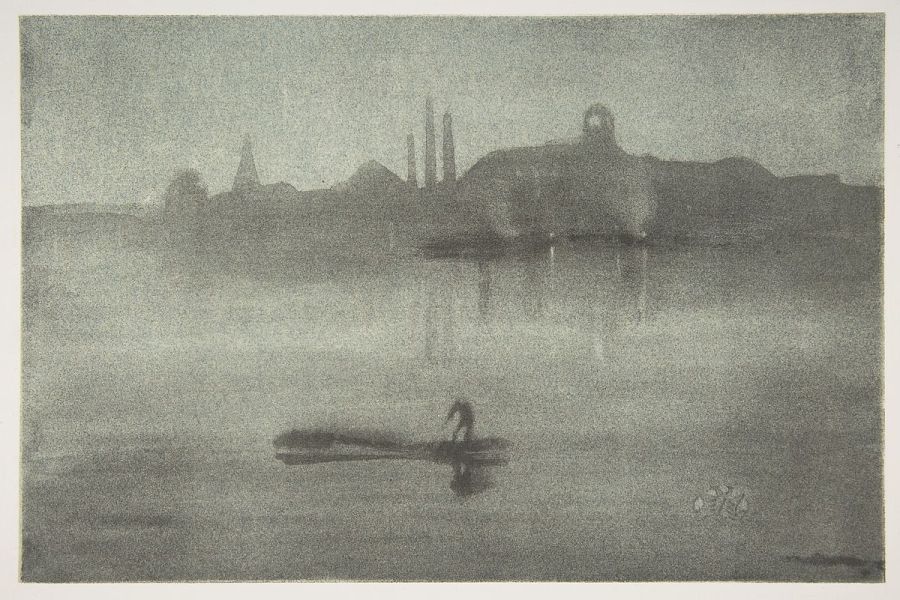
Looking on the Bright Side

By John Brehm

Featured Art: Nocturne by James McNeill Whistler

Death: at least it’ll give me a chance to catch up
on my sleep. No more tossing and turning
worrying about what’s going to happen next.
Unless of course my dreams of dancing girls
and hookah parties come true.
In which case it’ll give me a chance
to catch up on all the fun I missed
being too tired from lack of sleep.
A win-win situation.
Unless of course the dancing girls turn out to be
my former lovers, flitting before me
with vengeful or disdainful expressions
on their still painfully lovely faces.
In which case I can go on writing the poems
of failed love that failed to make me
famous when I was alive.
A suitable way to while away eternity.
Unless of course the hookahs are filled
not with tobacco but with heavenly peyote,
(food of the gods the gods left for us)
in which case it’ll give me a chance
to catch up on the deathless
bliss of boundless mystical oneness
my fear of death always kept me
from fully experiencing
here and now.


Read More

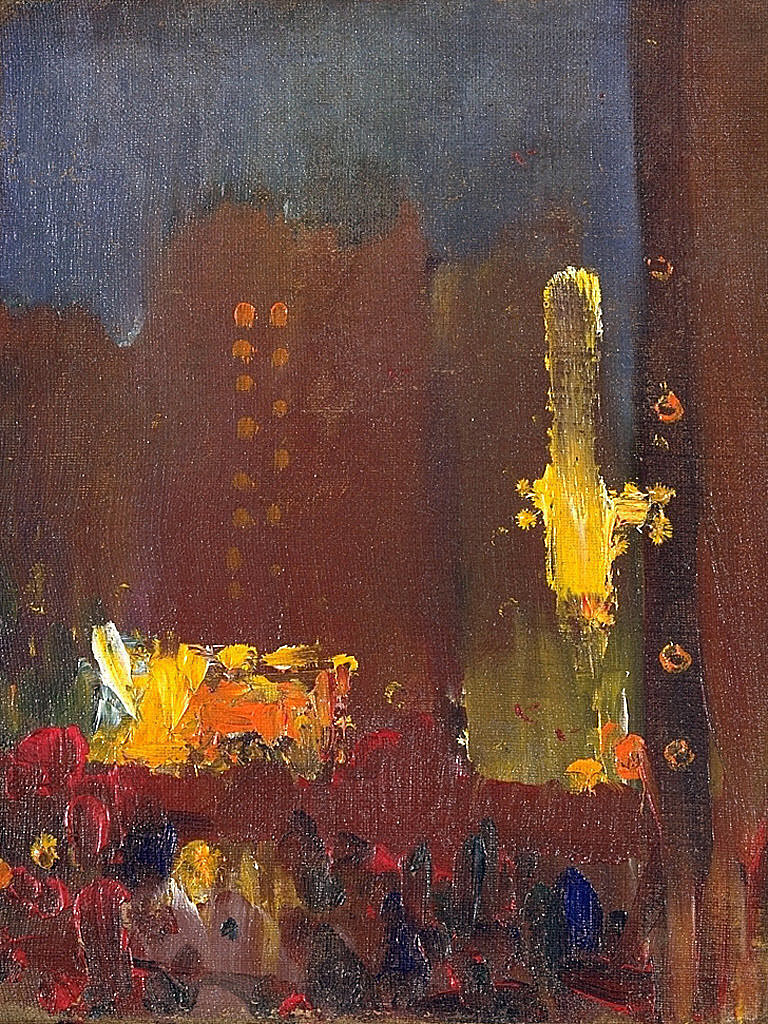
Scooter

By David Rivard

Featured Art: City at Night by Arthur B. Carles

Phil Rizzuto, shortstop, the Yankees’
Scooter & play-by-play announcer & The Money Store’s
man of a certifiably trustworthy nature,
but invented for me first in war stories told
by my father—
on a South Pacific island naval air station
maybe it’d be fun to put Scooter
in the game, brass thinks
a sports star visitor to war zone
great theater of operations P.R.—
but basketball, not
civilization-beating baseball, basketball
my father’s game—
“I could take him,
he couldn’t get by
me”: sayeth Norman
Rivard, testimony of
a former All-State point guard
1942 season Mass state champs
team captain
Durfee High School Fall River;
his torpedoed destroyer sunk
by a two-man Japanese sub
(a sake brewers’ assistant & an Imperial War College ensign?),
a few days earlier their suicide mission
had sent my father
to the base, rescued
just in time for Scooter’s morale boosting
visit, the two together on an asphalt court
in cosmic time Holy Cow!
an immortal, lucky accident—
but will, pride, intensity
count more for Norman—“don’t depend on luck
OK, why don’t you just apply yourself?”
my father’s question, frustrated by
his distracted, blurry
son—
apply yourself, stay on track,
stick to it, that’s the thing,
you’ll adhere
successfully to whatever you want
(not sure I know what the wanting is for even now),
you can be
an architect, trial lawyer, oncologist, surveyor,
if only you apply yourself—
like a wing decal on the model
of a Mustang P-51 Fighter
or whiskey dried in a glass-sized ring
on a liquor cart?—
skim the ear wax off your eardrums,
Dad—here is your poet, & here
is your poem.


Read More

Ambassador of the Dead

By George Kalogeris

Selected as runner-up of the 2013 New Ohio Review Poetry Contest by Barbara Hamby

Featured Art: The Artist in His Studio by James McNeill Whistler

My parents were never crazy about Cavafy—
They didn’t know much about poetry, at all,
And barely had time to read anything but the papers;

Though sometimes a poem they liked would appear in their
Beloved Hellenic Voice. (A poem that was always
In rhyming stanzas, and deeply nostalgic.) Or else

I’d show them one of the Modern Greek poets that I
Was trying to translate, and ask for their advice
About a line. “Is this for school?” they’d say.

My parents were never crazy about Cavafy—
To them he was too refined, too ALEX-AN-
DRIAN, and they were only peasants, xhoríates.

And there was no Ithaka for them to go back to.
When I’d beg them to read the Greek, they’d balk when they got
To his purist kátharévousa diction—they just

Couldn’t stomach its formalist starch. His poems were never
Demotic enough, never trapέzeiká:
Songs to be sung across the kitchen table.

And if I read them Elytis, Odysseus Elytis
Too was too elitist to trust, too drunk
On the island sun of his own Ionian vision.

To people for whom elevation meant being raised
In the steepening shadows of Peloponnesos.
(“The great Odysseus,” my father would chide.)

And if Yannis Ritsos spoke their working-class language,
And his poems weren’t hard to follow, still, once they heard
That Ritsos was Marxist that’s all they needed to know.

Read More

My Father’s New Woman

By Fleda Brown

Featured Art: Fruit and Flowers by Orsola Maddalena Caccia

My father has a new woman. He’s 93, the old one is worn out.
They used to hold hands and watch TV in his Independent Living
cottage, but now there is the new one, to hold hands. The old
one is in Assisted Living not 50 feet away but barely able
to lift herself to her walker. He sits in her room after dinner,
her mind wandering in and out. What if she escapes
and comes over while my father is “taking a nap”
with this new one? My mother is two miles away beneath
her stone, relieved. I bring artificial flowers to her with my sister,
who likes to do that when we visit. I am not much for
demonstration. I would just stand there and say, oh, mother,
he’s at it again. And she’d say, I am sleeping, don’t bother me
with him anymore. And we’d commune in that way that knows
well enough what we’re not saying. And I’d be lamenting
my self-righteous silence in the past, my smart-aleck-motherjust-
go-to-a-therapist talk. What I should have said was, was,
was, oh, it was like a tower of blocks. Pull one out and all
would fall. She would get a divorce and a job and marry some
balding man like her father, who would be my ersatz father
and would take her dancing and let her wear her hair
the way she wanted, and she would cut it short and get it
permed and life would quiet down and my father, to her, would
morph into the handsome and funny Harvard Man he was
in the old days, the way he posed her for his camera, tilting
her head to the light with his devouring-passion fingertips
and her days would begin to feel like a succession
of pale slates to scribble on and erase before the new husband
came home from work, while my father would spin off
after whoever would “put up with him,” as he says,
and would follow his new one around carrying her groceries
and complaining that she spends too much, but biting his tongue
and thinking how soon she would let him, well, you know,
and I would be, what? The same as now, writing this down
so that none of the shifting and sifting could get away
cleanly without at least this small consequence.


Read More

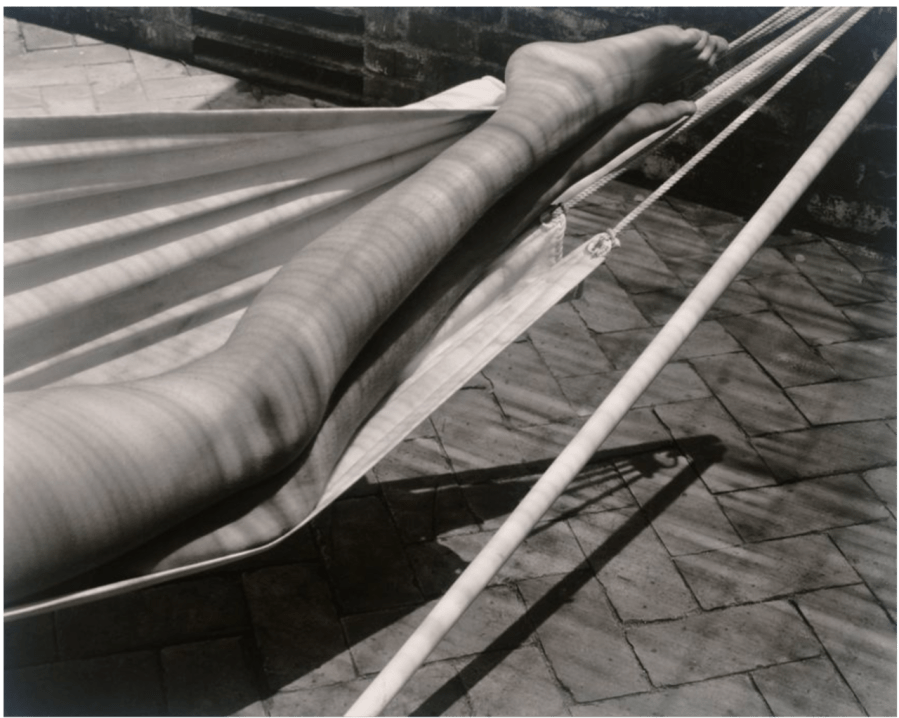
Animals

By Brock Guthrie

Featured Art: Leg in Hammock by Edward Weston

One is what one looks at—well, at least partially. —Joseph Brodsky

All morning in my hammock burning
a tight one, poised with pencil and notebook
and seven-week beard, I look to the pines
outside my cabin, seeking inspiration
from the birds and the squirrels
whose singing and foraging, whose
exclamations, no, arguments, reflect
my inner my inner my inner . . .
and every so often my cousin Ricky returns
from hunting rabbits on my four-wheeler
to tell me he’s thought of a new way
to beat off: Anywhere around here to buy
watermelons? Even his camo flannel
can’t conceal that Superdome belly
and I hate to think how long
since anyone’s seen his diminutive dangle
so I tell him in all seriousness, my sympathy
sincere, You might be on to something,
but after he tokes and rides away
I get inspired, realize I should’ve said
Go drive around these country roads, man,
look for signs!
and even Ricky would’ve
nodded with a look of feigned profundity
like he’s posing for an author photo
but I let that moment go

Read More

The Muse of Work

By Ellen Bass

Featured Image: “Portrait of Mrs Marie Jeanette de Lange” (1900) by Jan Toorop

If I could choose my muse,
she’d have red hair, short, spikey,
and green cateye glasses with rhinestones at the tips.
She’d wear a sleeveless white blouse, ruffled
over shallow scallop-shell breasts.
Can you see how young she is?
I think she’s the girl Sappho loved,
the one with violets in her lap.
When she opens the door, a flurry of spring,
apple blossoms and plum, sweeps in.
But I’ve been assigned the Muse of Work.
It turns out she’s a dead ringer for my mother
as she scrambles the eggs, sips black coffee,
a Marlboro burning in a cut-glass ashtray.
Then she opens the store. The wooden shelves shine
with amber whiskeys and clear vodkas,
bruise-dark wine rising in the slender necks.

Read More

Yet

By Eric Torgersen

Featured Image: “Study for “Le Bain”: Two Women and a Child in a Boat” by Mary Cassatt

You’ve got to act, and soon, but you don’t dare yet.
There’s one big load you don’t think you can bear yet.

You chose to dive this deep; it’s not for me
to tell you why you can’t come up for air yet.

You had big plans. You’re running out of time.
There’s no excuse to contemplate despair yet.

All that time and trouble spent on you.
For all the rest, you don’t have much to spare yet.

The world should find some meaning in your work?
You haven’t shown us why we ought to care yet.

Don’t give me that I-don’t-get-it look.
Sixty-five, and still not self-aware yet.

You might just want to start to pack your bags.
You may not have enough to pay the fare yet,

but that doesn’t mean the taxi’s not on its way.
Look out the window. No, it isn’t there. Yet.

Call it what you will, but thank something, Eric.
There’s one stiff suit you haven’t had to wear yet.


Read More

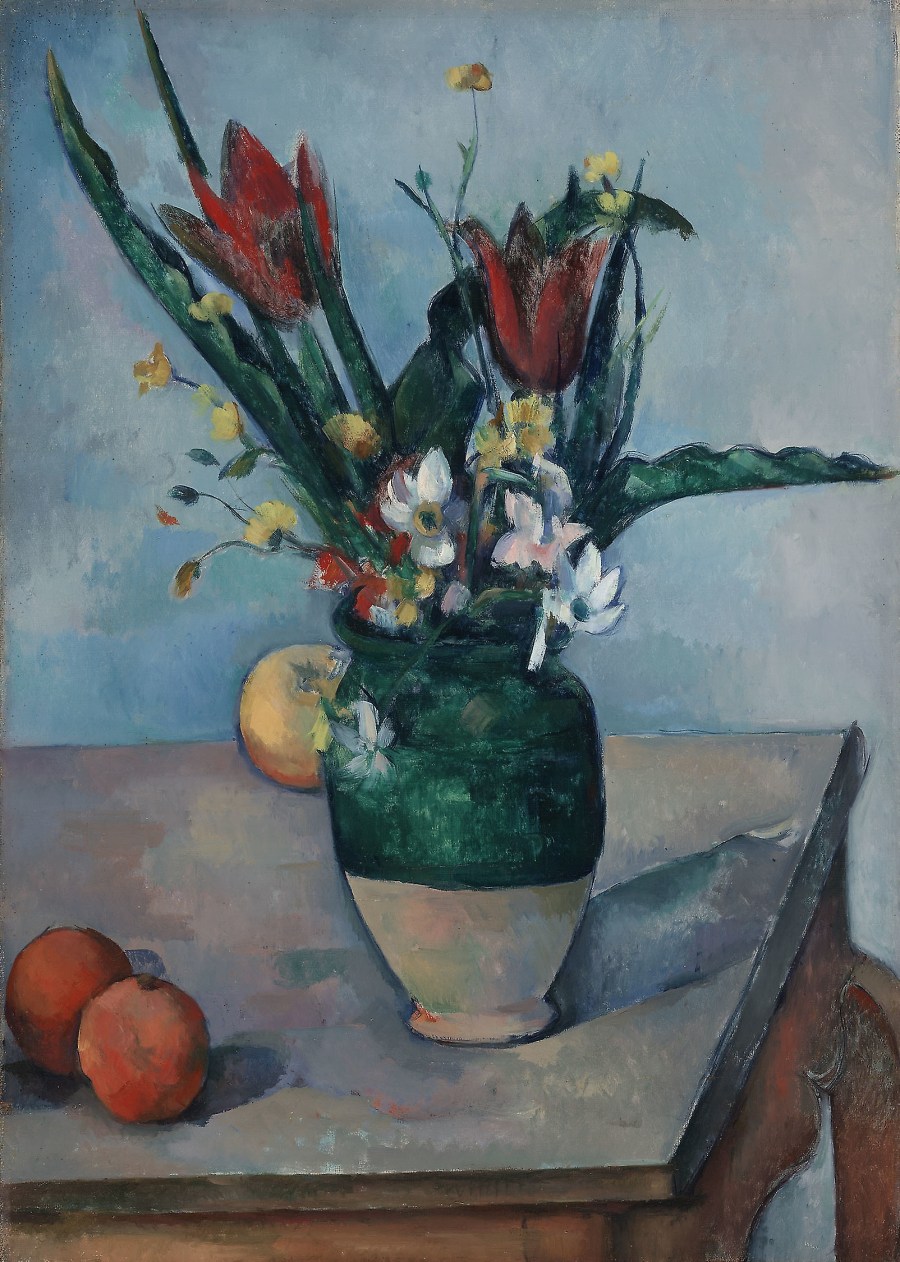
Heroine in Repose

By Rick Bursky
Featured Image: The Vase of Tulips by Paul Cézanne

I wasn’t sure if she kissed me
or simply used her lips
to push my face away. Yes,
the moist warmth was enjoyable,
but when my head was forced
back over the top of the sofa
the intention grayed.

Earlier that day I planned
to quit my job and pursue
a career writing romantic novels
that would be confused with memoirs.
But if I couldn’t distinguish
between a kiss and a push
what chance do I have
of writing romantic novels
that would be confused with memoirs?

After the kiss, and I prefer
to think it was a kiss,
she sank back into the pillows
and watched me
out of the corner of her eye.


Read More

Chicken

By Stephen Cramer

Featured Image: For Sunday’s Dinner by William Michael Barnett

At the festival when we were celebrating
harvest with pumpkin tarts & cider,
an older farmer asked what I was into
& maybe my answer was muffled a bit
from the cider’s tang because he started
talking passionately not about his favorite poet
or the use of weather in haiku
but about his chickens: White Leghorns,
Silkie Bantams, Rhode Island Reds,
Plymouth Rocks, how, in Corporate Agriculture
the birds are bred so big that their legs
cripple beneath them & isn’t that a shame.
I tried to break in, to tell him he misheard.
But he shook his head & held up his finger.
That’s not the case with his birds.
When his hens are laying he puts oyster shells
in their grit to give them extra calcium
for their own shells. His birds are free range—
not debeaked & stuffed two dozen
to a pen. No, his birds can go anywheres they want
from the barn to the bog & even in the house.
Read More

In which I first discovered

By Emily Pérez

Featured Art: Woman Writing by Zabitz

Quite suddenly, at least it seems in retrospect
Though I still seek a complete

My relationship to my past
It was as if my past had taken

Without warning, understand,
Had slipped in such a way that it uncovered

No, that’s not right, for it suggests a lack of deliberate
It wasn’t that I didn’t try

Read More