2018 Summer Exclusive
Featuring stories by Mari Christmas, Scott Koenig, LaTanya McQueen, JH Bond, Tamar Jacobs, and Traci Sauce, and poems by Mark Williams and James Lineberger.
NOR: Embrace Your Conjunctions
Featuring stories by Mari Christmas, Scott Koenig, LaTanya McQueen, JH Bond, Tamar Jacobs, and Traci Sauce, and poems by Mark Williams and James Lineberger.
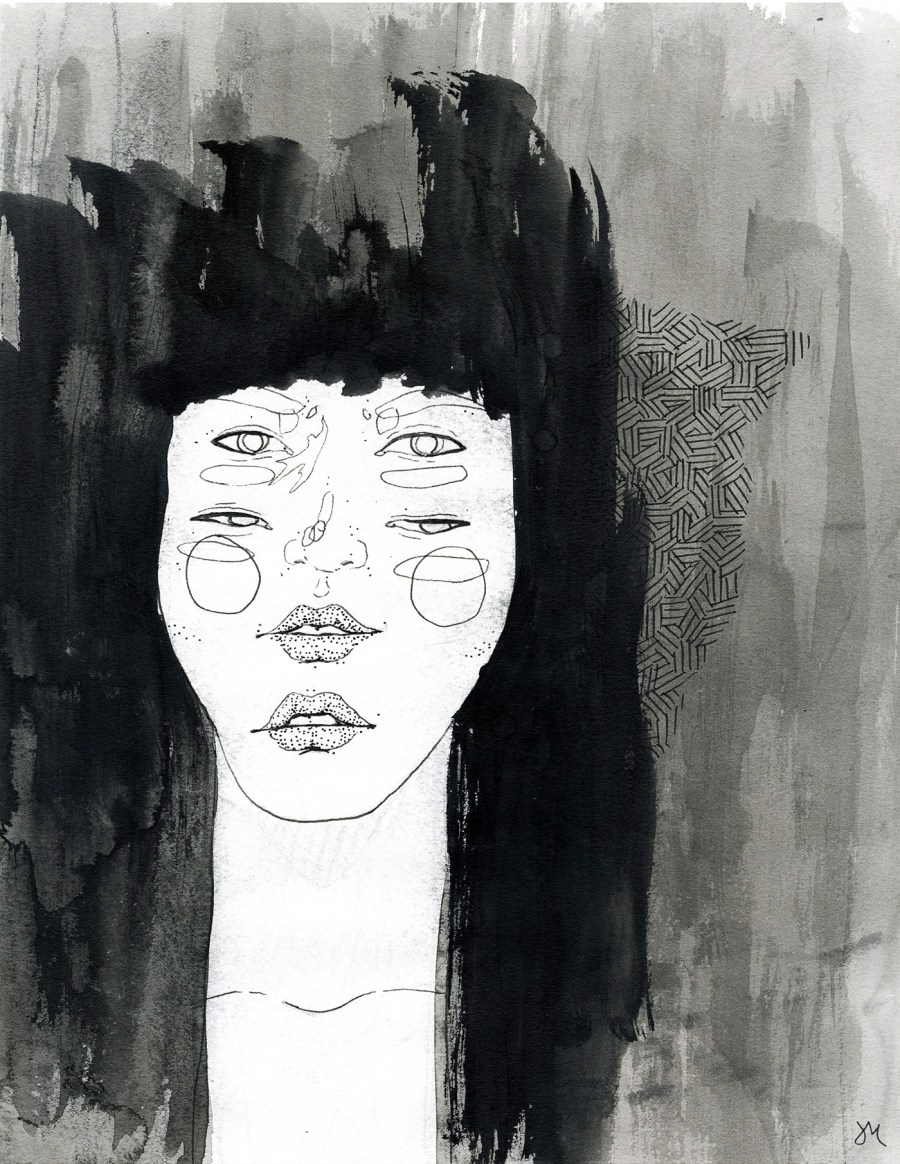
By Mari Christmas
My husband manages a cheap hotel off the interstate five days a week, and every Wednesday night he visits the community center pool. Some days I meet him there. I like to watch him push the water around. It helps with the arthritis, he says, sculling the surface, making frog legs. He believes I deserve an office job, something that allows me to move between cities while wearing a thin blouse. We hardly speak. This is because of all the guilt. I look out across the pool. Children shiver in wrinkled suits, sucking their hair. Inside, it is airless, hazy, the windows fogged. The water a dark tangle of rope. Even though I cannot see him, I know he is there.
*
After swimming my husband will stay in his small room, equipped with a desk and a plastic lamp, and berate his romantic Romanian pen pal over the phone. He feels the need to give important looks, to demonstrate his rigor over a crowded table, and so forth, even internationally. “If you piss in the corner, I piss in the corner,” he tells her, speaking in English. For two bars of chocolate a month she puts up with all of that. He refuses to learn her language, as he cannot be bothered with the gender of specifics.
Tonight, he comes into the kitchen with the phone saying he wants a son, one he will name Atilla. Atilla? I think. Like Atilla the Hun? I marvel at my attraction to this bareheaded man, whose age has a secure density to it, like a landmark, and how this makes me feel intimately bound to him. “Something that does not weaken the spirit. Nothing that gives him an ironic existence,” he explains to his girlfriend, and then retreats down the hall, padding softly, his shirt untucked. Through the walls I hear him say the name ennobles mankind and something about plundering a northern province. He is never done. He talks and talks. Another blind Milton dictating to his poor daughter. The top of my head says, at least they’re not sleeping together, but I no longer believe in any of that.
Read More
By Scott Koenig
It’s so bright even though the blinds are closed. Streaks of white light gash the wall. The wall Dad painted blue last month. Your favorite color is red but you like blue, too. There’s the humming of lawnmowers in the distance. Open those blinds.
Out there it’s green everywhere. Up above, it’s blue. There’s a white car in your driveway, too. Not our car, you think. Whose car is that. Green grass down here, around the strange little white car, and blue sky up there. The colors are so pure it kind of hurts. It’s nice, though. Do your eyes hurt? You could open the window to smell the grass but Dad got mad last time. Up on the hill where green turns into blue are big brown houses. If you squint they look like blobs of oatmeal raisin cookie dough when Mom lines them up on a baking sheet. And between the houses are thin lanes of grass where the older kids go sledding on snow days. The older kids with the colorful backpacks and the best Pokemon cards. Andy said one of the Meyer boys had three holographic Charizards. There’s no way. You aren’t allowed to go sledding on the hill yet. You just got allowed to ride your bike up to the black mailbox. The green mailbox after that is too high, too far up the hill, too dangerous, Mom always says. You know you can do it but you aren’t allowed. But soon you’ll be allowed to go all the way up – to the top of the hill. Then back down super fast into the coldy sack. Like how the older kids do.
The man across the street is bent over by a bush, the man whose house is white and black and pointy and looks like a castle. He’s bent over by a bush using those big shiny scissors. The scary ones. The kind Dad uses a lot. Is Dad outside? Look down into your part of the green. Dad isn’t in your part of the green yet. Maybe later. There’s still the humming. Humming is an outside activity, Mom always says. Sometimes she hums but she does it quieter than you. And mostly outside. Her humming is nicer than lawnmower humming. Especially because when there’s a bunch of different lawnmowers all at once it sounds like buzzing. Like bugs, kind of.
Read More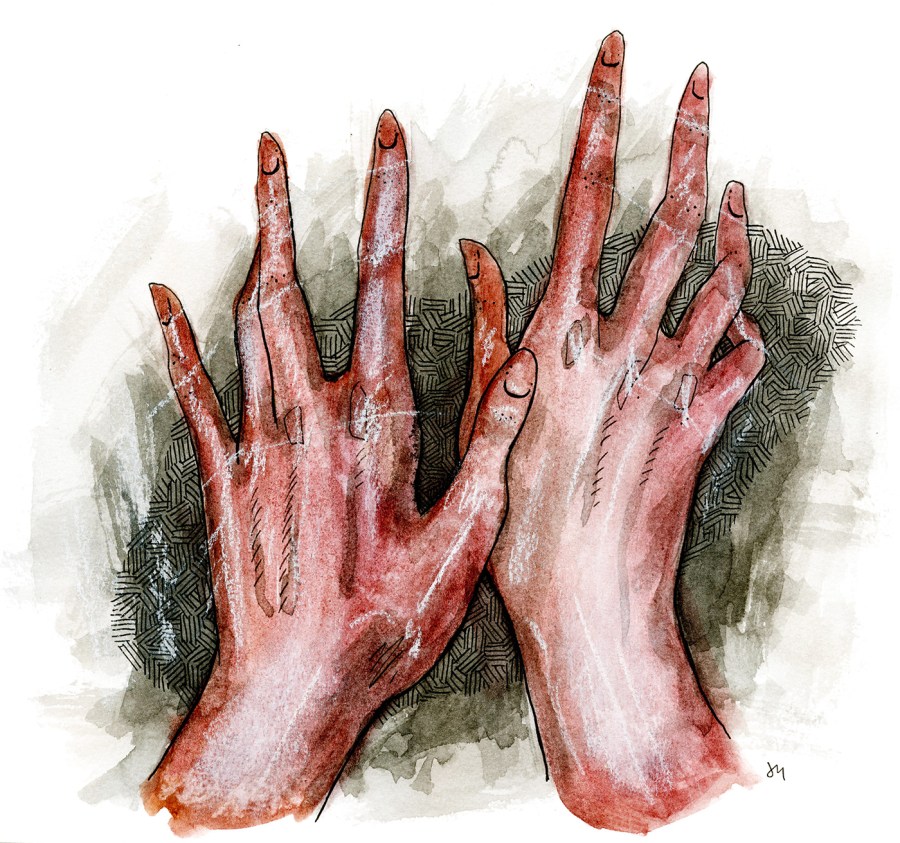
By LaTanya McQueen
Because of her own curiosity she said yes when he asked her to put the bit on him. The bit, or gag, was an iron mask shaped like half a moon with a hook that went around the front of a person’s head. A spiked collar connected to the mask through a lock at the back of the neck.
He collected historical artifacts like these, the iron bit and scold’s bridle women were once punished with wearing, the shackles and chains forced upon slaves, items all from a not-too-distant era. When she asked him why, he told her he had a fascination for history long forgotten.
“Forgotten?” she asked and he shrugged in response.
She was used to men wanting things like this from her, to be blindfolded with her wrists cuffed and legs tied. She’d been expecting a day to come when he’d ask her if she would wear the bit, because hadn’t their relationship been leading up to this? Men, both white and black alike, were always asking in various ways to put her in this position, one of servitude, of serving. They wanted her on her back with her legs spread, body motionless, a mouth open only for moaning or what he’d force in. So many of them held this secret desire within themselves but eventually, with time, they always found a way to tell her.
She picked the bit up. As she felt its weight, she imagined what her fore-bearers must have experienced as the iron was fastened on. “Where did you get this?”
“eBay,” he said. The simplicity of his answer made her laugh. She asked him if it was real.
“I think so. Go ahead. Put it on,” he urged, and she did.
Read More
By J.H. Bond
We’re in a bathroom at McDonald’s and it smells like pee and I’m helping my dad put his makeup on. It’s his eyebrows that he struggles the most with. They’re supposed to arc like dark rainbows high up on his forehead. He can’t do them in the mirror—they look like mountains.
“Get ’em even, Mitchell,” Dad tells me, as he kneels down, eye-level.
I’m always drawing pictures. Now I’m drawing one on my dad. His real eyebrows are gone, lost under a mask of white. I give him some new ones with a makeup pencil, then paint the tip of his nose bright red.
He pulls on his stockings. Zips up his yellow-gold jumpsuit. I hand him his giant shoes and ask how come they’re so big. Goofy factor, he says.
He fits on his wig and it blazes like fire.
“How do I look?” he asks me.
“Like a clown,” I say.
*
Dad’s got three parties this afternoon. I count eight kids at the first and I don’t know any of them. Dad’s trying to make a wiener dog balloon and I’m at a table in the corner, drawing pictures of the motel I’ve been living in with my mom.
I sort of hate the kids Dad entertains. He gives this boy with braces the wiener dog balloon and a freckle-faced girl a turtle. They’re all cracking up and happy like Dad’s a good clown, but he’s not. Every time he tries to juggle he splatters an egg. Kids laugh, but still. He can’t do tricks. He doesn’t tell jokes. He just falls down and spills stuff, and slips in the stuff he spilled.
Read More
By JP Gritton
I guess you’re wondering how I ended up with a woman like Syrena, in the first place. Truth is, it’s Mike’s fault. He’s the one to blame. Or to thank, I don’t know which. It was Mike Corliss who turned to me on this too-hot afternoon beginning of September. The four of us ought to go out sometime. Double Dutch, I mean. And I remember him smiling at me while my guts turned somersaults. He was a different man those days, full of piss and vinegar. He had a smart mouth on him, and he wasn’t afraid to use it either, which is why Laughton Starbuck kind of had it out for Mike.
“Where’s your protective eyewear, Corliss?”
“My protective eyewear?”
“That’s what I asked you.”
“My protective eyewear’s protecting the dashboard of Sheldon Cooper’s truck. That’s where I left it this morning.”
Sheldon, he used to call me, ’cause he knew it got on my nerves. To everybody else I was Shelley.
I was just a journeyman carpenter back then. I drove Lij’s truck to work and home every day, give my best friend Mike Corliss a ride. Half the time, he’d forget something on the dash: that blue bandana, that pack of smokes, that pair of goggles.
I guess I looked up to Mike, who was a couple years older than me and besides that had a way about him. He told a story better than anybody I know, though you never knew how much was true and how much he’d half-made up. He told me how a honeybee flies through the rain, missing every drop. He told me nobody’d ever saw a giant squid, but even so scientists know they exist ’cause sometimes, he said, a whale or a shark will wash up on the beach, a great big bite took out of it.
Read More
By Tamar Jacobs
I was chopping peppers when Ronnie came home. I’d been thinking to go to Safeway to see if there were any open bags of candy I could take from, or maybe walk down to the water to feed my birds, but then I saw him and all those ideas went up like smoke from my head. I hadn’t seen him in two years. He got out of the car and stepped into the sun, one whole big part of his skin a new lake of blue. I saw later up close it was all made of little tattoos lifting and blending together, but from behind my side of the kitchen window that day, it looked like he’d been afflicted with some kind of blue sickness. Down his arm and up his neck and some up on his forehead right above his eyebrows and a little trickle from just one eye. He’d gone away, got dipped in color and come back. I found this extraordinary and mysterious, and it kept me up at night thinking about it, touching my own skin wondering what it might feel like to go blue.
After Ms. Eva got done bumping into everything around her with her car like always when she parks, and they slammed their doors closed and went inside her house, I squeezed my eyes shut and chopped as fast as I could, felt tiny sharp prickles of cold pepper water punching into my fingers. I could not look down, because if I did the pepper water became the licking tongues of snakes trying to kiss me away from my knife, trying to slither out from under the blade I was hacking on them with. But as hard as I could I refused to see and they gave up moving and I heard Ms. Rose roll over the loud spring on the couch and I tried even harder because I could not let her hear me chopping in a crazy-sounding way or she would know I’d been skipping pills again. I would not feel sorry about those snakes. Would not, would not, no, I told myself.
I would not then, but when I sleep, I can’t stay as careful about my thoughts as when I am awake. That night while I slept feelings began to creep in about those snakes I killed. They were just being themselves. Being snakes. And there I had been chopping them to pieces trying to pretend I thought they were peppers.
Read More
By Warren Decker
Mike came to Japan because he was tired of being Mike. He was the only guy in the dorm who would never take lime Jell-O vodka shots, and would get mad if his roommate woke him up— stumbling drunk through the door, and turning on the florescent light, before passing out snoring in the lower bunk, fully clothed, wearing shoes filthy with mud and wet grass clippings from the university lawns. Mike would climb down from his top bunk and turn off the light but he could never get back to sleep, and his morning study routine would be disrupted.
Mike preferred Chinese characters to people, specifically the kanji characters used in Japan. He had already worked his way through the bright red “First 500 Kanji Workbook,” and was halfway through the light blue “500-1000 Kanji Workbook,” while some of the other freshmen were still struggling with the phonetic hiragana characters. His teachers praised his diligence, but for Mike it was very simple: he preferred Chinese characters to his roommate but he also preferred Chinese characters to Mike. If he spent an hour carefully memorizing the stroke order of a kanji like 鬱, then Mike—with all his doubts, his unfounded sadnesses, and fears—would be somewhere far away.
In his junior year, he arrived at Kyoto University as マイク (ma-i-ku). When people spoke, he could quickly associate the syllables of sound with a specific kanji, and decipher the meaning within a few seconds. The other exchange students were still fumbling around with “ohayo gozaimasu.” Within a month マイク had lost his virginity in his single-occupancy dorm room with Reika, an English major, who wore huge sunglasses and had long hair that was dyed a dark shade of reddish-brown.
Read More
This story originally appeared in New Ohio Review 8. Here, Joanne Serling, author of the new novel, Good Neighbors, reads for our NOR Audio feature.
Illustration by Devan Murphy.

By James Lineberger
In the sixth grade I asked
Sissy Morgan
if she would go to the picture show with me
on what was supposed to be
my first date but when I said it her eyes got wide
and her mouth fell open and she just backed off till she ran into
a chair and had to sit down and didn’t say a word.
But during recess I could see her at the swings
giggling and whispering to her girl friends
and all of them staring at me
but if it was a trick or what I didn’t know
cause while I was waiting for the school bus
she came up to me and said
well all right but she would not go to
the Paramount which all
they showed was double-feature westerns with people like
Sonny Tufts or Charles Starrett
and if there was anything she could not abide it was Charles Starrett doing
The Durango Kid.
But when I told mama she said not
to worry because
we could go see Forever Amber at the Visulite
with Linda Darnell and Cornel Wilde
which was kind of like Gone With The Wind mama said
and the name was because of the color
of her eyes which ought to be just the kind
of story that a little girl would go for
and what we will do
mama said was I will drive y’all to the Visulite
and meet you out front again when
it is over.

By Mark Williams
It is better to write of laughter than of tears,
for laughter is the property of man.
François Rabelais
Monday
I’m stumped. A man angel with a giant halo
is talking to a woman angel with an average halo.
They appear to be a few feet apart,
but since they’re standing in the clouds,
they could be miles apart, in which case
they are giant angels and the man giant angel
has a ginormous halo and the woman giant angel
only has a giant halo. Either way,
I have no idea what the man angel is saying,
but I have six-and-a-half days to figure it out.
Possibly, cartoonist, Will McPhail, had an idea
when he drew the angels for this week’s contest: #526.
Or maybe he was Sullivan in search of a Gilbert.
I thought I was a Gilbert when, in response to #520,
Corey Pandolph’s drawing of a banana peel
slumped on a psychiatrist’s couch,
I had the psychiatrist saying,
Depression, heart palpitations, fatigue?
You could be low in potassium.
Still, you have to hand it to first place winner, Michelle Deschenes
of Fort Collins, Colorado, who wrote,
It’s normal to feel empty after a split.
Tuesday
He never used one word when ten would do …
is what I’d write if someone were to draw my tombstone.
I can see why everyone might think
the angels got me thinking about my tombstone,
but I’ve been thinking about my tombstone
ever since the banana peel in #520 when,
before I came up with
Depression, heart palpitations, fatigue? et cetera,
Read More
By Traci Skuce
For the past hour, Alli had been sitting against the small oak, her eighteen-month-old son latched to her breast. His molars had finally—thank God—broken through, and now he suckled, cheeks sticky and eyes lolling with pleasure. Alli had hoped another mom would show up. Jeannie was off visiting her parents in Vancouver and Clay, well he was just plain off, so she hadn’t had an adult conversation in days. She wanted someone, anyone, to gab with about the impossibility of lost sleep, errant husbands, and teething. But there were only the crows, waddling around the rim of a garbage can, diving in for pizza crusts then flying off across the playground to the giant cedar.
Alli’s daughter, Tavia, looked at the birds from under her floppy sunhat, and then dumped a handful of sand onto an accumulating pile, patted it down. Alli mimed eating, mumbled yum-yum as she had been since they’d arrived. “Do you like it Mommy?” Without waiting for an answer, Tavia ran back to the production center beneath the slide.
Jack continued suckling. Both breasts were drained and she’d become a giant pacifier. His eyelids fluttered and his blond feathery hair stuck to his forehead, ear crusted with milk and peanut butter. She picked at it, and he swatted her, still sucking hard. Enjoy them while they’re young, people said, but she couldn’t wait to toss these days onto the slag heap of motherhood.
Read MoreThe poem, “Hilltop Cemetery” by Brendan Cooney, originally appeared in NOR 22. It became the inspiration for this short film, by Bridie Jackson.

