“The Accompanist” by Anita Desai
By Lynne Sharon Schwartz
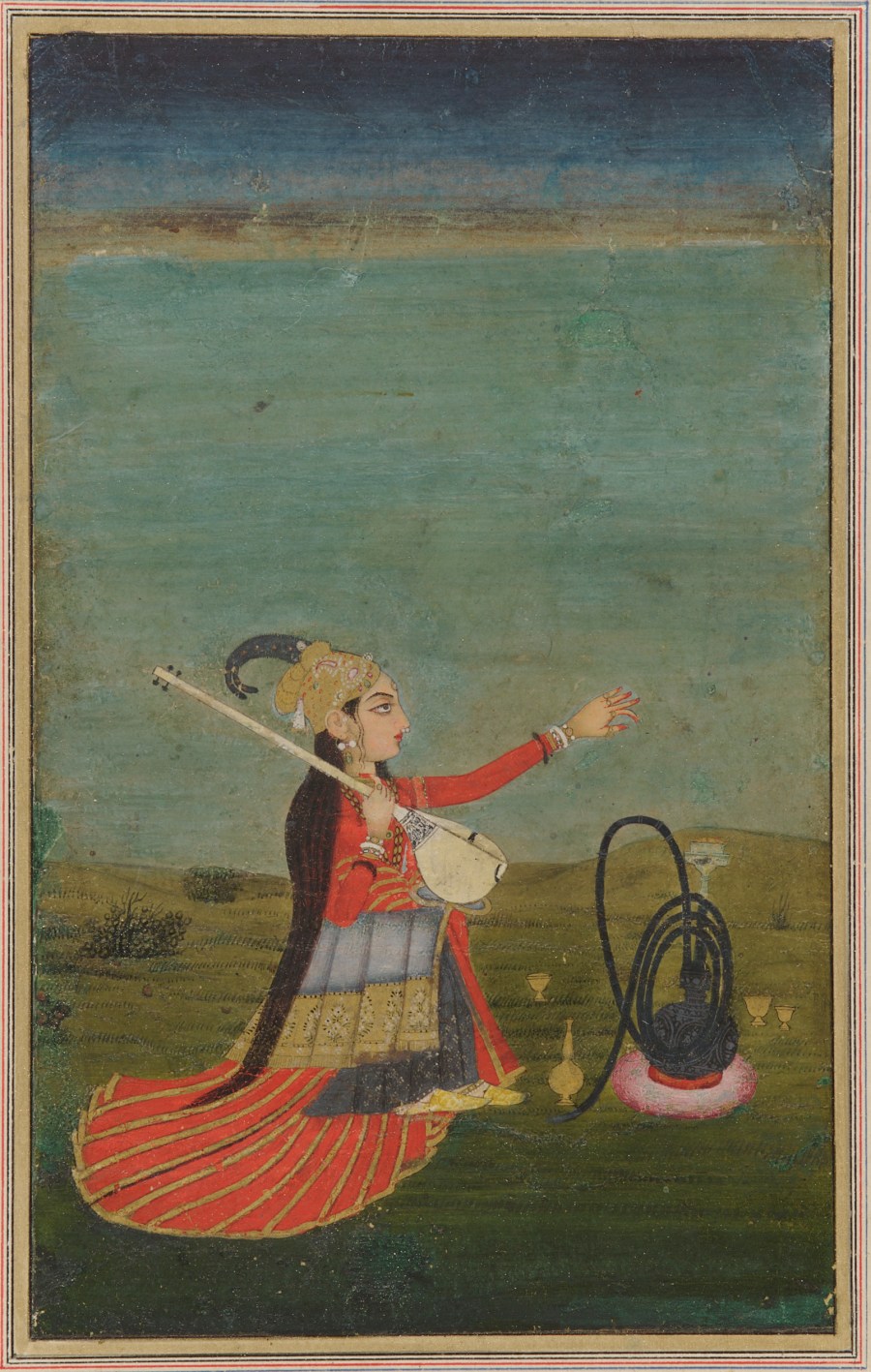
Featured Art: Female performer with tanpura by Unknown
For a short story to linger in the mind as long and as tenaciously as “The Accompanist” has in mine, it must hit a sensitive nerve. So in revisiting the story, which I first came upon years ago in Anita Desai’s early collection, Games at Twilight, I looked for what had struck me so keenly in this first-person account of an Indian musician from a poor background who dedicates his life to the most humble of accompanying instruments, the tanpura.
The narrator’s father makes musical instruments and music is “the chief household deity.” Soon after Bhaiyya’s lessons begin at the age of four, his talent is obvious: “My father could see it clearly—I was a musician . . ., a performer of music, that is what he saw. He taught me all the ragas, the raginis, and tested my knowledge with rapid, persistent questioning in his unmusical, grating voice.” The father is stern and rough, never offering praise or encouragement, only calling his son a “stupid, backward boy.”
























 New Ohio Review