The Dog in the Library

by Catherine Stearns

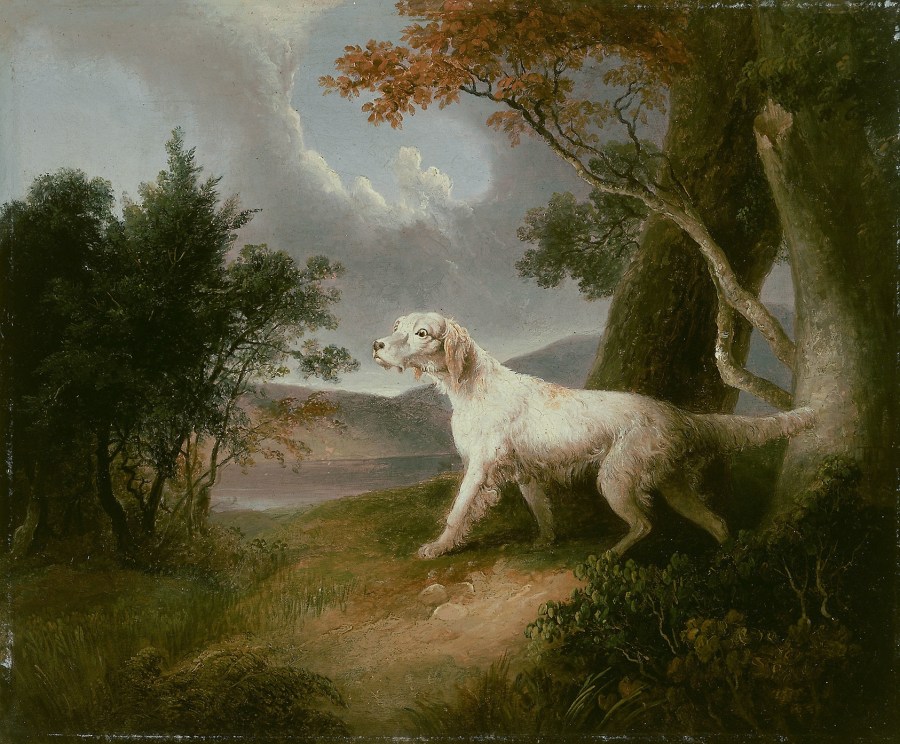
Featured Art: Landscape with Dog by Thomas Doughty


“We may be in the universe as dogs and cats are in our libraries, seeing the books and hearing the conversation, but having no inkling of the meaning of it all.” —William James


On sunny, cerulean days I go all the way
to eleven when I stretch and sniff among the leaves,
whereas you stay inside, hunched over
your moral universe. Old girl, if you
stopped trying to decipher those fossil bird tracks,
you might see the thermal-gliding hawk above
or that zaftig possum gnawing on fallen
persimmons under the window. I’m just saying
your preference betrays a certain fear
of your own nature. Remember
last summer when you left me in the car
to pick up a book they were holding for you,
and a page or two in you recognized
your own penciled and may I say
obsessive marginalia, although you had
no memory of the text itself?
Whatever made you think your mind
could be disenthralled with words?
As a pup, I once took Mark Strand’s
injunction in “Eating Poetry” to heart,
devouring one or two slim volumes,
but soon realized I prefer the raw
material of life, what e e cummings
calls “the slavver of spring”: smells
of fresh earth, the ghostly scent of
rabbits, even the mounds of dirty laundry
piled up on your bed. If you found answers
to your questions, do you truly believe
those answers would transform you?
So many of your species seem
susceptible to revelation. We’re all
browsers, old girl, without an inkling,
waiting by the door for a treat or to be forgiven
until our unleashed immortal part bolts
for that hit of dopamine. Then
all good dogs go to heaven.

Read More

Ekstasis

by Erika Brumett

Featured art: Summer: Cat on a Balustrade by Théophile-Alexandre Pierre Steinlen

                       “One by one—in convents across medieval Europe—nuns began to believe they were cats.”

                          –Michael Garerda (Shared Hysteria: Group Madness and the Middle Ages)

Happened after mass
last sabbath.  We broke
fast (curdmilk, cabbage),

sat rigid in our hair-
shirts and worship. But heard
then—urgent as prayer

by the dais—a purr-
purring rise from Sister
Mary Iris.  Since then, Read More

The Problems of the Wild

by Abby Horowitz

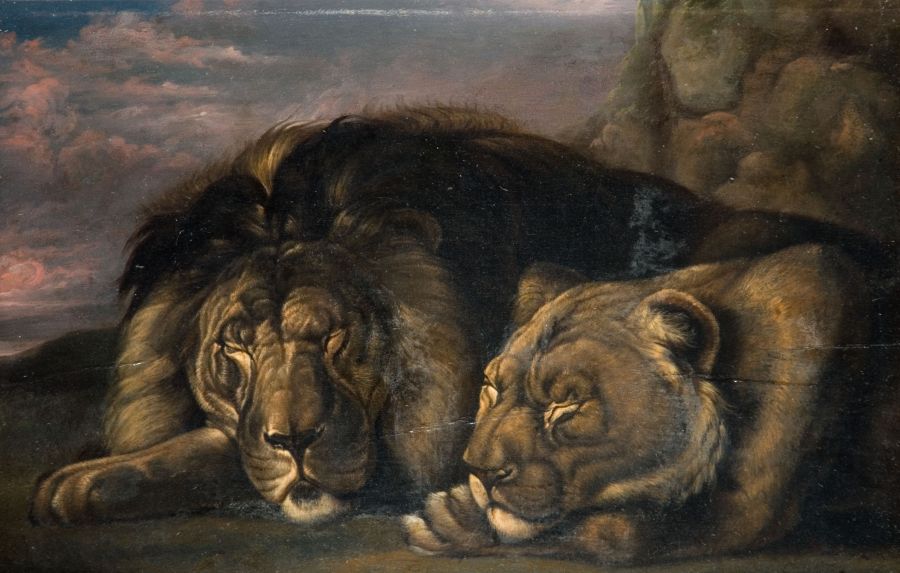
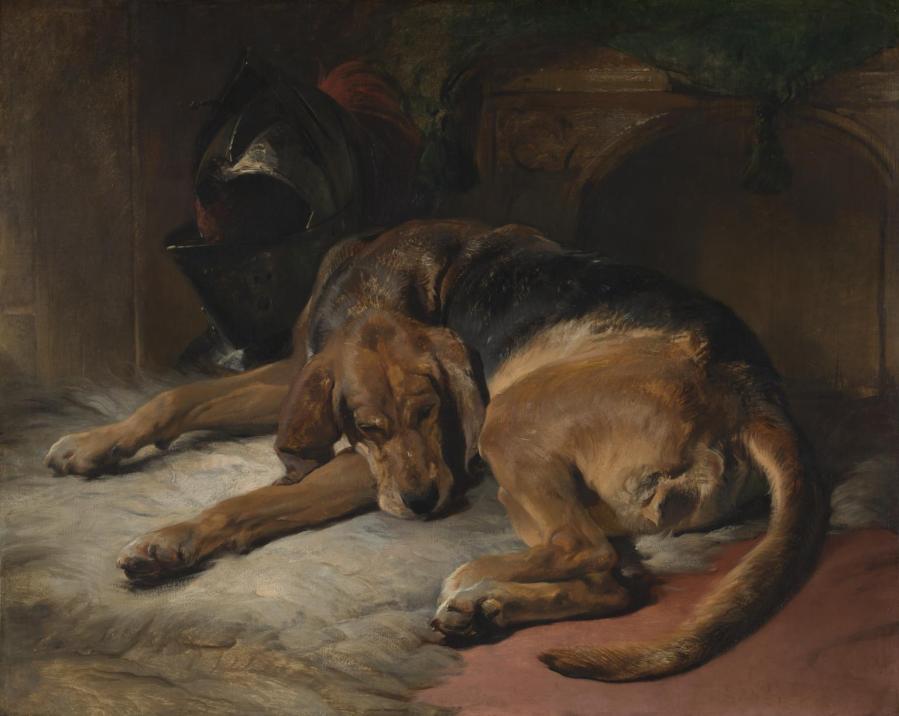
Featured Art: Sleeping Lion and Lioness by Samuel Raven

I am trying to tell Francine about the new babies in my life. They’re lions, baby lions, and they have fur the color of corn flakes and little ears that look straight off a teddy bear and they turn my heart right to butter. But here is the kicker: their mother is dead. Something weird must have happened when she birthed them because a little while later, they found her stretched out in the dirt up front by the viewing glass. The father lion was roaring on his big rock, with his mane standing on end, while the cubs were kneading their paws into the mother lion’s white underbelly and gnawing at her black teats. But no dice, that lioness would roar no more and now things do not look good for those little cubs. Because they’re not taking well to the fake milk they’re getting now or the plastic nipples they’re getting it from, and the father lion keeps pawing around with an evil  look on his face that is making the zoo staff nervous. Read More

Octopus on Ecstasy

by Geneviève Paiement

Featured art: from A Picture Book of Practice Sketches by Rinsai Ōkubo

-In September 2018, Johns Hopkins University neuroscientist Gül Dölen
published a scientific study wherein she dosed octopuses with MDMA
to see if they would react like humans and become more cuddly. They did. 


She hypothesizes that humans are more closely related to octopuses
than we think. Fills a tank with ecstasy. Plunks in us two octopuses.

Just five hundred million years of evolution between us, she muses.
Surely what MDMA does to humans it will do to us octopuses.

Surely we’ll break out in the same cold-sweat/hot-flash, will twist-grind
our visceral humps, bump beaks, squish-entwine our fellow octopus.

Oh wow. I’m at the other’s central axial nerve pump in a house beat,
sucker-to-sucker, lights-out smoke machine to my sister sextapus. Read More

Dune Cat

by Winnie Anderson

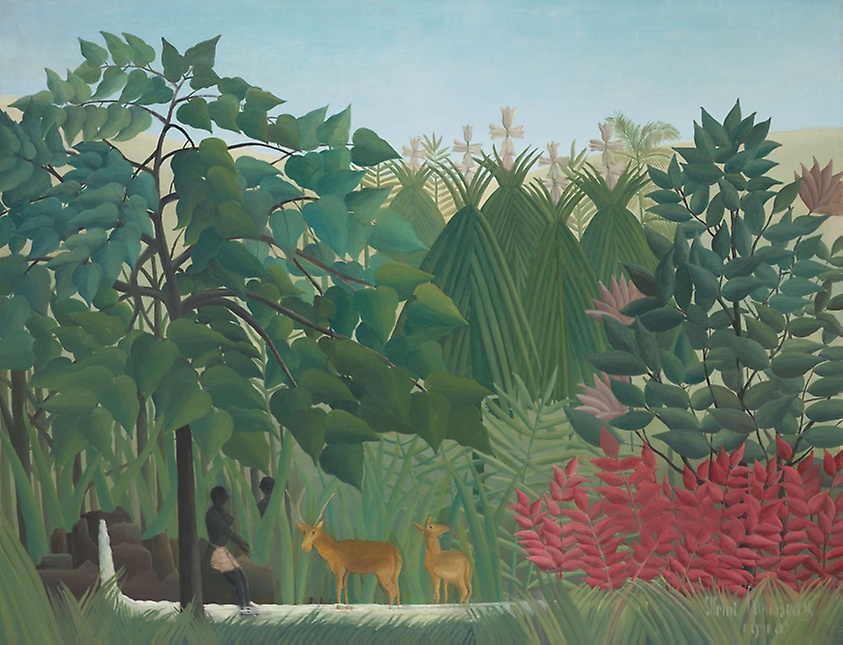
Featured Artwork: The Waterfall by Henri Rousseau 

Eons ago, during the Pleistocene Epoch, the jaguar left his home and traveled across the cold arid grassland: his resolve set. The floods were coming again. If he stayed, the land would either be covered with water or be broken into land pockets, from which there’d be no escape. The time was now. He had to go.

In him the jaguar carried echoes of history, tens of millions of years’ worth of heat spikes, ice ages, tectonic upheavals, and mega-explosions. Time swirled uniquely around him. He felt two trajectories at once—like a stone cast into the deep lake of time, sinking down to the bottom where all life may have begun, as well as the outward rippling cat’s paw upon its surface. History. Present. Future. All there, his for the grappling. Read More

Critical Insect Studies

by Tom Whalen

Featured art: Still Life with Poppy, Insects, and Reptiles by Otto Marseus van Schrieck

One more step and we are out of the circle and have entered the domain, equally delineated and autonomous, of a different species.
—Vladimir Nabokov, “Father’s Butterflies”

My wife departed on the day I began in earnest my Critical Insect Studies. Before this date, I had only jotted down a few thoughts and titles, cut and pasted a few class papers, nothing more, but I was sure, as much as I had ever been sure of anything, basking in my certainty like an oiled blonde in Cannes, that I had found, at age twenty-seven, the subject on whose wings my career would soar from campus to campus, lecture hall to lecture hall around the globe, sometimes Sam coming along, though increasingly, I imagined, taken up with his own concerns. Perhaps we would have had children by then, or new avatars, I didn’t know, or perhaps we would have drifted apart, he wanting nothing to do with me or my fame. Read More

Birds in Cemeteries

by George Kalogeris

It must be the shade that draws them. Or else the grass.
And it seems they always alight away from their flocks,

Alone. It’s so quiet here you can’t help but hear
Their talons clink as they hop from headstone to headstone.

Their sharp, inquisitive beaks cast quizzical glances.
The lawn is mown. The gate is always open.

The names engraved on the stones, and the uplifting words
Below the names, are lapidary as ever.

But almost never even a chirp from the birds,
Let alone a wild shriek, as they perch on a tomb.

And then they fly away, looking as if
They couldn’t remember why it was they came—

But were doing what our souls are supposed to do
On the day we die, if the birds could read the words.


Originally appeared in NOR 11

In the Second Month of Parched Land

by Daiva Markelis

Featured art: Two Camels by John Frederick Lewis

We came across the camels every time we picnicked that merciless autumn, huge herds grazing on sparse vegetation. Camel comes from jamal, the Arabic root word for beauty. From a distance they did look lovely, their curvy silhouettes mimicking the contours of the dunes. Up close, however, they seemed slightly ridiculous, like bad female impersonators, batting their Scarlet O’Hara lashes to keep the sand out of their eyes, their long necks sloping towards us, then coyly withdrawing. Read More

Monarch

by Kathleen Radigan

Featured Art: Abstraction on Concrete by Howard Dearstyne

In the garden I cup a hand
before you, strain my wrist,
willing you to perch.

A nearby woman grips her cane.
“Young lady. If you touch them,
they die.”

Born again from a gauze
coffin, you’re blackwinged,
fragile on a wax leaf. Read More

The Last Litter

by Melissa Cistaro

Featured art: A Farm in Brittany by Paul Gauguin

1975

My mom pours the warmed milk from the stove into oversize plastic bottles, then pops on the giant caramel-colored nipples.

“Do you want to feed one of the little ones down in the calf barn?” she asks.

I cannot contain my smile. My Keds are on in three seconds.

I follow her down the grassy path, holding the warm milk bottles against my chest and trying to copy the sway of her hips. She explains how the calf barn is the holding place for the young Holstein calves who are being weaned from their mothers’ milk.

“Roger likes to wean them young,” she tells me, “so that the mother cows can get back to their job of being milk cows.”

The calves cry and bleat like goats when they see us with the milk bottles. A black-and-white calf shoves his head through the wood slats of the stall and stares up at me with his big polished eyes. I put the rubbery nipple close to his mouth. He grabs and tugs fiercely at the bottle.

“Hold on tight,” my mom says. “That guy is a tough little sucker.”

My calf slurps as he drinks, then yanks at the nipple like he’s mad at it. Milk splatters across his soft black face. When he’s done with the milk he wants to keep chewing and sucking on the rubber tip, but my mom says that will put too much air in his stomach.

“Just stick two fingers in his mouth,” she tells me from across the aisle.

“What?” I say.

She walks over to my calf and sticks her middle and pointer finger right into his mouth. He latches on and starts making sucking sounds.

“There are no teeth in there, just gums,” she says.

I hesitate. I am not certain about this. She grabs my hand and pulls it toward the calf’s mouth. He latches onto my two fingers with such force that I am startled. His mouth is strong and smooth inside. I feel his tongue, like fine sandpaper polishing my fingers. I start to laugh. My mom laughs. I don’t want this to stop. I want to learn as much as I can about living on a farm in case I ever get to live on one. I take my other hand and rub the calf’s face, swirls of
thick black velvet, a perfect white diamond on his forehead.

My mom says she’s got a few chores to do back up at the house, and I ask if I can stay here in the calf barn for a while.

“I like it here,” I tell her.

“I’m glad,” she says. She smiles at me, pushes an unlit cigarette into her mouth and gathers up the empty milk bottles.

My fingers get a little sore from staying in the calf’s mouth so I pull them out. The calf seems okay because after a minute he buckles down on his wobbly legs and flops onto the straw floor. I decide to do a little exploring around the barn. There are dusty bird’s nests tucked all around the rafters and small birds like starlings that swoop down to gather bits of straw from the ground. I find a place to sit in the feed room where there are burlap sacks filled with
cracked corn and molasses-covered oats. I push my hands deep into the open sacks and pull the molasses oats close to my nose. It smells good enough to eat.

I take a walk to the far end of the barn aisle where the calf stalls are empty. There are two tall white buckets with lids on them, the plastic kind that painters use. They look out of place to me for some reason, like maybe they were set down there and forgotten. I pry the lid off the bucket closest to me. There is no particular smell.

I am not sure if what I am seeing is right or true. Kittens. Piled up to the brim. Clean white fur. Brown, black, tan, orange. Small paws with fleshy pads as soft as apricot skin. Wiry tails. Tiny pink noses. Whiskers, as fine as fishing line, almost transparent.

It is not a dream. I push the lid back on. I think there must be more than a dozen piled up in there. I pry open the other bucket only because I want it to be something different. But it’s not. One all black, one striped orange, one smoky gray, more colors underneath. Soft triangle ears, thin as potato chips. I want to stop staring but I can’t. A small calico kitten lies across the top of the heap. Its eyes are closed, but the shallow part of its belly moves—barely, up and down like it’s in a deep sleep. I want to touch it, but I am afraid. I don’t know what to do. I put the lid back on.

I walk back up the hill toward the farmhouse, my heart pounding underneath my yellow T-shirt, the tall wet grass soaking the bottoms of my jeans. When I open the screen door, I see my mom at the table with her New York Times crossword puzzle, her coffee and a cigarette. She’s smart with words. I’m not. I’ve got a throat full of gravel that usually keeps me from saying what I want to say.

But I know what my question is.

“Why are all those kittens in the white buckets?”

She keeps looking down at her crossword puzzle like she’s just about to figure something out. Her dark bangs hang like a frayed curtain across her forehead. For twenty seconds, I don’t even think she’s going to answer my question.

“Oh, that,” she says with a frown. “You weren’t supposed to see that.
Roger was supposed to dump them.”

I wait for her to say something more.

“I’m sorry you had to see that, darlin’. It’s the way of the farm here.”

She smashes the clump of soft ashes down with the filter of her cigarette. There is sparkly pink polish on her fingernails. I hate it when she’s so matter-of-fact.

“There were just too many kittens.”

“What do you mean too many?” I ask.

“Those were feral kittens, wild and inbred—just the ugly ones. Believe me. I can tell the inbred ones right away, their eyes are wide-set and slightly askew. Their heads are oversized.”

“But how did they die?”

My mom gets up from the table with her ceramic coffee cup, and goes into the kitchen. I can tell she doesn’t want to listen to my questions.

“Chloroform is what Roger said to use.”

She measures out a heaping spoonful of sugar into her cup.

“But power steering fluid works just as well. It’s very quick. They don’t suffer.”

I feel my throat tighten up like a fist. My legs are as wobbly and uncertain as the calves down in the barn.

“Mom, I saw one breathing on the top, a calico one, not an ugly one, but a long-haired calico.”

“There were no calicos,” she says, slamming the garbage can lid down. “And, you did not see any kittens breathing.”

“I did, Mom. I definitely saw that one on top.”

“None of those kittens were breathing, you understand?”

I am strangely afraid of her. She knows how much I love kittens. I try to stop the image of her hands pushing those kittens into the white buckets. I know there was a calico. I know that she killed them.

She heads out the screen door, says she’s got to grab a few fresh eggs and she’ll be right back.

I watch her outside the window, walking through the tall grass. I recall what I once overheard her say—that she thought about drugging my brothers and me when we were small because she didn’t want us to suffer. She had an emergency plan in case there was an awful natural disaster. She would give us all sleeping pills. We wouldn’t suffer. But I am almost ten now. I am too big to trick like that.

I wait at the window for her to come back. I wait because I want to feed the calves with her again. I wait because I want to swirl the sugar and cream into her coffee and breathe in her L’Air du Temps perfume. I don’t know when the next time I’ll see her will be. I scratch my fingernail along the thin white paint that covers the window sill. I remind myself that there are things I am not supposed to talk about or remember. I am not supposed to remember the day she drove away in her baby-blue Dodge Dart. Everyone tells me that I was too young to remember. But I remember everything. “Too many,” she said. I know this phrase. I heard her screaming it late one night before she left my brothers and me.

I reach into my jean pockets and I push the secrets in as far as they will go. Between my fingers I roll around a soft piece of gray lint. I don’t want anyone to know that my mom killed those kittens. I push my hands into my pockets even deeper. I make room for the kittens, because they are a new secret.


Originally appeared in NOR 7
Roost

by Janice N. Harrington

Featured Art: Crows in a Tree by Charles François Daubigny

Circling above bare limbs, like Dalí’s wild and articulate capes,
black wings undulate. Raucous hundreds settle and splat
their stench. A murder of crows, a give-a-fuck mob,
stirs the air above ash and oak and hackberry, milling
and loud with news: day heralds, unwelcomed Cassandras.
Dawn light pinched by a crow’s beak, pieces of light falling
everywhere, bright meat that the crow pecks, strips away.

The crows know my neighbor’s face. Knowledgeable birds,
they know the way I hurry each morning, the way my eyes try
to read their dark signs: articulate smoke, curtains
of a confession booth. Blessing? Pardon? Mercy?
The stories say that crows suffer scorched wings, that they
are cursed for stealing from the gods. But the stories, as always, err,
wind-running, wings wide, a-glide on a slide of air,
black bodies, bituminous-black, cosmos-black rising to soar.
There is no damnation in their dizzying speed, the break-wing
improvisations of their flight. God–blessed and black,
their sharp notes strike my skull like hailstones or chunks
of sky, dark bodies that lift my eyes and scorn gravity, a lesser law.

Read More

crows

New Ohio Review Issue 27 (Originally printed Spring 2020)
Newohioreview.org is archiving previous editions as they originally appeared. We are pairing the pieces with curated art work, as well as select audio recordings. In collaboration with our past contributors, we are happy to (re)-present this outstanding work.

Someone Threw Down a Wildflower Garden in an Empty Lot in Newark

By Theresa Burns

Featured Art by Robert Jacob Gordon

And now, instead of staring at the weeds
and broken bottles from the train platform,
we’re taking in a scene from a Monet.
Asters, cosmos, little yellow fists
of something. All random and confetti.
I’m half expecting a lady in a high-waist
dress and bonnet to appear on a diagonal
stroll through its splendor, pausing
with her parasol so we can selfie with her.
Maybe she’ll hop aboard the light rail
to the Amtrak station, get off in D.C.,
step back into the painting she escaped from.
Who was the genius who thought of this?
What meadow-in-a-can Samaritan
got sick of passing the four-acre eyesore
on the way to work? Shook pity into blossom.
To whom do I write my thank you?
Mayor, surveyor, county clerk, church lady.
Who marched down to city hall, begged
anyone who would listen?


Read More

I propose we worship the mud dauber

By Jessica Pierce

Featured Art: by Pieter Holsteyn

The female in particular seems worthy.
She carries mud in her jaws to make her nest
one mouthful at a time, setting up
in a crevice or a corner. One egg,
one chamber. One egg, one chamber.
It’s better to keep them apart, as larvae don’t
know the difference between food and
a brother or a sister. They aren’t wicked,
just young and hungry. She has pirate
wasps to battle—they want her young
to feed their own offspring—and she does this
alone, drinking flower nectar to keep
herself going. Let’s just try

and see what happens when we raise up
this winged thing who will hover by your feet
without attacking. Covered with dense golden
hair and sometimes described as singing while
she works, all she wants is bits of damp dirt.
She has a slender thorax and two thin
sets of wings to carry her and
her earth. She is exactly strong enough
for what she needs to do. She doesn’t burn
or proclaim or fill your head with visions
as she hunts crab spiders and orb
weavers and black widows. Yes, let’s ask

her to pray for us as she stings
a black widow, brings it to its knees,
and sets off to feed her children,
singing as she holds up the world.


Read More

Wants

By Chris Greenhalgh

I want a punchbag hung in my office and / people to hear the first thump straight
after they leave. / I want you to call me. I want the linctus with / the double action
that both soothes my throat and / brings back memories of a time when I was loved.
/ I want the road below me, the sun above me / and beside me, you. I want to wipe
the legend / “You Will Die” spelled backwards from the bathroom mirror / each
morning as I brush my teeth. I want you / to drive while I change gears. I want my
life story / voiced by William Shatner. I want a belle dame / with plenty of merci.
I want a view of the sea. / I want the future with you and me in it. / I want my
doctor not to have a personalized / number plate. I want my coffee hot, my mattress
/ hard and my maps beautiful rather than useful. / I want small hard bits of chocolate
snapped 
off. / From mind, I want world. From lips, I want the madness / of kissing.
I want to know where businesses / end and scams begin. I want to confuse salesmen
/ by offering more than the asking price. I want to / stand in an elevator shaft
of rainfall / and look up into the light. I want to know where / you were last night.
I want this confederacy / of selves dismantled and slowly made whole again.


Read More

The Tour

By Erica S. Arkin

It occurred to Dennis six hours into the road trip that he might have made a terrible mistake. His daughter Natalie sat on a fold-down seat in the back of his pickup’s not-so-extended cab, plugged into her Discman and propped against the small window behind the empty passenger seat. She was reading a magazine with a cover that said something about Bedroom Tricks to Blow . . . Dennis only caught a glance when she’d pulled it from her backpack at the last rest area. He was glad he couldn’t see the whole thing in the rearview mirror.

The trip had been her mother’s idea and pitched as a way for Natalie and Dennis to spend some time together. When Hannah called him at the garage a few weeks earlier, she used phrases like “father-daughter road trip” and “genuine bonding.” It might be nice for him to actually get to know his daughter. His ex-wife made a sport out of taking little digs whenever she could.

He balked at first. It was hard enough getting an afternoon off to go to a doctor’s appointment, never mind two whole days to chauffeur Natalie around colleges in Pennsylvania.

“When was the last time you traveled with your daughter?” Hannah had asked. The only trip that came to mind was back when Natalie was ten and Dennis took her to Block Island with his then-girlfriend, Rita. He opened his mouth to mention the trip, but realized it would likely hurt, rather than help, his case. On the last night of the vacation, after Natalie was asleep in the hotel, he and Rita had snuck down to the bar for a nightcap and came back to find an empty room. It was negligent to leave Natalie alone—a fact Dennis realized even before he frantically called the front desk and took to the halls yelling her name. When he finally found her a little over an hour later, she was trying to catch big nocturnal crabs on a spit of beach a quarter mile from the hotel. Flustered, he’d scolded Natalie to the point of tears for wandering off, something he would later realize was his second mistake of the night.

“A trip that hasn’t ended in disaster,” Hannah added. He hated how she could still read his mind.

Read More

Squids

By Liz Breazeale

Featured Art: by Nsey Benajah

The first ghost stepped out of the ocean in the summer, shimmering and hazy with captured light. We saw the age in her body, moving as though still burdened by a vast and lonely sea. Her wrinkles like the finest, most fragile spiderwebs we’d ever destroyed.

She came to rest on a foamy lip of shore. Her outline was set and static, her insides swirling, misty, full of translucent opals spun in an ancient hand. We realized later that every ghost was different in texture, but only when we couldn’t count them anymore, when they’d packed themselves across the sand.

Tourists surrounded her, our first ghost, asked where she came from and why. But she didn’t even try to answer. Just planted herself on that sharp beach in Maine and watched the shore birds scuttle and dive.

We spread the video of her like an invasive species, a creature introduced in the most fertile of ecosystems. Amongst ourselves, we debated whether she was a projection or performance art, a trick of the light or a stunt like Holograph Tupac. We asked one another, is she yours? Hoping one of us was the answer, some brilliant marketing ploy, some Don Draper–genius viral advertisement to be jealous of, but knowing under our skin this was something else, something new.

Read More

Watching For You

By Connie Zumpf

Featured Art: by Callie Gibson

You’ve seen it.
That slight shudder of shadow
on the fringe of your vision.
The thing you think you might have seen
while reading Proust at night.

It slips into a crack somewhere.
You search behind the chest of drawers
and underneath the bed. There’s nothing
but a fleeting after breath
of cinnamon and mint.

You think you’ve left the music on.
Humming wafts in from the kitchen
and floorboards creak in 2/4 time
like someone sliding a tango alone.

Following footfalls, muffled steps.
You turn, the sidewalk’s empty—except
for acorns and crackled leaves, strewn
as if awaiting a late-autumn bride.

Dining alone you scan the café,
certain that someone is staring,
but there’s only a waitress checking her watch,
and a man dipping madeleines into his tea.

Then one day, while on your way
to a rendezvous so many times
dismissed, ignored, re-slated—

you spot a figure, somehow familiar,
who waits on a bench by the fountain,
tossing sandwich scraps to the birds
and patiently watching
for you,

biding time as would a beloved
who knows your entire life,
on this day when you come to Death,
who rises to greet you,
smelling of cinnamon (or is it mint?),
arms open to your approach
despite your late arrival.


Read More

Run in such a way that you will obtain it

By Justin Danzy

like Damon did, run clear across the Gulf until the second transplant slows
you, like Dave until the glaucoma sat him down, Janice
ran to the islands to evade it but a hurricane got her, Kim never made it south
of Baltimore, and Anthony, he tried to trick it, changed his name
so it couldn’t find him though it still did, Cordia Jean turned to the bottle
instead of facing it, Beulah stayed put and dared it to come
get her, cost Fred his legs if nothing else, Howard’s eyes went and
it came quick after that, same with Virginia once her mind tapped out,
Mac tried to sue it away but that got him nowhere, P learned to sing to
try to seduce it, Cherry, she just cursed it and called it a day,
Jacques wrote his own Bible and claimed authority over it, Luck served it peach
cobbler as a peace offering, better than Brian, who turned and ran back straight
into it, did it twice actually, he looked it dead in its eye
and charged until running felt like fleeing no longer


Read More

Interrogation Scene

By Allison Elliott

Featured Art: by Edward Penfield

That cat on the corner, drowsy in the arms
of a sleepy-eyed woman. That cat knows something.

You’ve indulged several seasons of vague forecasts,
now you’re playing bad cop with the weather.

A traffic light changes before you’ve finished crossing,
What can that mean? What future portend?

You pass a two-seater buggy with only one baby.
Make a note of it. It might come up later.

The drunk who yells all night under your window
was gone three days, now he’s back.

The Spanish lullaby on the radio,
the eyelash in your lemon tea.

Star witnesses with nothing to tell you.
And they were your whole case.


Read More

What I Meant to Say

By Emily Alexander

friends I am not in love these days I wait
for the bus when it’s cool enough
I bake little treats in muffin tins for fun
I say sea urchin        squash blossom

vacuous oh no I’m afraid
I don’t know

what this means and many others the usual
fears plus some     uniquely mine balloons popping
in a small room needing immediately

a tooth pulled in a city I’m only visiting strange
coffee shops parking lots
I’m not sure
the rules here     maybe these are
usual after all I don’t mean what I say

always what’s the difference these days
before going anywhere I out loud
say     phone wallet keys

yesterday I said it and still
forgot all I needed then from the freeway

the ocean right there among everything oh

friends I’m just undone you know
what I mean       truth is these days I find myself
occasionally full

of rage other times beer sitting with Halle
on her bedroom floor  what’s new

oh man did you hear
about whoever I’m hungry are you
a little flimsy
drunk now the city rumors its width around us

and sometimes over it we just say
very quietly yeah


Read More

How It Ought to Be

By David J. Bauman

Featured Art: by Édouard Manet

When we stepped up into the bus that shuttled us
from car to hospital, she was talking to the man in
the overcoat and fedora. But at the next stop,
he stood up, tipped his hat and clambered down the steps.

Her smile made me think of plums, though barely a brush
of rouge on her cheeks. She wore a heavy, old-woman’s wrap-
around, like a blanket with buttons, tugged about her like a fur
stole. The bus lurched forward, and she turned toward the lady

two seats up. “May I ask where you got that gorgeous shawl?”
“Oh, please don’t,” the other laughed. “It’s very old. They
don’t make them anymore.” The fur-plum lady in her blanket-
coat began to recount how her gran used to wrap her

in a shawl like that, but bigger, “Half the size of a bed sheet!
My grandfather walked behind to help unwrap me when
I got to school.” I whispered in your ear, causing you to giggle.
“Is he misbehaving?” she asked you, like a scolding but

indulgent aunt. She asked us what we’d had for breakfast.
What time was our appointment? Hers were always early.
What were our plans for the holiday? Easter—still two weeks
away. “Well,” she said as she stood up, “if you’re still hungry,

come to my place. I always have plenty left over. “She drew
her massive coat around her and took the steps one at a time.
“Poor soul,” the driver said, and for a moment I wondered,
whose? “She says that kinda stuff to everyone.” He pulled

the lever that closed the door. “She lives alone.” This time, you
whisper to me, and two weeks later, we are standing
on her lawn. You carry the pies. I have the wine. The woman
in the floral shawl holds a casserole, the shuttle bus parked

at the curb. We thought we’d surprise her, but the fur-plum
lady beams like she’s expecting us as she throws the door open,
takes our jackets and hangs them by the others, rows of hats
and wraps, a fedora and an overcoat. She shows us to our seats

at a table impossibly long for her tiny home. Others in white
lab coats are unfolding extra chairs. A doctor with her stethoscope
is lighting the candles. A young man from the hospital café
helps the CEO fill glasses with sparkling water. Other
guests we recognize from shuttle rides and waiting rooms.

The table is draped—I see it now—with that grand, old shawl
of yore, adorned with salads, collard greens, and plums, of course,
scalloped potatoes, and beans of every hue. You’re smiling
like you used to as the oncologists enter with steaming platters,
boats of gravy. And the doorbell just keeps ringing.


Read More

Stolen Hard Drive

By John Moessner

Featured Art from rawpixel.com

It contained home movies where he wore
goggle-sized glasses, a toweled shoulder holding
a small redhead at a birthday party, three hours

of ripped paper like static on a radio, the sun flaring
off the ripples of the neighborhood pool. What do
those thieves think of your soccer games,

the Go girl! and the rain that drove him cursing to the car?
What about last Christmas? He was too tired, so you held the
camera instead and closed in on his drooped head

nodding while everyone opened gifts. Would they tear up
thinking of their fathers, would it convince them to call more?
Ripped from your life, just a plastic box in a bag of stuff.

Maybe before wiping it clean, they will browse your home
movies and say, What a good father, what a good life.


Read More

No, Nothing

By Daryl Jones

Featured Art by Jozef Israëls

He’s in one of his funks again,
my stepmother’s warned me,
hair shaggy and mussed, baggy clothes afloat
on his skinny frame.

My father makes hardly a dent
in the overstuffed sofa he’s sitting on.

No, he’s not hungry.
No, nothing in the paper interests him.
No, there’s nothing I can do

but stare blankly into the distance where he’s staring

as I did sixty years ago when we hunched
shivering and silent on five-gallon buckets
flipped upside down on the ice of Cedar Lake,
waiting for a tiny red plastic flag
to snap to attention.

Now and then, we would stand up stiffly,
huffing and hugging ourselves, stamping our feet,
then skim the slurry from the augured holes
and sit down again, nothing to do but wait,
testing our wills against the deadening cold

and the wily old lunker pike we pictured

in the black, still depths below, impervious
to the booted thunder rumbling overhead,
hunkered down, hovering in its singular darkness,
grim, stubborn, defiant.


Read More

Learning

By Kelly Michels

Featured Art from rawpixel.com

A new cure is invented every day,
along with a new disease
because every miracle needs a disaster
to survive, and there is no shortage
of disaster, the sparrows have learned
to eat anything under the slash-and-burn
of the sun, and the children have learned
how to weave plastic buttercups into bracelets
between the alphabet and spoonfuls of NyQuil
their mothers give them before bed
where they dream of the swish of scar tissue
behind their teacher’s glass eye.

We tell them: There is horror. There is pain.
There are people wedged between bullets
and mud floors, between cracked river ice
and broken elevator shafts. But not here.
Never here.

Now, we sit still as an Eames chair, and the children
will never know the bridge of a song the rain spells
out in the sand on an October morning.
It is safer behind closed doors and windows, safer
where the wheat and ragweed and daisies
can kill no one.

We tell them: We have seen the grim amoeba of lake water,
the blizzard of ocean waves lashing against the curved spine
of coast, the blue-eyed grass raising itself like a rash toward
the swollen ache of sun, the sting of salt, grazing the long arm
of a bluff. We have lived it. We know better now.
We have knelt at the rim of a cliff and looked down.
We have fallen, felt the pulse of the sea pull at our hair
and it was not kind.

Child, put your ear to the conch shell and listen.
This is enough.


Read More

The Pasture Ponds

By John Bargowski

Featured Art by Kieran Osborn

You know the spot, that sharp left
off the county road to Hope

that passes the roadside shrine her
classmates built to our youngest,

the blank stones that mark the old
Presbyterian graveyard,

then on past the last rusted knob
of safety rail

where a graveled lane cuts through
swampy woods.

The pair of wood drake decoys
Hubert anchored to the bottom

riding out every weather on the big pond,
the splotch of white on their sides

that catches in our high beams
as we round the curve.

The twiggy wrack of alder and sumac
clipping the sideviews

as we pass through streaks of moonlight
burnishing the shields

on the skeletoned ruins of our friend’s
red Massey Ferg.

A place we’ve gone to many times
trying to nudge the season ahead,

we crack open the side window, crank
the heater up a couple notches,

sit with the lights clicked shut, side
by side in the front seat,

strain for the first callers crawled free
from March mud, the hyla crucifer,

no bigger than a fingertip, noted in our
dog-eared Peterson’s for shrill voices

that rise then fall, and those dark little crosses
they carry on their backs.


Read More

Tackle

By John Bargowski

Featured Art: by Teerasak Anantanon

Weeks after the cops cut Bill down
and the squad sheeted his body,

bore it out to the street, his mother
leaned over her sill and called us

upstairs to share the flies he’d wrapped
and knotted, labeled

with names we could never
have dreamed up, and arranged

in small wooden boxes next to coils
of tapered leader and packs

of hooks barbed along their shanks,
the button-down shirts

and bank teller suits in his closet
screeched and swayed

on their hangers when she elbowed
her way in for the split bamboo pole

he’d hand-rubbed to a gloss
and mounted with a reel cranked

full of line, nothing we could ever use
when we biked down

to the Hudson piers and bait-fished
for river eels and tommycod,

but we took it all, every piece
of tackle we could carry down

to the stoop to divvy up among us—
his canvas vest, his shoulder bag,

spools of waxed line, the bamboo poles,
his hip waders and creel,

and those boxes of flies—
the Zebra Midge and Gray Ghost,

his Black Woolly Bugger,
Pale Morning Dun.


Read More

Knife and Salt

By Justin Hunt

Featured Art: by Markus Spiske

At sundown, we sit at our garden’s edge,
speak of thinkers and their theories—

what’s real, if something follows
this life, the ways of knowing

the little we know. An owl swoops
the creek below, swift as death. I shift

in my lawn chair, pick at my knee—
an old wound I won’t let heal.

Do you wonder, I ask, if Descartes
ever said, I feel pain, therefore I am?

You sigh, run your eyes to a remnant
of light in the oak above—as if,

in your drift, you could re-enter the time
of our son, inhale his dusky scent.

I honor your silence. But what I feel,
what I know, what I want to say is,

we have no choice but to watch
September settle on our garden.

And look! All these tomatoes
that cling to withered vines—blushes

of green and carmine, waxen wines
and yellows, the swollen heirlooms.

When the next one falls, my love,
I’ll pick it up, fetch us a knife and salt.


Read More

Dear Sister of My Childhood

By Stephanie Rogers

             Remember Mom and how she sent us away
to play near the highway ditch, us throwing gravel,
   cracking a windshield, an accident. The wronged

                        woman dragged us by the arms, back
   to Mom, who was talking on the phone with Dad,
                                            their separation not quite

        official, the whistle of the kettle in the kitchen.
Listen, the woman yelled at Mom
           who paid attention then. Your kids banged up

                       my ride with a rock, and Mom twisted
the phone cord around her wrist, smiled a sorry,
            sent us to our bedroom where we blanketed

                        the stuffed animals, planned a fantasy
ship trip, and swung them over
              the green carpet ocean till a rabbit flew off

           and drowned, the kittens and bears unaware
of their fallen friend. What the hell?
                          We were fun kids, placing our heads

                on Dad’s chest, listening for his heartbeat,
our faces like mother
                              birds covering the nest. We licked

         our plates clean when told, laughed at the old
dog dragging its ass across the rug, salted up
                              those outdoor slugs that vanished

                          into mush. Dear sister, visit me now.
New York City stays
                           windy all year, the crowds shouting

                    their snare-drum quips at one another,
the summer sweaty as beach shells, Dad dead
  from a rip in the intestine, Mom’s boyfriend gone

on the vodka binge, and all my life spent rounding
corners like a whirlwind, my smoke
                                settling now. But here I am, still

                broke and meddling in your Nashville life,
your three girls sweet as key lime pie
                    smashed in the face, their tresses: long

         and swaying down their backs the way honey
slips softly from the spoon. Let’s crescendo
              under the moon together with our banter,

                                        tempers under the weather
for once, us in love with our stupid boyfriends,
                                                               giddy as a cow

Read More

Chip’s Laundromat

By Stephanie Rogers

We walk in on Thanksgiving, trash bags filled with clothes
                   slung over our shoulders. Heather insists I break
a twenty at McDonald’s. I buy a dollar cheeseburger, eat it
             as the cashier counts out the nineteen dollars’ worth

of quarters. No one else is there. Neither of us
bothers to separate
                                                     the whites from colors or obey
the posted sign that says we shouldn’t

                                            sit on top of the washers. So, we lie
back, discuss the different shapes
the ceiling stains resemble: a butterfly, atomic
                                                                 bomb explosion, ruffled

curtain, deep red
crayon melting down the wall. We don’t want to go home.
Three streets over, our parents wash the dishes, hit
their joint again, and pack the leftovers

                                        away, while their two daughters hope
the dryers won’t really dry the clothes
                 in fifty minutes. We drag them out. Heather insists
we fold the underwear.


Read More

American Horror

By Jessica Alexander

You should have seen me then, under those yellow stadium bulbs, my lips so
full they’d burst in your fingers. I had this top on: a floral print and ruffles, red,
to match my lips, and my tight Levi jeans. And my sun-kissed cheekbones and
the sun-kissed bridge of my nose. And my smile was just like America—like
a cornfield stunned by its own golden beauty—my gorgeous delight! I went
braless, wore no makeup. It rained and the grass was slick. The way it goes is
that something happens next. It happens by a lake or in a parked car. You take
one look and know I’ll never survive it. My teeth were like a horse’s. A feeling
they mistake for a girl. A feeling they write songs for. The kind of songs that
played in pickup trucks and there’s me standing in the bed of one, hurling my
top into traffic. Could be a hitchhiker. Some guys carry knives. What is it about
blonde girls and America? Blonde girls and wherever? I was so all–American.
So cute I could have murdered my own goddamn self. What is it about a blonde
girl that breaks the world’s heart? I miss those days. Not Bobby or Leo or
James. Just miss that particular ache, which was not unlike a bulge in shorts,
that summer rage that could break my chest apart and hurl my beating heart
into the bleachers. Like them I could not keep myself. There is the stadium
again. There is Bobby, cheering. Isn’t that how it happens in America? Topless
in Texas. My little red shorts. In the back of a pickup, again. The window
breaks. In Tennessee? In Indiana? The sound of a power drill, a chainsaw. The
sound of summer. The bleachers, those bright white lights waiting to throw
my shadow to the ground, and there I am, arriving, and it’s always like what
happens to me next has everything to do with every one of us.


Read More

The Worst Thing Ever Done to Me

By Rodney Jones

I was four,
playing on the front porch.

Early spring.
The mimosa was in bloom.
Eisenhower was in the White House.

Usually when I played, I became a car,
the noises of the engine,
the clutch, and the tires
scorching around corners.

Or my body was a car—my mind drove.

Twilight, a little before supper.
My father, just home from work,
was talking with a neighbor—
a bachelor cousin,
a farmer and minister.

A beautiful little knot
nearly everyone treated like a saint
for the fervor of his prayers
and his epic sermons
on the black children of Cain.

Do not suppose I am not grateful
the worst thing ever done to me
did not involve boiling water, 
electricity, bullwhip, pliers,
starvation, pruning shears, ax,
chain, blackmail, blowjob, or rope.

I was not doped or blown up. I
was not snuffed in a hole.

For the crime of interrupting
a conversation about guano
by mimicking the noise
of an old car backfiring,
I was lifted by the ears
and swung like a pig.

Read More

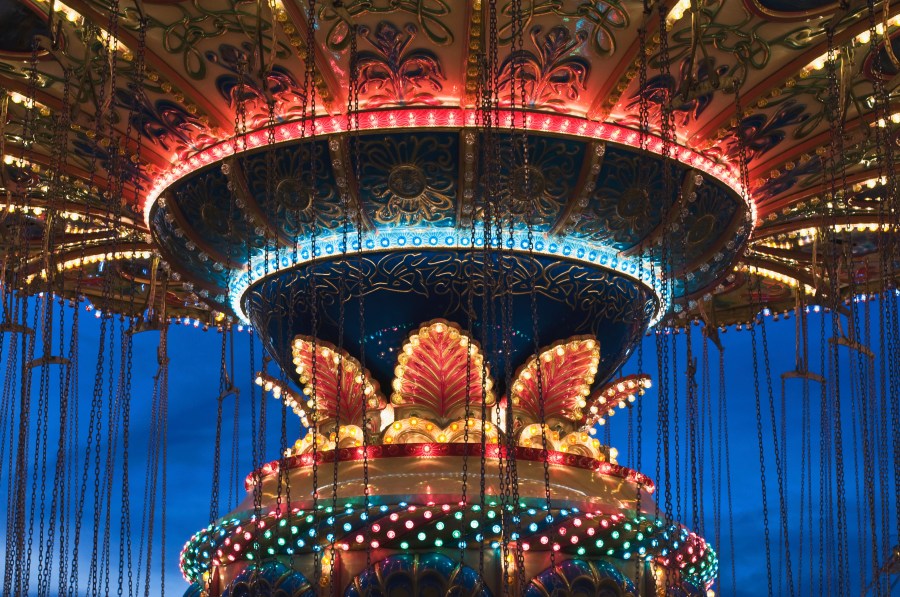
Tilt-A-Whirl

By Nancy Miller Gomez

Featured Art: by Scott Webb

It was a hot day in Paola, Kansas.
             The rides were banging around empty

as we moved through the carnival music and catcalls.
             At the Tilt-A-Whirl we were the only ones.

My big sister chose our carriage carefully,
             walking a full circle until she stopped.

The ride operator didn’t take his eyes off her
             long dark hair and amber eyes, ringed

like the golden interior of a newly felled pine.
             She didn’t seem to notice him lingering

as he checked the lap bar and my sister asked
             in her sweetest, most innocent—or maybe

not-so-innocent—voice, Can we have a long ride please,
             mister? When he sat back down

at the joystick, he made a show
             of lighting his smoke and the cage

of his face settled into a smile
             I would one day learn to recognize.

Here was a man who knew
             his life would never get better,

and those dizzying red teacups began to spin
             my sister and me into woozy amusement.

Read More

Guts

By Jamie Danielle Logan

She stirs with the movement of the sun. Dawn stretches over the horizon, and she searches for motion amid the brush. Her world appears in shades of gray, with bursts of blue and violet. She cannot see the orange of my vest or the green-brown pattern on my coat, but she can smell my breath in the air. She startles, bounding once, twice, before the breeze decides her fate. It shifts and she pauses next to the lone pine tree, the one that is seventy yards from my small wooden stand. She has just lost the spots of fawnhood. I pull the trigger.

The hunt is humane, my uncle tells me. The population of white-tailed deer in Mississippi is estimated at 1.75 million. It is the highest density in the nation, and only Texas has more deer. In some areas, the herd is still above capacity. A study done in Wisconsin revealed that starvation, non-human predators, and vehicle collision are the top three causes of death for deer, afterhuman hunting. Of these three, none are painless. A bullet to the heart is.

I was sixteen when my uncle first built a deer stand on family land. Deer had begun to appear on our property with increasing frequency. An outdoorsman, he eagerly anticipated teaching his three children this new skill. He convinced my father, his younger brother, to join him. It was decided. My cousins, my brother, and I would learn to hunt. My uncle taught us how to shoot in the summer when the earth was green. We aimed for slabs of cardboard, our mantra ringing louder than the echo of the gun. If it’s brown, it’s down, we said. We did not think of race when we said it, just of victory.

Read More

Bayou Newlyweds

By Rome Hernández Morgan

Featured Art: by David Hockney

Evenings, we hold hands
and take long walks
through the neighborhood

as the sweet and sickly smells
of the chemical toilet plant
crystallize into greenish glowing stars.

We live a stone’s throw
from the nicest part of town
and we do—throw stones

that is—skipping them
over flooded ditches
on the way to the laundromat.

Our little home is dark,
iron bars cross the windows,
and no matter how I sweep

or mop, swamp mud
holds tight to the linoleum.
When we argue

I plan fire escape routes.
I imagine kicking out
the A/C unit, climbing down

the cinderblock wall.
Sometimes we visit your mother
who serves us stuffed flounder

with remoulade sauce.
Fish emerge from the freezer,
their pale faces

surprised to see the uncovered
chicken breast frozen
to the shelf and ever shall be

world without end. That unbearable
pink heat of the kitchen
—we escape to the patio,

watch cockroaches pilot haphazardly
from tree to tree. Your mother
drinks in cigarette smoke

and white wine and wants to know
about our sex life. I wince
at the salt-sharpened fish, the ashen fins.

Read More

Fireworks: Albuquerque

By Kate Fetherston

Featured Art from rawpixel.com

Summer evenings on our street, the dads nursed
warm cans of Hamm’s, exchanging a syllable now

and then, casually supervising us kids setting off cherry
bombs or Stinky Snakes, while the moms appeared in lit

doorways as they swiped bugs with a wet
dishtowel, a baby slung on a shoulder, and yelled or

begged for some one of us to stop
hitting our brothers or to let our sisters play, then disappeared

behind kitchen curtains into a foreign
country. We kids thought we knew

everything worth knowing: that the dads spent
midnights banging things around in the garage, or

leaning against a Chevy half-ton on blocks in the front
yard, smoking and killing time until the moms put us to bed

or until moonrise enticed them to laugh and curl
into the dads’ arms long after we were supposed

to be asleep. Those warm lingering dusks the dads lounged
on sidewalks like lions staking out their savannah, eyes

on us but not on us. We ran into the street trailing
sparklers, whooshing our arms like Ferris wheels

in the same motion our dads’ fists
made circles that crushed hissing

empties. When Mr. H let slip between
swigs, that Mrs. H was so clumsy she

broke her arm falling through the living room
window, the other dads, suddenly quiet, squinted

at stars popping out and spat into the gutter. Conjured
from nowhere and all business, the moms, with one

swift stroke of Bisquick-dusted arms, whisked
us eavesdroppers back into the street where

we twirled into the coming night, our sparklers shooting
fire we thought would save us. We flew

and flew and flopped on the still
warm asphalt, until a dust devil of moths beat

against porchlights flickering
on, one by one. Those fluttering

deaths meant nothing to us.


Read More

Lap Dance with No Ending

By Kathleen Balma

There’s a bouncer in this poem, watching
you read it. His name is Vic. Vic won’t make
eye contact, won’t bug you unless I signal
distress. I’ve never had to do that in poetry
yet. He was in the army. Discreet as a landmine.
As long as you keep still and do nothing
while I work, he won’t interrupt this lit
experience. Vic may or may not have killed.
He may or may not use meth. He does work out.
He does know my routine. He’s seen me do it
dozens of nights. He knows all the words
to the money songs. His peripheral vision
is muscular. It sees every crook and swerve
of me, though he and I don’t speak and I
have never touched him. It’s crucial that you
fear him while my naked’s in your face.
Only sometimes you need more. The dog
tags looped through my shoe strap, those
aren’t Vic’s. I can defuse a bomb with my teeth.


Read More

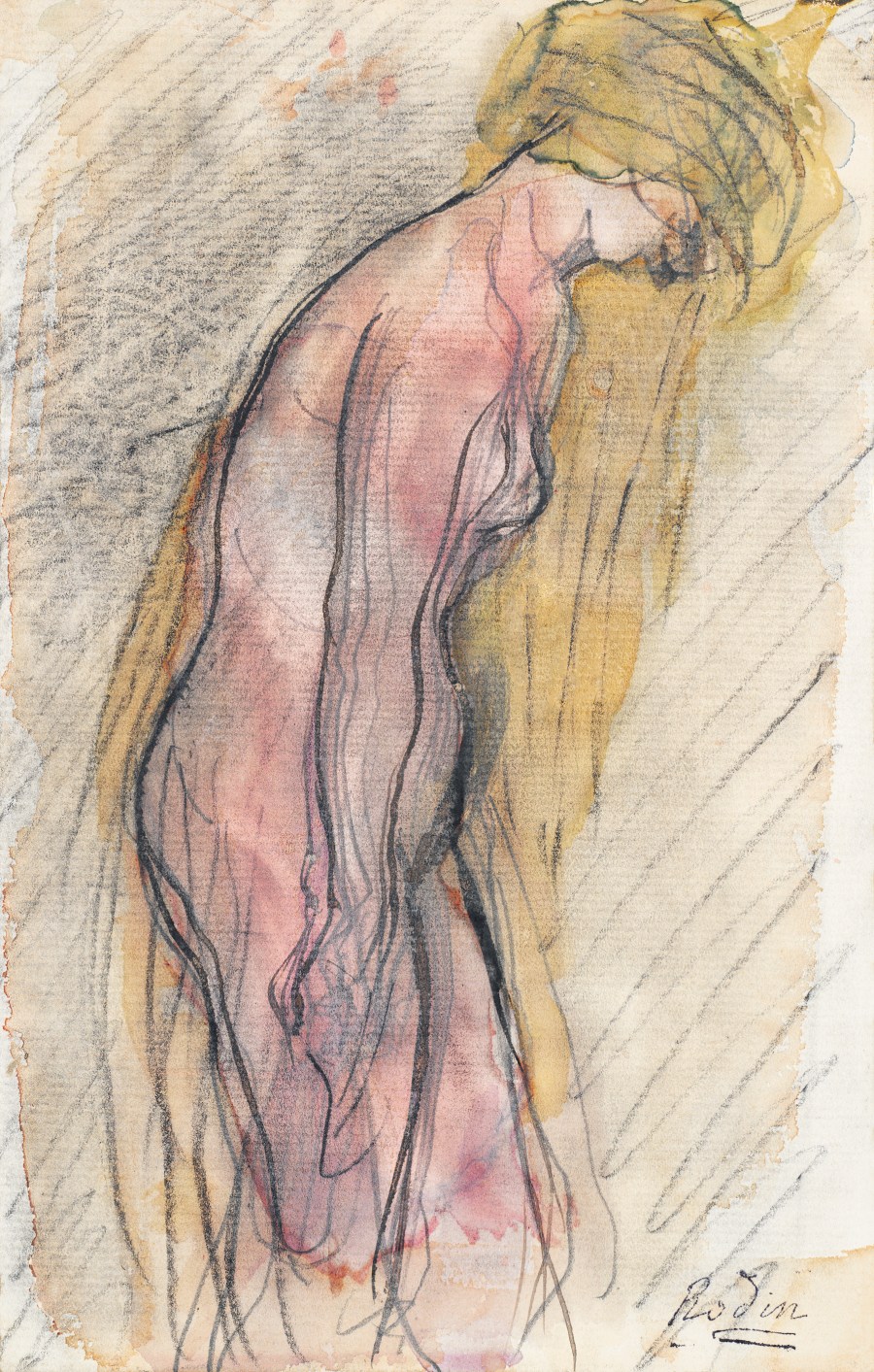
Photo of Betty at Mass Ave and Third

By Mark Kraushaar

Featured Art: by Auguste Rodin

We were happy, it’s true.
She had this zippy, kind of dithery inner gladness
and made a joke out of posing, hip-slung,
hands in the air, she had that pink top on.
Years later by the window near the stove
I watched her leaving in her blue Ford.
I made a drink and turned the TV down.

I opened the fridge and let it shut
then lay on the couch feet up
and watched our maple sway,
confiding, conspiratorial.
It was autumn.

It was early and as a taxi passed
I could hear the neighbor’s children
on their way to school.
I could see them shouting and shoving,
someone running ahead and I thought how easy
their lives must be, what a heaven of unconstraint.

It’s hard to know how to stand,
hard to know when to smile or when to be serious.
She had that zippy, kind of dithery inner gladness
and made a joke out of posing.
I’m different now.
She lives out east I think.
She had that pink top on.


Read More

When the Doctor Calls After the Final Round of IVF

By Josephine Yu

It’s a good thing he caught you on the threshold
of Publix, so you can cross into
that tiled acreage of plenty.

When you’re pushing a cart with a temperamental
wheel, you won’t cry. When you’re putting
chicken salad with tarragon and almonds

into the cart, you won’t weep, and choosing
a tray of ground chuck, plump under Saran Wrap,
you won’t howl.

Stacking cups of fruit-on-the-bottom yogurt
into the cart, you wouldn’t dream
of collapsing on the tiles in a spectacular

Old Testament hair-pulling fit—not there
before the stoicism of buttermilk,
the solemn dignity of Greek yogurt.

As you reach into the frozen food case, hand above
a bag of mixed vegetables, an old voice
appears in your head, as clear

as the piped-in Billy Joel, that familiar voice
insisting calmly, I told you
you were worthless, didn’t I?

You and your moldy rat turd eggs that will never
make a living thing
, and you wait, numb
in the artificial cold, and let that voice say

the truth it has to say with its smug authority,
and then lay the bag of peas, carrots, and lima beans
on the metal seat where the infant would sit.


Read More

When a Friend Writes of Her Pregnancy

By Josephine Yu

Heft up the door of the storage unit
where you sequestered the baby
things after the second miscarriage.
Board books, plush animals,
clothes sorted in file boxes
like evidence in a cold case. Kneel there

on the concrete floor. Choose a gift
to send her—act of penance
for the low sob that groaned
from your chest like the cry
of some prehistoric flightless bird.
Penance for the bad math that clacks
its abacus beads: one infant plus
one infant equals zero infants.

Fold footie pajamas in tissue,
as if relayering an onion. Scrape
curling ribbon with a scissor blade
until grief sloughs off
like charred skin debrided. This,

this is your feat of strength,
a woman lifting a car
off a toddler.

That terrified. That furious.


Read More

Layover

By Caitlin Cowan

Featured Art: by Serzill Hasan

There was a mechanical bull and a waitress
who flirted with everyone. There was a rainbow
of cocktails served lukewarm in pint glasses,
two fingers of dread. We’d missed a flight
in bad weather but had been offered another.
There was only one seat. He wanted me
to get on, but I said no—wouldn’t leave him.

Interred at a dark sports bar, we ended
the night eating wings cruelly torn
from an Atlanta–area buffalo. He watched
five games at once—linebackers creaming each other
in snow—and nothing was enough. Outside
I dialed a friend, asked her Is it weird he wanted me
to leave without him?
At the airport hotel

he laid his head on the sticky desk
in front of the mirror, defeated.
He was beside himself—
one version quite literally slumping
next to the other, and only one of them still

my husband. My eyes hurt from the obvious
overhead lighting. I asked him if he was okay
until I felt insane. We never know
how long we’ll have to rest,
how long we’ll nap in the terminal
of not good enough before we run,
out of breath, to board something better—

I wouldn’t recognize myself
for years, had so far to go until
I could become a woman I’d want to know.

That night, there were gas station 40s and Cheetos.
There may have been pay-per-view porn.
Back home in Texas, Jolene may have been waiting
for his return: I couldn’t hurry my knowing.
It was Christmas. When I opened
his gift, he whispered next year
and better. But there was no next year,
no better.


Read More

CVS

By Erin Redfern

Featured Art: by Jordan M. Lomibao

The drugstore on Hamilton and Bascom used to be a Long’s, then a Rite Aid.
Now it’s a CVS. That’s where sadness stays, nestled in packs of Ticonderogas,

hiding behind Jim Beam bottles at closing. While registers spin LED dreams,
sadness settles between Pampers and Depends. Not at home,

but still it’s got everything it needs––sandals, snacks, sewing kits.
Curled into itself, sadness inches forward on the same tear-track it emits,

snags on frayed carpet in the photo album aisle, which is always empty.
Sadness adheres to envelope flaps, tastes of foil torn open with teeth. It naps

amid our unanticipated needs: Ace bandages, B vitamins, vaginal cream.
It permeates the circulated air––the air I breathe in every other CVS.

The one back East where I bought lip gloss that smelled like apricots.
The one in Chicago you found when I got sick.

Even the future one, where you’re not on the mend
and need strange new prescriptions from the pharmacy bins. Dad.

Your body has begun its reluctant fade: you’re on your third left knee,
second right lens, first dental bridge. In the San Jose CVS

I’m not buying anything yet; I’m in the greeting card aisle, reading condolences,
passed by smocked employees with their carts for restocking.

They’ll stop what they’re doing to help someone find cat food or aspirin,
nylons or sunblock or a drying rack. They’re bone-tired and kind. They don’t let on

how these dumb rhymes make me cry, how I’m standing here wiping my nose
with my sleeve. Opening, reading, putting back. Practicing.


Read More

The Wild Barnacle

By Billy Collins

Featured Art: by Karolina Grabowska

“Do not speak, wild barnacle, passing over this mountain.”
                                                                     — Patrick Pearse

In a lullaby by the Irish poet Patrick Pearse,
a woman of the mountain begins
singing her baby to sleep
by asking Mary to kiss her baby’s mouth
and Christ to touch its cheek,
then she gets busy quieting the world around her.

All the gray mice must be still
as well as the moths fluttering
at the cottage window lit by the child’s golden head.

Then, amazing to me—
one summer night when I first read the poem—
she orders a wild barnacle, of all things,
not to speak as it passes over a mountain.

To me, a barnacle came with a shell,
lived underwater, and stayed put
after silently affixing itself to a rock,
but here in the hands of a poet,
the small creature was miraculously
endowed with the powers of speech and flight.

I could see it now on a mountain top,
its black shell shiny with salt water,
no more than two inches tall,
but dancing and riotous with joy and rage,
shouting the anthem of the barnacle,
loud enough to wake up
every sleeping baby in Connemara and beyond.

But of course, it is the barnacle goose
Pearse had in mind, I later found out,
common in the west of Ireland
and quite capable of flight with a honk
that could possibly wake up a baby.

For a while there, I had my own wild barnacle,
but the barnacle goose is fact,
and so is the fact that Patrick Pearse,
known as the schoolmaster,
was the one who proclaimed the independence of Ireland
from the steps of the General Post Office

and for his troubles was stood up
with the fourteen other insurrectionists—
save Connolly who was seated
due to a recently shattered ankle—

yes, was stood up against the fact of a wall,
in a courtyard of Kilmainham Gaol, Dublin,
and executed by a British firing squad
in his final April in the terrible, beautiful year of 1916.


Read More

When They Were Handing Out Superpowers

By Robert Wood Lynn

Somebody got Super Speed and somebody
got Can Talk To Fish. Somebody else
got Invincibility and Flying both
at the same time which doesn’t seem fair

especially since somebody else got
Motivated By Dead Parents.
But most people just got some combination
of Can Curl Tongue and Double-Jointed.

I didn’t get any of those.
I’m little help in an emergency
even just the kind of hot embarrassment
where people ask you for a party trick.

I did get Impervious To Poison Ivy.
I am mostly happy about it.
I keep the little card they gave me,
the one with nicely embossed letters,

in my wallet and I peek at it
more often than is polite to.
It has come in handy enough times.
Here’s your ball, dear strangers.

It rolled under the fence, worried a path
through the rest of us all the way
into the angriest vines. But here you go.
You’re welcome, citizens, I say as I don’t fly away.


Read More

Final Visitation

By Dan Albergotti

Featured Art: by Paul Gauguin

After talking with him for thirty minutes,
as he lay cocooned in a thin wool blanket,
I told my father I had to head back to Conway.

He turned his ashen head a bit and said, Conway . . .
that’s where my son lives. I met my sister’s eyes
before fixing his in mine to say, Father, I am your son.

His eyes widened in that way that makes
us say, You look like you’ve seen a ghost,
or as if he’d found himself the quarry of a hunt.

I touched his hand before I left to show him
I was real. I think I could have walked through walls
to get to my car, so grateful was I to be that ghost.


Read More

God Is Going to Be Late to the Party

By R. Bratten Weiss

Featured Art: by Taylor Kiser

God is going to be late to the party,
was the message we all got. At first
we were disappointed, then angry:
who does he think he is?

Then someone got the idea of popping
the special bubbly we’d saved for him.
We only live once, but God is living now
and forever, which means his champagne
will never go flat, and will always be
waiting for him. And which also makes
it especially rude for him to show up late.

God’s champagne goes down like you’re
drinking pure reason. Like you’re having
sex in Paris in the afternoon, while outside
bombs are going off, it’s that kind of movie
now. God’s champagne is a memento mori,
which means we might as well be swimming
up into each other’s bones like radiation.

Then we’re all dancing, throwing
confetti. Like the party in The Shining,
the party that never ends. What’s so
terrifying about that?

For a hundred years we go on dancing,
drinking the champagne, throwing confetti.
God is stuck in traffic or a snowdrift,
but he’ll be here soon enough, and we’ll
need to tidy up, smooth our hair, put our
best faces and our figleaves on. We’ll need
to try to explain.


Read More

New Year’s Resolution

By R. Bratten Weiss

Featured Art from rawpixel.com

To live decently is to tread lightly, but
here it is a new year and maybe I’m ready
to stop worrying about decency. I’m ready
to stomp around, a ten-ton weight with
elephant legs, shaking the windows.

I’m tired of going gently, water on glass.
Maybe it’s time for the tongues of men and
angels, time to shoot fire from my fingertips.

A fleet of ships on the wine-dark sea would
do nicely to carry what I want to say.
I need to make cities fall.

I need to write the message like a knife to
the throat, like firewater. I need it to crack
like a whip in winter air.

If it does its job, it will lift you on its
burnished horns, trample you, raise
a trumpet to its mythic mouth and blast
Alleluia over the broken cliffs, terrify
the wild turkeys and the grazing deer,
and the red-tailed hawk that will take
to the air crying your name.


Read More

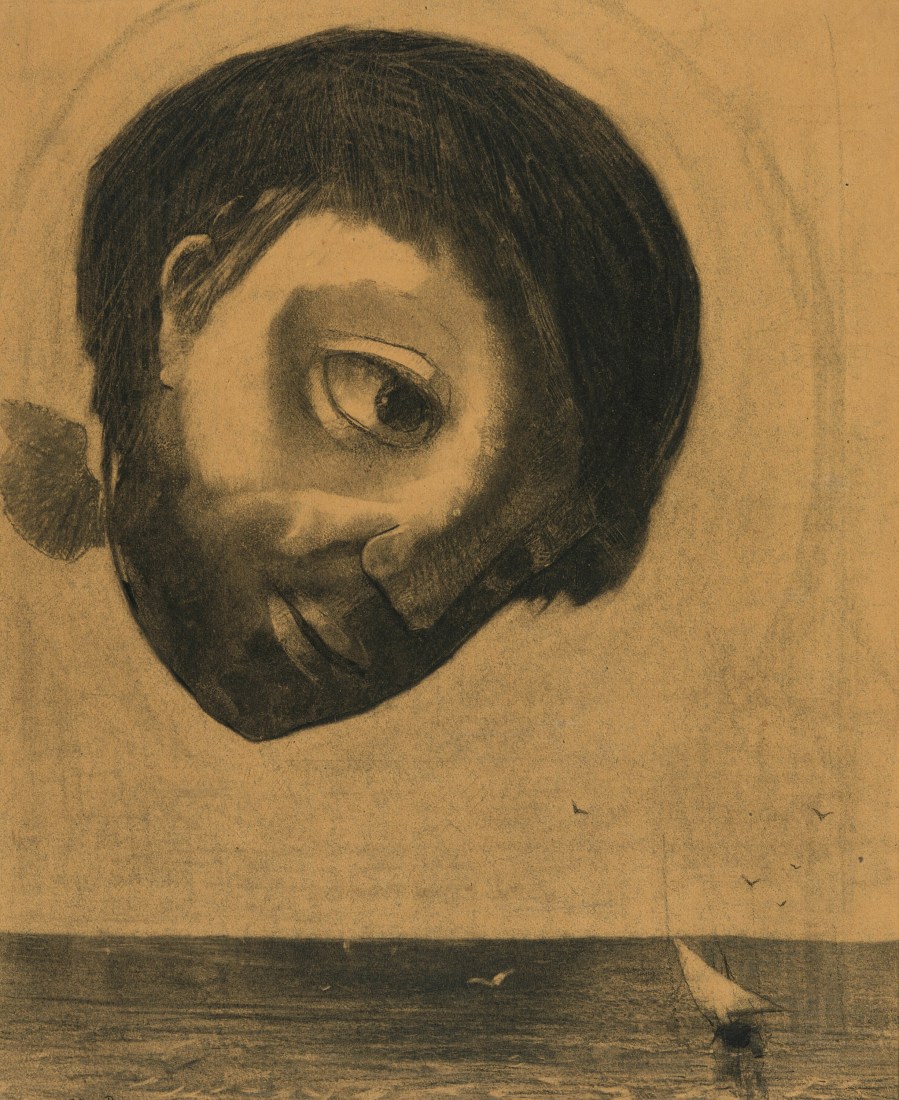
Immediately Following Mandatory Happy Hour with the Boss

By Molly Kirschner

Featured Art: by Odilon Redon

I said to the driver, deliver me
to the nearest beautiful thing.
My name is not ma’am.
Where clouds rallied together like workers
I said let me out here.
Palm trees dusted the sky. No rain.
I called another taxi, I said, take me to
a larch, a church, the awe
in the word autumn.
Take me to dusk.
To a Sikh temple where I can meet the genderless god.
The casino.
Behind the curtain
where we pray our children will fix the world
before we are reborn.


Read More

Saturday

By Veronica Kornberg

Featured Art: by Johan Teyler

Valentine’s Day and I’m at the farmers’ market
with my aquamarine Olivetti, typing poems for
whatever the buyers think they’re worth.

For Annie, the homeless woman who stops by
each week, I pull the sun out of the sky,
let it hover just above her solar plexus
and shoot its rays out of her eyes, superhero style.
She flashes her dimples and takes a dollar
from the jar, pushes on between
the pickler and the flower stall.

I tap away, next to the cheesemaker’s penned-up
petting goat shaking flies off its ears, opposite
the oozing combs of the honey man and a pile of sweet
potatoes, root-hairs whiskering their chins.

My table is usually a drowsy zone, but today
a line of genial men materializes before me,
managing their bouquets while one-hand-texting,
children threading between their legs.
The goat and I are busy.

Some men want their hearts laid raw, beating
on the page. One talks about a fishing trip.
I give them oceans. Powdery stamens
on a daffodil and pillow talk. Black-seamed stockings
in a country inn. I tell them what I wish

someone would say to me this chilly February
afternoon. It’s worth a lot, that little silence
while they read, minds suddenly gone naked,
before we shudder back to our ordinary selves
and they stuff the jar with bills. Which I use to buy turnips.


Read More

Ode to My Pink Bathroom

By Julie Danho

Featured Art: by J.L. Mott Iron Works

How long I’ve tried to love you, the way
you still blush and gleam like a teenager
in a poodle skirt, unblemished as the day

you were pressed against wire and mortar
in the shower, on the walls, even the floor,
its concrete flecked with pink. The Nolans,

who chose you, are long gone, their daughters
now grandmothers in their own houses,
the blueprints they left behind moldering

in the basement. How can I blame them?
I didn’t live through the War, the Boom,
this neighborhood rising up in neat rows

as if each Cape had been pining for sun.
In those years, you were prosperity, pedigree,
First Lady Pink named in honor of Mamie

Eisenhower, her White House bathroom pink
from the walls to the tub to the cotton balls,
so that all over America, millions like me

wake up and stumble into a past that waits
with toothbrush and soap. In you, I saw history
running like a faucet, building to a flood

unless stemmed. But when the contractor
gave me a price, he said you were lead,
and with my daughter . . . it might be better

to let you be. So I’ll own your purr and poison,
though I may dream still of reinvention—
blue trim and Harbor Gray—even as I hang

the pink polka dot shower curtain, lay down
that cranberry rug, act as if I chose you,
as if you were everything I ever wanted.


Read More

Love, Again

By Sarah O. Oso

Featured Art: by Philip Henry Delamotte

When it happens—and it will,
bright as a bed of red tulips
shaking out their flags in rows,

or rising like steam off the top
of a lid—allow it to uncurl.
Stand and stretch. It’ll be the pop

of sockets, of elbow and hip, sighing
into place after waking. Vertebrae aligning
like rhyme beneath the skin.

By noon, it’ll head on over, whistling
with cans of white paint in hand, here
to restore the chipped fence.

Imagine restirring. The heart’s late-night diner
singing to life when someone shoots
a nickel down the juke. Belting a familiar tune,

good and even—the way the radio plays
in Papa’s ’74 Firebird you figured couldn’t run
until that summer it roared

back, and you sat shotgun
against the black leather, windows open
the whole drive home to Florida.

And if it’s anything like the state of sunshine,
then it’s soft and airy and easy.
Like the seat you’ve settled into, just now,

where it nestles once more at the foot
of the chair, dozing, or otherwise
poking its wet nose at your palm.


Read More

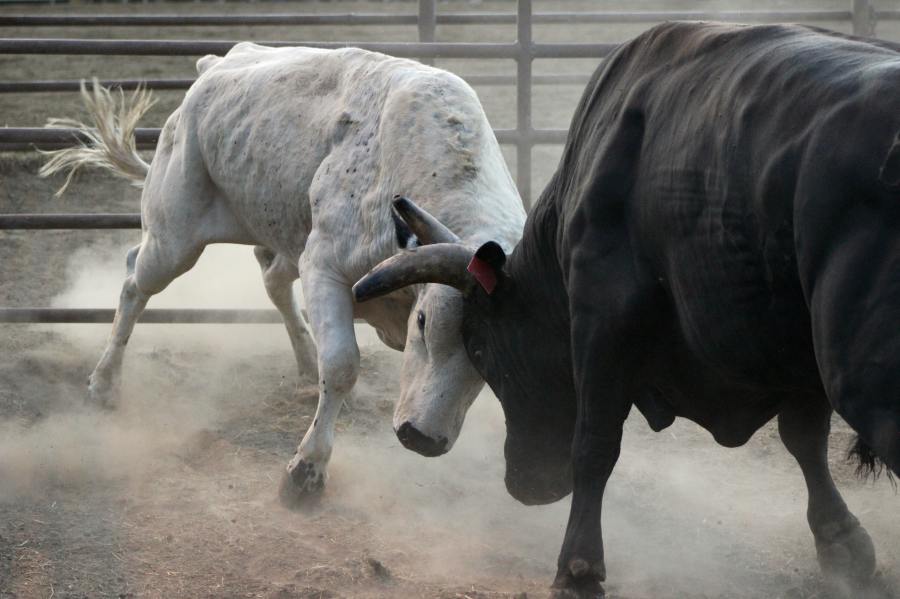
Rodeo

By Sunni Brown Wilkinson

Selected as winner of the 2020 NORward Prize by a panel of previous poetry contributors

Featured Art: by 2 Bull Photography

Tonight is a rodeo night, the announcer blaring his bull
and clown doctrine so loud it carries two miles
east to our block, where just now a hummingbird
hawk-moth drinks from the pink phlox
with its long wand
and I’m alone for a moment and the sky
is bleeding itself out over the train tracks and the brick
abandoned factories. The lights
of the carpet store by the mall flicker carpe
and I wonder just what I can seize.
The homeless shelter bearing some saint’s name
fills up every night and spills
downtown next morning,
wings of strange creatures brush our flowers
while we sleep, and a hapless moose wanders
a schoolyard before it’s caught,
tranquilized. Everyone’s looking for it:
a warmth, a softness in the belly, in a bed
of grass. Take it when you can. Seize it.

Lately sleep is a myth and my brain
is so hard-wired for worry my whole body
crackles, then a deep fog rolls in and all day
I’m lost. Unlike this moth, greedy in its guzzling,
drinking sweetness without asking,
and now the buzzer of the bull riding sounds.
I think of the grace of that single man,
one hand on the saddle
and the other a flag waving violently
above him. A wild show of surrender.

Some days it’s like this: one part
anchored while the other begs for mercy.
And some days it’s the other, the posture
he begins with: both hands together, holding tight.
Sometimes you hold your own hand.
That’s all there is to take.


Read More

Palacios

By Mark Alan Williams

Featured Art: by Katie Manning

We buy hot dogs at a gas station
of broken pumps and eat them
on the pier, watching ratty shrimpers
limp in for new bandages,
sit there in the cold for hours,
thinking sunset will fill the bay
with the blood of the Brazos,
do something holy to us.

This is after Ganado,
and Victoria, and Refugio,
and Point Comfort, and Blessing.

We’re newlyweds,
willing to burn fuel on skywriting
if it can make marriage
feel less like living in Houston.

Sunset hangs around
like a towel that won’t dry,
and when we tire of waiting,
we leave the dim, fuming galaxy
of refineries for home,
bright and deadly as a hospital
circled by ambulances, the music off.


Read More

Free Association

By Henrietta Goodman

Featured Art: by Katsushika Hokusai

“Free associating, that is to say, is akin to mourning; it is
a process of detachment that releases hidden energies . . .”
—Adam Phillips

Always the smell of Windex brings me back to Martin Shelton
in first grade, his memory atomized from some forgotten source.

It’s wind and window when I see him late for school through double
doors of tempered glass, then rushing in on the lovely trochaic

feet of his name, shirt buttoned wrong, blond hair blown in a gust
of oak leaves, smoke, and frost that swept away the simmered meat

and rubber smells, the green litter that soaked up accidents. The wind
recorded and erased. I was afraid to sit with him, or speak—

my first crush a boy who packed his own lunch and walked alone
through dark stairwells hung with Bomb Shelter signs, arrows

aimed at the basement lunchroom where we bowed our heads
to wait for fallout’s drift from the split atom, the invisible anvil

that could fall no matter where we hid. Even when the speakers
hummed and Mr. Wells announced that we were safe,

his name said the earth would swallow us. And now I spray
the glass to wipe away the prints, the trace, but traces gone,

the glass I see through stays. How, then, could mourning set me free,
if Windex leads to Martin leads to beauty leads to bomb?


Read More

Donovan

By Susan Browne

Featured Art: by Carol M Highsmith

I walk down my neighborhood street called mountain
although there is no mountain     only rolling hills
although hills don’t really roll        & as I look
at a window display of shoes & pass by the candy store
a gasp happens in my head    a quake in my heart     they aren’t
here      my father who loved sweets
my mother who loved shoes    & the sun shines
on a world of orphans      I quake along mountain street
like a rolling gasp although if someone asked
how are you I’d say fine      like most of us are
& aren’t       I thought sadness was a prison
but it connects us & if a chain it should be
one of tenderness     my father died
two years ago although sometimes I say a year
a way of keeping him closer      can’t do that
anymore with my mother      need math on paper      the ache
woven into each leaf although there are birds & nests
we live in a tsunami     waves of being & non-being
but I’m no philosopher standing at the counter buying
bunion pads     feeling drowned & drying
under fluorescent lights & warmed by the smile
of the clerk who blesses me with have a great day as I go out
to mountainless mountain & remember donovan’s song
playing in my parents’ house in the sixties      first there is
a mountain then there is no mountain then there is


Read More

Look

by James Lineberger


Look at this, this

petri dish. Here are stem cells

replicated

as heart cells. Look. The heart cells

are beating. The cells do not

know the difference. They think they are hearts. Read More

Thresher Derby

By Patrick Bernhard

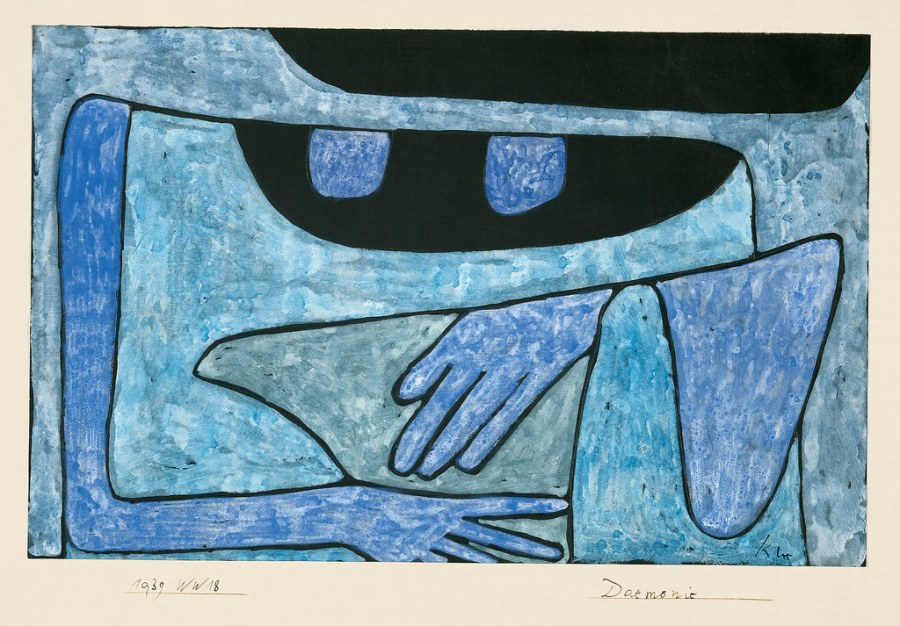
Featured Art: Daemonie 39 by Paul Klee

The undertow had carried Daisy far enough out to sea that her bullseye swim cap probably looked like a floating pastry to the judges, even with their binoculars. She hoped that rest of her looked similarly delectable to the Medium-Class blues that the scouting report had placed a reasonable 19% of hunting in the Frontier Belt; nobody had caught anything elsewhere, outside of a zebra shark that wandered into the Sandbar Belt that the chatterbox from Bethany Beach managed to cosh, catch, and drag. Not that she was worried by that bag; Chatterbox’s zebra had the telltale torpor of a bad fungal infection, so it barely put up a fight, and she’d repeatedly coshed more dorsal than skull and in shallower water, too, losing major accuracy marks that she couldn’t afford to have subtracted.

Daisy’s choice of enticement pattern – tread for ten seconds, followed by a burst of strategic thrashing – was fairly exhausting, with the current more active than the lifeguards’ flags were indicating, but the rumor was that deep-water endurance played up heavily with the judges at this particular beach, mostly due to sentimental reasons. It was apparently at this depth that the woman that this derby was named after, Betsey Gulliver, managed to drag in a four-foot thresher even after a whip from the tail of the shark in question had lacerated her left eye and given her ear a flat top. Thus, the parameters for this derby’s Spontaneous Technical Victory – cosh, catch, and drag a Medium-Class thresher – were established. The banner reading “Betsey Gulliver’s Thresher Derby” was stretched above the stands like a giant volleyball net, painted in garish lettering whose crooked slant was evident even from where Daisy was, as if the banner had been made in a group effort by the local middle school.

Read More

Lunch Duty

By Barry Peters

What I know of her

cackling in the back row,

sassing the boy next to her,

absent, tardy, bathroom pass,

not doing any goddam work

and this is the easiest

history class in the history

of American education:


what I know of her

is that for one moment

each day, after escaping

the apartment,

the bus fights,

first-period algebra,

second-period biology,

third-period gym


she hunkers down alone

in a corner of the cafeteria

communing with some

XXtra Flamin’ Hot Cheetos,

oblivious to the orange

residue on her teeth,

smiling as she offers me

the open cellophane bag.


Read More

Lucy’s

By T.J. Sandella

Featured Art: Actor’s Mask by Paul Klee

I confused guacamole

with guano

until I was seventeen

when my girlfriend’s mom

patiently explained the difference

plopping a dollop onto my plate

next to the Spanish rice

catapulting me

on the long flight

from meat and potatoes

to masala and paneer

for the first time

as a freshman in college

tartare and foie gras

as a grad student

and so it goes

the older I get

the farther I travel

with my tongue

curries and compotes

caraway and cardamom

ginger and jasmine

and planes and trains

to aromatic rooms

in cities I can taste

better than I can pronounce

which have all led me here

Read More

Dispatches From the Near Future

Featuring poems by Ruth Bardon and Jiordan Castle and a new story by Joseph Rakowski, as well as a variety of timely pieces from previous print issues of NOR: poems by Tanya Grae, Okla Elliot, Emily Sernaker, and Emily Mohn-Slate; a story by Max Bell; and an essay by Kyle Minor. 

Each piece is accompanied by beautiful artwork, some by contemporary artists Corran Brownlee and Barbara Pierson, and others courtesy of the Metropolitan Museum of Art’s Open Access collection.

New Ohio Review Issue 26 (Originally printed Fall 2019)

Newohioreview.org is archiving previous editions as they originally appeared. We are pairing the pieces with curated art work, as well as select audio recordings. In collaboration with our past contributors, we are happy to (re)-present this outstanding work.

Issue 26 compiled by Julia Smarelli

Sad Rollercoaster

By Jared Harél

Featured Art: The Great Red Dragon and the Woman Clothed with the Sun, c. 1805 by William Blake

My daughter’s in the kitchen, working out death.
She wants to get it. How it tastes and feels.
Her teacher talks like it’s some great, golden sticker.
Her classmates hear rumors, launch it as a curse
when toys aren’t shared. Between bites of cantaloupe,
she considers what she knows: her friend’s grandpa lives only
in her iPad. Dr. Seuss passed, but keeps speaking
in rhyme. We go to the Queens Zoo and spot the beakish skull
of a white-tailed deer tucked between rocks
in the puma’s enclosure. It’s just for show, I explain,
explaining nothing. That night, and the one after,
my daughter dreams of bones, how they lift
out of her skin and try on her dresses. So silly! she laughs,
when I ask if she’s okay. Then later, toward the back-end
of summer, we head to Coney Island to catch
a Cyclones game. We buy hot dogs and fries. A pop fly arcs
over checkerboard grass, when flush against the horizon
she sees a giant wooden spine, a dark blossom,
this brownish-red maze all traced in decay. She calls it
Sad Rollercoaster, then begs to be taken home.


Read More

Keeping Warm

By Faith Shearin

Featured Art: Seated Woman with Legs Drawn Up (Adele Herms), 1917 by Egon Schiele

That first winter after you vanished
into the white rafters

of the afterlife the old boyfriends returned
in texts and letters, one close enough

to walk with me beside a fast river
in the snow; these were the men I loved

when I was young and now I was alone
so they came looking for me or I

called out with a sound between
a howl and a bark and they replied;

I wasn’t sure what I wanted
from them, or what they

wanted from me, but I was grateful
for their attention and for the way

they could still remember me standing
in the corridors of the past,

under apple blossoms, where
they spoke to me in whispers and

unfastened my loneliness; I was trying to learn
how to be a woman without you.

One reminded me of how he undressed me
under a Steinway piano during a power outage;

that February the ones who were single
sent music and texts and they worried

I was not warm; one spoke of building
fires and making tea while another

ascended the steep staircase
to my apartment and placed his hand

on my radiator which was like running
a finger over my wrist; I felt sometimes

that you sent them, though you
had been jealous when you were alive,

that you wanted them to buy me
mittens, to put the kettle on the stove.


Read More

Coyotes

By Terri Leker

Featured Art: Forest in the Morning Light, c. 1855 by Asher Brown Durand

The coyotes moved into the woods behind my house just after I learned I was pregnant. On a quiet June morning, while my husband slept, I pulled on my running shoes and grabbed a leash from a hook at the back door. Jute danced around my feet on her pipe-cleaner legs, whining with impatience. It would have taken more than this to wake Matt, but I hushed her complaints with a raised finger and we slipped outside. A light breeze blew the native grasses into brown and golden waves as we wandered, camouflaging Jute’s compact frame. She sniffed the dirt, ears telescoping as though she were asking a question. When we reached a shady thicket of red madrones and live oaks, I unclipped the leash and wound it around my wrist.

It was over with Richard, had been since I’d found out about the baby. Anyway, I had come to believe that adultery sounded more illicit than it actually was. Between managing my schedule with Matt and making time to rendezvous with Richard, an affair often seemed more about time management than sexual gratification. I was meticulous with the calendar, but I would have known that the baby was Matt’s regardless, because Richard’s sperm could not locomote. He had told me so early on, while showing me the master bedroom of his faithfully restored North Oakland Victorian. His unexpected disclosure had interrupted my admiration of the exposed brick walls, so unusual for the earthquake-conscious Bay Area. Matt was having dinner just then with friends, thinking I was helping my mother set up her new television (she would be  dead within a few months, but we all pretended to be optimists then), so he was eating eggplant parmesan at the Saturn Café as I lay with Richard on his king-sized bed, hearing words like motility and capacitation. Richard’s sober tone had suggested that I might comfort him in his sterility, which I did, if    the definition of comfort was a passionate encounter that lasted as long as   one might spend unboxing a 48-inch HDTV and connecting it to both Netflix and Hulu. But Matt and I had tried to have a baby for three years, so I took the pregnancy as a sign to recommit myself to my husband, who, predictably, jumped up and down on our unmade bed when I shared the news, attempting, in his white-socked excitement, to pull me up with him, not realizing that doing so might judder the bundle of cells loose, delivering me back to Richard and a childless but aesthetically pleasing life.

Read More

What If We Wake Up Dead

By Jennifer Sperry Steinorth

what if we plant roses beside the shed
what if we paint the living room a muddy incarnadine
what if you go on a diet
what if we go to Paris
what if the dog’s ghost follows us      when the house is sold
where will we go      when the house is sold
what if we try talking
what if I could be nice
what if we have to move in with your mother
what if we could be honest about the weather
what if   like a father      you get up only to leave the room
what if   like a mother      I speak only in other rooms
what if we redo the kitchen and you become a pastry chef
what if we move to Phoenix
what if I smash the Lennox
what   if I drive away         what is good
what   if I drive away         into a tree
what if we cross our hearts
what if we make applesauce
what if you become what killed your father
what if I can’t forgive what killed your father
what      if the kids could see us
what      if the kids become us
what      if the kids inherit everything


Read More

No Good After Midnight

By Jessica Hincapie

Dionysus! What is on your record player tonight? Turn up
ABBA’s greatest hits and call me Chiquitita one more time.
The night is young and we are ancient
history, but dammit if you don’t throw the wildest parties.

All the columns choking on vines. Wisteria
fronding from the lamp lights. And I, wishing I’d worn
the dress you gave me at the beginning when the sex was still
effeminate. The dress with the cape made of migrating starlings.

Masterpiece of murmurations. No matter,
I prefer this prison jumpsuit. Gauche orange
like a Halloween pumpkin. Oh! You should know by now
how much better I carry my body when it is a trashcan fire.

Dionysus! Remember our first time? You came
in the back of your father’s classic Panther West Wind.
Now other people’s tongues pulse in your mouth.
Now sirens from the downtown precinct. But not before,

Dionysus! Show us that party trick you do so well.
The one where you pluck out your own femur and make
WOMAN. The one where that WOMAN uses magic
to ensure that her soccer team wins the World Cup.

Dionysus! Sneak us onto the edge of the River Styx.
See which one of us skinny-dips into the deep end first.
I’m betting it’s me who wakes up in your bed again after six
too many red wines. I’ve never been good with endings

or perhaps it’s hard to leave behind a place where no one knows
what you look like naked. And weren’t we once acquainted
with each other’s morning-after tics? How I prefer the smell
of citrus to coffee. How you only ever have human hearts

to offer. Plump and halved like papayas. The kind where
a single bite shows you your own death. The kind where
if you tilt one just so, it will catch the light and turn into copper.
A penny you can throw at a fast-moving train.


Read More

How Young Boys Survive the Ghetto: 101

By Taylor Byas

—after “Ghetto Boy, Chicago, Illinois,”
by Gordon Parks, 1953

Play house. Climb on a chair of shit-stained paisley
in an alley, avoid the broken bottles. Cut
your momma’s housedress, make a cape that’s maybe
a size too big. Pose for this camera, strut

like the pimps that limp these streets in zoot suits, caned
and gold-toothed. Know the power of a stuck-out
hip, its demand for respect. Practice your slang,
and call the women shorties until you luck out,

get slapped upside the head. Don’t turn around.
Don’t look behind and see the world’s kept going,
that Eldorado dropping down to the ground,
its rims still spinning, pool-hall lights still glowing—

boy look into this lens, let me remember you
like this, carefree, acting a fool like you always do.


Read More

The Flash

By Jennifer Givhan

My 11-yr-old son has forgotten not to eat on my bed            He loves watching The Flash
from my room with the widest windows, the warmest place in our house each winter,

& with the coneflower warmth of his brown skin veiled in his bright red suit, he tucks
his kinky curls under the cap & ghosts from room to room undetected, sneaking

cookies            till I climb beside him into piles of crumbs            You’re grounded I echo
& he is sobbing            but what he says catches

the pit of wax burning always inside me            We got him
into special ed classes last year after years of fighting with teachers & breakdowns

over homework & his father yelling You’ve got to learn to listen            & I kept insisting
he’s trying, he just doesn’t understand             & here he slides onto my floor,

tears & mucus streaming down his cheeks, onto the superhero costume he wears
24/7, the toddlers at the park following him around perennially because he’s Iron

Man, Flash, Capt. America—            Mama I don’t know what’s wrong with me
between hiccupping sobs            I forgot—

I was hungry & your bed is so warm            & I’m afraid I’ll go to jail
when I’m a grownup       
      I’m afraid I’m bad            because I always do the wrong thing

         & I’m hugging him on the floor where I’ve joined him
as sirens flick onscreen            thinking of how his little sister ties his shoes            how years

back his best friend said You have to learn to tie your shoes—do you want your mom
to tie them for you when you’re twenty? & we laughed            before we realized

we should not have been laughing            how at night I watch him breathing            & pray
because when I screamed at his father for screaming at him he said He has to learn

to listen! I’m trying to keep him safe—

                         Much later I ask our boy with a milkshake in his hand
what he would do if the police, like they did to his daddy—

He beeps. Electronic Jeremiah is not here right now. Please leave a message.
He flashes so quick, I never see him vanish.


Read More

Promised Lands

By Christie Tate

Winner, New Ohio Review Nonfiction Contest: selected by Kiese Laymon

Featured Art: Sunset over a Pond, c. 1880 by François-Auguste Ravier

I.

The first time I walked into Grandma’s church, I was a little girl in white Stride Rite leather sandals and a pale yellow dress with a sash. The First Baptist Church of Forreston, Texas. There was no parking lot, so Grandma, like a dozen others, steered her big blue Chevy off the road into the grass in front of the sign welcoming all worshippers.

The white clapboard building looked like the school-church from Little House on the Prairie. Simple wooden porch with four steps. Plain white steeple. Two long skinny windows. Our regular church in Dallas was three times larger, had bells that chimed every hour, and its thick walls held colorful stained glass depicting Jesus carrying the cross, falling, dying.

My older brother and I trailed behind Grandma, who hung her big leather purse in the crook of one arm and used the other to grip the wooden rail to steady her arthritic knees. My brother and I jockeyed to sit next to her because we wanted to plumb her treasure-filled purse. Doublemint gum. A map of the highways crisscrossing the Texas plains. A keychain with a long plastic placard with her name blazed across it. Virginia. Same as the state. I liked to run my finger along the raised white letters.

Before we opened the door, we could hear voices singing “What a Friend We Have in Jesus.” I shot a look at my brother. We were late—something we were never allowed to be on Sunday mornings with our parents at Holy Trinity. My brother shrugged. I grabbed Grandma’s free hand and let the rush of air and music pour over me as she opened the door and led us to the back row.

Read More

16 Days of Glory

By Jill Rosenberg

After our parents left for Vermont, Ruby and I spent most of our time waiting for the Olympics. The world is coming to Los Angeles! the commercials told us, and the announcer’s tone was so excited and serious it seemed to imply that every American should prepare.

That summer was going to be a turning point for our family. We were in the final stages of a move to rural Vermont, where my parents were rebuilding a house they planned to have ready by the start of the school year. Once the house was inhabitable, even barely so, we’d all move in and complete the finishing touches as a family. We’d already chosen the stencils we’d use on the walls in each of our bedrooms. Mine was going to be silver, turquoise, and black.

In the meantime, my job—mine and Ruby’s—was to have the fun summer that my mother said we’d earned. We could contribute to the house by holding down our current fort, a converted garage in the Philadelphia suburbs. The beauty of the garage apartment was that it looked like a mini-version of the other houses in the neighborhood. My mother liked to point out that you could look at a picture of the garage and a picture of a real house, and you couldn’t necessarily tell which one was which.

But Philadelphia’s Main Line was only a stepping-stone in our journey. The goal was to educate ourselves in multiple ways, and the four years of high-class learning we’d done in the suburbs—in one of the best school districts in the country—was coming to an end. It was time for us to learn from the land, to shed our unscuffed shoes and make ourselves interesting.

Read More

Pollution

By Amelie Meltzer

Featured Art: Landscape, Sunset, 1886/1887 by George Inness

The sun sets red through clouds of ash
made of normal stuff, like trees and brush, but
also bedroom walls, Persian rugs, winter clothes, LEGOs,
maybe the family dog.

At a safe distance from the actual disaster,
we cough and small-talk about wind patterns, particulate counts.
It’s everyone’s opening line on Tinder, something like,
“I’ve got an extra N95 mask waiting for that special someone ;-)”

And I wake up halfway through a memory back from the dead of
kissing my summer camp bunkmate, to practice for boys,
scrunchies on our skinny wrists, hands in each other’s hair,
a lump in my throat.

I can’t believe I lost this. My tiny, broken heart
suddenly unhidden by the bonfire smell.

She must have slipped under the door like smoke.


Read More

Soda Money

By Emily Johns-O’Leary

Featured Art: Little Walter’s Toys, 1912 by August Macke

Edison was allowed to spend one-third of his monthly spending money on manatee merchandise, but it usually came to about half. His mother was a marine biologist, and Edison had seen a photograph in one of her magazines when he was six and couldn’t stop looking at the manatee’s bloated snout and flippers like gray oven mitts pinned to the balloon of its body. He was thirty-one now and bought his own nature magazines to look for more pictures, more patient expressions on the floating creatures. Their eyes seemed to want to listen only to him.

He woke early on a Thursday worried about his spending money. He moved Harold’s plush tail and found his phone beneath an umbrella his father had given him. Edison paused to close and open the umbrella, watching the manatee’s face crumple and smooth. Ten years earlier, when his parents said he should have more independence, when his case manager found a retired woman on the other side of San Diego whose client with special needs had moved out of her basement room, they encouraged him not to decorate the walls like his childhood bedroom. “You’re grown up now, Eddy,” his mother said, and his father—so rarely in the same room as his mother and stepdad— nodded and squeezed his shoulder. But Edison had been up all night thinking about moving out of his parents’ house, just like his high school classmates. He was certainly going to decorate the room with manatees.

Read More

Scatter

By Claire Bateman

Featured Art: The Breeze at Morn, 1930 by Thomas Lowinsky

And here we see where the pages of the ocean
were torn from their logbook as if in meticulous rage,
though there’s no debris adhering to the binding,
as might so easily have been the case.
What to do with this stiff and empty cover?
Pack it with snow and staple it all around,
so it can retain its shape until the committee
rends it open and shakes it out face-down,
inviting the ragged pages to return
in just the right sequence
from every place they’ve flown.


Read More

No Good After Midnight

By. Jessica Hincapie


Dionysus! What is on your record player tonight? Turn up

ABBA’s greatest hits and call me Chiquitita one more time.

The night is young and we are ancient

history, but dammit if you don’t throw the wildest parties.

All the columns choking on vines. Wisteria

fronding from the lamp lights. And I, wishing I’d worn

the dress you gave me at the beginning when the sex was still

effeminate. The dress with the cape made of migrating starlings.

Masterpiece of murmurations. No matter,

I prefer this prison jumpsuit. Gauche orange

like a Halloween pumpkin. Oh! You should know by now

how much better I carry my body when it is a trashcan fire.

Dionysus! Remember our first time? You came

in the back of your father’s classic Panther West Wind. Now

other people’s tongues pulse in your mouth.

Now sirens from the downtown precinct. But not before,

Dionysus! Show us that party trick you do so well.

The one where you pluck out your own femur and make

WOMAN. The one where that WOMAN uses magic

to ensure that her soccer team wins the World Cup.

Dionysus! Sneak us onto the edge of the River Styx. See

which one of us skinny-dips into the deep end first.

I’m betting it’s me who wakes up in your bed again after six

too many red wines. I’ve never been good with endings

or perhaps it’s hard to leave behind a place where no one knows

what you look like naked. And weren’t we once acquainted with

each other’s morning-after tics? How I prefer the smell

of citrus to coffee. How you only ever have human hearts

to offer. Plump and halved like papayas. The kind where a

single bite shows you your own death. The kind where

if you tilt one just so, it will catch the light and turn into copper. A

penny you can throw at a fast-moving train.


Jessica Hincapie is a writer and teacher living in Austin. She received her MFA in poetry from the University of Texas and is currently the Program Director at The Writing Barn, a writing workshop and retreat space in South Austin. You can find her work in The Indiana Review, Ruminate Magazine, Four Way Review, and elsewhere.

Originally appeared in NOR 26.

Rules of Order

By Carrie Shipers

Featured Art: Eternos caminhantes, 1919 by Lasar Segall

To ensure meetings have a clear, productive point,
statements of need and rationale must be approved
prior to invitations being sent. If two important

meetings overlap, please disregard the laws of time
and space. Your project heads have far less power
than they’d hoped, their agendas set by management,

inboxes filled with bad ideas. To ease the burden
they’ve assumed, complaints must be voiced before
the call to order. Late arrivals will be penalized

with dirty looks, wobbly chairs positioned in a draft.
Because discussions may grow heated or not go
your way, you may storm out of two meetings

a year and leave in tears from one. If these limits
are exceeded, you’ll be elected secretary.
Otherwise please stay until officially adjourned,

even if you’re bored or late for surgery.
If a meeting runs over its allotted time, an alarm
will sound. Continued failure to disperse

will cause the sprinklers to come on. To avoid
a doorway bottleneck, you’ll be dismissed
in order of seniority or usefulness. We tested

these new rules the same day they were written:
we came, discussed, voted, and left impressed
with our efficiency. If due to their constraints

we brainstormed less, explored fewer options
or consequences, we found it a fair trade for the brisk
pace, guarantee we’d escape getting drenched.


Read More

Melbourne Beach

By Bo Lewis

Featured Art: Second Beach, Newport, c. 1878-80 by Worthington Whittredge 

Coach West had just finished grilling the dogs and we were all standing in line, going crazy with hunger. We’d had nothing but concession stand sno-cones after the doubleheader, and we were ready to eat our weight in barbecue. Rudy and I were going to do an experiment to see which tasted better on dogs—onions or relish. I was going to blindfold myself with my ballcap and Rudy was going to feed me one bite of each until I discovered the answer.

But Dad’s hatchback came skidding across the gravel toward the pavilion, a long dust cloud rising up behind it like the tail of a dragon, and I knew something was about to happen. The door popped open and his hand shot down to the gravel like a kickstand as he got out of the car. He left it running and didn’t shut the door behind him.

Coach West set down his tongs and gave Rudy’s father a look. They hopped off the pavilion deck and went to greet Dad. Marcellus’s mother, our Team Mom, took over at the grill, speaking loudly and brightly, asking what everybody was doing for summer now that we were done with the third grade.

Read More

Moving the Piano

By Kathryn Petruccelli

Featured Art: The Keynote, 1915 by William Arthur Chase

It takes almost nothing
to step into each other’s lives: a favor
for a neighbor, a huge, upright Steinway
there’s no one left to play.

All morning they labored together,
the men. Everything they could think of
to get it out of the van
                                          and over the curb—
metal ramp, wooden boards, a jack,
the old bed frame from behind the garage.

Dave had never asked my husband
for anything before. The house
he’d grown up in was already packed,
mementos sold, his mother’s mind

skipping liberally among the decades,
her fingers running through chords in the air
or waltzing grandly
through measures of Chopin.
                                                     His father
stooped from his own burdens, aged beyond
his years, nodding when people talked
about his new facility, so highly regarded,
so clean. There was sweat, grunting,

my husband mumbled a curse
as they argued about angles, pushed
their charge up the cracked walkway,
three shallow steps to the porch.

And because we have no better idea
how to be with each other
in our pain,
                       when they’d finally struggled
the monstrous instrument
into Dave’s house, they could only
wipe their hands on their jeans,
crack their knuckles, and share
a pizza, which they ate standing
in the kitchen, hunched over
its grease-stained box.


Read More

On the Walls

By Julialicia Case

I am two, and the cornfields are enormous. An ocean of stalks surrounds our house in Iowa, green and hushed in the summer, brown and rattling in the fall. From our porch, the only thing visible that isn’t corn is a tiny house far in the distance at the crest of a small hill. This is where all the storybook characters live.

At night, I fall asleep imagining them. Big Bird sits in an armchair and watches the same episode of Dallas my parents watch in our living room. The Berenstain Bears make rice pudding while the poky little puppy splashes in the bathroom, and the Borrowers steal a sliver of soap. They are all there: Francis and Arthur and Corduroy, sharing popcorn, singing Simon and Garfunkel, adopting every single stray cat. Someday I will be there, too.

The fields are so big, the corn so tall. I will need to carry Fig Newtons and apple juice. I will bring my favorite blanket so I can sleep without nightmares among the leaves. Some days, while playing in the yard, I start out, racing across the grass toward that house on the horizon. My parents always catch me, turn me around, aim me back toward our flowerbeds. They laugh as if it is a joke, as if I’m not determined to risk everything.

One evening, a spring thunderstorm pelts the newly planted soil. Wind rocks the power lines, black clouds churning. I watch through the screen door as lightning throws up sparks along the horizon, the storybook house suddenly a star of flame. My father calls the fire department, but by the morning the house is only a gray smudge of ash.

Read More

Morning Rig

By Angela Sorby

Featured Art: Ophelia, 1851-2 by Sir John Everett Millais, Bt

The moon knows the laws—
the factors, the forces,
and is at peace. Look,

it’s unconscious up there!
Meanwhile, my brother quits
being a bankruptcy attorney

to get his Class B Trucking license.
Why? Let’s wake the moon
to ask why other people make

their weird other-people-decisions.
This is the origin of all religions.
An important part of the story:

the moon never responds.
It lies languid, bathed
in darkness like Ophelia,

while big rigs turn their engines
over as dawn breaks pink
with pollen and pollution.

So much is broken,
but never the largest laws—
how wheels set in motion

spin unless something stops them,
but never skid over the line
from speed to freedom.


Read More

The Dog in the Library

By Catherine Stearns

Featured Art: Sleeping Bloodhound, 1835 by Sir Edwin Henry Landseer

“We may be in the universe as dogs and cats are in our libraries,
seeing the books and hearing the conversation, but having no
inkling of the meaning of it all.” —William James

On sunny, cerulean days I go all the way
to eleven when I stretch and sniff among the leaves,
whereas you stay inside, hunched over
your moral universe. Old girl, if you
stopped trying to decipher those fossil bird tracks,
you might see the thermal-gliding hawk above
or that zaftig possum gnawing on fallen
persimmons under the window. I’m just saying
your preference betrays a certain fear
of your own nature. Remember
last summer when you left me in the car
to pick up a book they were holding for you,
and a page or two in you recognized
your own penciled and may I say
obsessive marginalia, although you had
no memory of the text itself?
Whatever made you think your mind
could be disenthralled with words?
As a pup, I once took Mark Strand’s
injunction in “Eating Poetry” to heart,
devouring one or two slim volumes,
but soon realized I prefer the raw
material of life, what e e cummings
calls “the slavver of spring”: smells
of fresh earth, the ghostly scent of
rabbits, even the mounds of dirty laundry
piled up on your bed. If you found answers
to your questions, do you truly believe
those answers would transform you?
So many of your species seem
susceptible to revelation. We’re all
browsers, old girl, without an inkling,
waiting by the door for a treat or to be forgiven
until our unleashed immortal part bolts
for that hit of dopamine. Then
all good dogs go to heaven.


Read More

Recovery

by Max Bell
Story originally published in New Ohio Review Issue 25
Featured Art: Recharge by Corran Brownlee


Two Weeks 

Lisa left when the droid arrived. There was no period of transition, no time for Richard to adjust. After she signed for it, she carried it into the living room, set it down in front of him on the worn shag, and began saying her goodbye. Like the stitches in his hip, she was disappearing, dissolving in front of him. He did not, however, rejoice in the knowledge of her impending absence. Read More

Stage Four

By Kate Wisel

Featured Art: “Neurons, No. 3” by Madara Mason

What I did was held my hand out like a gun and sprayed. I was supposed to be wiping down tables. But there was something about walking through the pink mist, I can’t tell you the feeling. That clinical smell that clung to my neck like antiseptic perfume. At that time and that time only, I liked doing the opposite of what I was told.

I was breathing in the rinsed air when this guy wandered in and crouched down at the end of the bar. He was in a white blouse with one of those dog-chain gang-rape necklaces gleaming down his neck. I watched him, a bold move that made him turn to me as he tapped his combat boot on the leg of the stool.

“What are you doing?” he said. I set the cleaner down.

“What are you wearing?” I came back with. I contemplated his soft-spoken British accent, his inflection so authentic I thought I could hear it in a voiceover. He just sat there looking like someone from the past, like Steven Tyler, the pouty-lipped version from my mom’s old and broken records. I started wiping beer puddles with a stiff rag across the laminate, afraid I might actually get in trouble this time.

“Tell me, who’s in charge here?” the guy said.

I glanced at my boss, the manager of Bukowski Tavern, this nice kid named Larry who sat on a bar stool by the door. Not to check ID’s but strictly just to stare out the window like a lapdog. His hair was going prematurely wispy and he kept one leg on the floor with the visible outline of his penis through his gray sweatpants. I grimaced.

Read More

Bacon

By Alan Sincic

Featured Art: “My Blue Garden” by Madara Mason

“Look at you, boy.” Cochrane gave his junk another shake, stuffed it back into his Levi’s. “You trying to tell me you could lift—we’re not even talking carry here—lift a quarter ton of bacon?”

“I been training,” said Barnett. The pudgy frame, the warble in the voice, the baby-fat of the face all pocked with rivets: we nobody believed he was old as he said he was. Fifteen? Sixteen maybe?

“Training?” said Cochrane.

“Dynamic Tension,” said Barnett, parsing out the syllables in the verberant tones of a preacher.

We laughed. We pictured the ads in the back pages of Gun Molls and Flying Aces and Popular Mechanics. Charles Atlas. The guy in the skivvies with the strapping chest and the husky, solid fighting muscles that every man should have.

“You mean bacon in a barrel,” said Joe from behind a tree, “so you could roll it.”

No sirree. No,” said Barnett. He rocked from side to side, careful not to back-splash off the azalea and onto his bare feet. “We’re not talking about a barrel. Like I said. We’re talking about bacon. Bacon by the slab. Four hundred pounds.”

Read More