One of my oldest friends, widowed a year, drifts on, riding low in the water, north into his eightieth year, his rudder broken away, the stillness of ice fields ahead, and little aboard but Hershey bars and Diet Pepsi, as he floats in one of two twin La-Z-Boys, his late wife’s dachshund asleep on his lap, a big flat-screen TV like a billowing sail, pulling them forward into the years, his choice of the two recliners now his—if he wanted to choose, which he doesn’t—hers still with the last of her flotsam around it, the Christmas decorations she’d hoped to finish in time, her hot-glue gun still at the ready, the empty cardboard toilet paper tubes, the red and white construction paper, some of the red already glued in cones— unfinished Santa hats—and cotton wads to pinch apart for making Santa’s beard.
This brother and sister have come hundreds of miles to sort through the mold and clutter left in the wake of their maiden aunt, who as the future closed about her assembled a proof of the past, heaped in the rooms she’d played in as a child, her toys, her picture books, piles of newspapers nibbled by mice, and over the years all of the black-and-white issues of Life, though life for her was there without having to pay for it, in color: the bone-yellow ribs of plaster lath where the ceilings had fallen, some of the crumbled plaster on her bed, and in the parlor an upright piano, dark orange-peel finish clouded with mildew and half of its keys stuck down as if a tremendous chord had been hammered into the silence to fade only a moment before.
By Faith Shearin Selected as winner of the 2021 New Ohio Review Nonfiction Contest by Jerald Walker
The last day of my old life, the one in which I knew my own identity, was Halloween 2018. I was out walking our dog, Wookiee, a small, flat-faced shih tzu with an underbite, through the streets of our Massachusetts neighborhood, when I felt the presence of my husband, Tom, though he was away, on a business trip in Colorado. It was evening and I was flanked by children wearing masks, capes, and wings, all of them carrying paper sacks of candy. I paused beneath a maple tree decorated with cloth ghosts, near a lawn littered with fake tombstones, and the dog sniffed the air where my husband’s apparition formed. I saw Tom materialize for a moment and he was young again: slender and dark, his hair a mass of black curls; he was opening the window of his dorm room at Princeton; I felt as if he was trying to show me something; I was aware of a rush of velvet air and the full intensity of his love before he vanished again, into the blowing leaves, and pumpkins, and the sounds of children knocking on doors. I was expecting him to fly home in a few hours and thought perhaps he had fallen asleep on a plane and begun dreaming of me; he sometimes came to me in dreams. But when I checked my phone I found no text; instead, there were a series of phone calls from a number I didn’t recognize, which turned out to be a hospital in Colorado, the last from a chaplain who said: your husband has had a heart attack and is being prepared for emergency surgery. I do not know if Tom was awake or under anesthesia when his ghost found me; I don’t know if he was fully alive or if his spirit was already seeping away. All night his Australian colleagues held vigil in the hospital, sending texts while fashioning boomerangs from coffee stirrers. By the following day, Tom’s sisters and mother and I converged in a waiting room, along with his friend Bob, who had flown home to Virginia from the Denver conference, then back again, when he heard Tom was in surgery.
By Sharon D. Kennedy-Nolle Selected as winner of the 2021 New Ohio Review Poetry Contest by Diane Seuss
At the Primrose Gardens’ group home, the guys share smokes around the picnic table; the house itself exhales a heavy Lysoled and linty air. Confined to an asphalt patch, under the 24/7 eye of Neighborhood Watch they slouch under overrated stars.
They have time: no AA tonight. Under the driveway spotlight, they lean, listening for the fenced dog’s advice. Brandon swears, “Horror movies put me here, that and the drugs.”
Back empty-handed from a ShopRite run, Little James explains, “The grapefruits were talking.” Grocery voices again, “They say, ‘Don’t buy me.’” Never mind the ice pick in somebody’s eye that sent him up.
Inside, the house hums clean as the dryers tumble on cycle “fluff.” They’re like seven Snow Whites, worn out after another day of scrubbing, mopping, vacuuming, as if conscience could be cleared by a good once-over, and a well-made bed.
Conned on all counts, I’m here to see my son, —the witch’s apple of my eye— but they all greet, “Hiya Mom.” Big Eric wails, “When you gonna bake that lemon meringue?” I lie easily, promising, “Next time, next time.”
Item Number EV-69-16 Case Number, CE-1896-16/SJS 64544: Date, Time, Place of Recovery (12/29/16 @16:30 hours, Shaft 18 by boat launch), Recovered By Det. Yemena Cortez. I must sign. I must sign again after the Date, Time, Place of Receival, From Locker 9 To Det. Carlson, Date (7/10/17). An invoice, the detective in sunglasses called it. It came envelope tidy, and in that, officially sealed, the last baggy so hard to scissor open; but when done, it breathes the aftermath of you, one month under, to the day. (What strange moss-made creature might you have become if you had stayed at the bottom?) Orange dust pimples the wallet, faintly sprinkling my hands, my lap, like fairy spice. Awful anointing, odd sachet, all day I wear the smell of your death. Must on my hands, old mold sweet, sweet, must on my hand, lips.
My mother calls to tell me she can no longer tell the difference between memory and dream. As she talks I walk the backyard—all day
I have watched a fat bee plunder the same plush marigold, slowly sinking his velvet face into the pollen, raising it up again. My mother has been
dreaming of her dead father, has to ask her sister what is real. Next to the bee the eggplant vine has been fooled into late flowering, lavender blossoms swirled with white. In the warm slow light I want to say to my mother,
who is still talking, with me it’s memory and desire, losses that cling to branches like glossy black clusters of chokeberries long after the leaves have blown away.
Years ago a friend and I fell out—he insisted on being in love with me, I couldn’t lie that I liked his poetry—though I still remember the line apricot skin, flush in the morning.
I wish I had an apricot or an evergreen, something sweet, cleansing. I like to walk barefoot on dewy grass to greet the day, though I’ve never actually done that. I’ve done it in my mind. Does that count?
One hundred and five degrees and everyone wants a taxi. I wait too long at the stand in Plaza Nueva. The driver gets a call from his wife. He tells her he will just finish this ride. He turns to me, ¿Entiendes español? His family adopted a rescue dog that sleeps on a bed next to his daughter. The dog was abused and has seizures during which he shakes and froths at the mouth. When a seizure ends, he is disoriented, unable to walk straight. Slowly, the dog begins to smell again and goes from family member to family member, remembering them. This morning the seizures are worse than they’ve ever been, coming one after another. The driver’s wife has tried everything and doesn’t know what to do. The dog is stumbling around the house—delirious and frightened. I never understood, the driver says, eyes meeting mine in the rearview mirror, why people were so obsessed with their dogs, but now—I don’t know what we’re going to do. We have to let the dog go and my wife, my daughter . . . he shakes his head. Getting out of the car, I tell him how sorry I am and wish the best for his family and the dog. He speeds away.
As I enter the museum, the man at the front desk points a thick finger at an oversized wall clock—I am four minutes late for the last tour of the day and one may enter only with a guided tour. I ask if there is a group inside and if I may join late. He responds that yes, there is a group but no, I may not join. Hay un horario, y hay que respectarlo. There is a schedule, and we must respect it. We argue. I explain how I’ve tried to visit several times, but the kids, the heat, the taxi, my last day. He repeats, Hay un horario, y hay que respectarlo. When it is clear that I will not be allowed to enter, I sit on a bench in the orchard and study the parched black apple trees. The man and other workers leave the house and lock it behind them. There was no group; they wanted to leave. Inside the house where Lorca spent the last summers of his life, his large writing desk remains, his drawings, his piano—positioned as it was when he lived there. I have read that it’s very moving. I have read Toda la noche en el huerto, / Mis ojos, como dos perros. All night in the orchard, my eyes, like two dogs.
By now the taxi driver must be home. He scoops up the dog, wife and daughter leaning into each other. The driver’s wife will lay a blanket from their daughter’s bed across the backseat and he will set the dog on it, shushing him calm. The dog’s heart races, white foam around his mouth. Soon the dog will be in the orchard. He will see Lorca there and Lorca will take the dog’s heavy, healthy head in his hands and off they’ll go to sit in a plaza, near a fountain, eating oranges, trying to breathe in the jasmine so deeply that it will be impossible to forget the sweetness, the brevity.
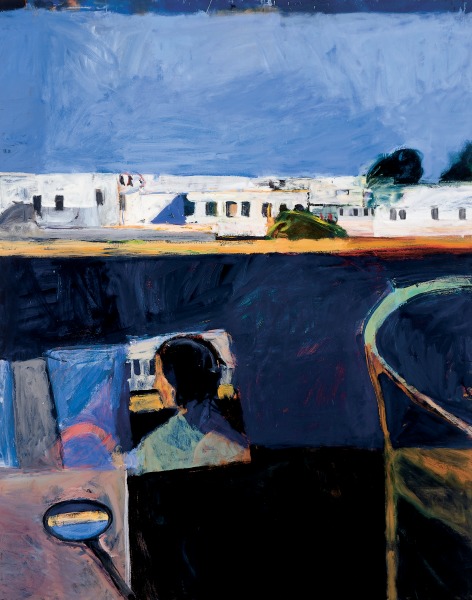
Featured Art: Interiors with View of Buildings by Richard Diebenkorn
“Blood and gore on channel four.” That’s what people said whenever QBZ-4, the station me and Paintbrush Martinez pulled the graveyard at, came up in drunk or sober conversations. It wasn’t really a joke, but we said it jokingly. It was just part of our language—like singing a nursery rhyme or dappin-up your homie at some backyard pachanga. We recited it like scripture, hummed it before sitting down on our sofa pews, before hitting that prayer-book remote, before entering the church of our living rooms or the confession booths of our sorry-ass bars.
“Blood and gore on channel four” was smeared on the streets, projected onto the heavens, and hardwired into the body of everyone in Albuquerque from the picket-fence, northeast-side gabacho, to the straight-out-the-Pueblo Indio, to la chola chingona hustling South Valley. But on the lips of those living lives flooded with fortune and security—culeros on that white-collar, whiter skin shit—it was a punchline, something to say after a sneeze. Lodged in the throats of los demás, all those scared-ass vatos and their families, it was a Hail Mary, a bulletproof vest, a way to savor your breath, remember your heartbeat.
Like them, I grew up on “blood and gore on channel four,” rehearsed the line year after year as I watched folks from the varrio become actors, turn familiar places into TV crime scenes where they played out the role of “meth user,” “gang member,” “tragic shooting victim,” or “drunk driver.” But I never understood it, the reality within the words, the physicality behind the images—not when I ditched home to study film on some diversity-ass scholarship—not while working nights at the Q with Paintbrush—not till the shit with Graci, Tío Albert’s ruca, hit the fan.
My father called me chiba, mi primer hijo— tomboy, my first son—knuckling the crown of my head. He said I sat too mannish—
my knees splayed, forearms on thighs, watching the Knicks on the couch in his apartment. When I began my model
plane phase, he came to my mother’s house to help me build an A-10 bomber—each piece primordial green. We labored over landing gear, inhaled foul rubber cement.
He mentioned boyhood dreams of building planes, watching the work of his hands soar instead of clunking to life like the radiators and refrigerators he worked on.
I told him I was proud of how he fixed what was broken. My father half-smiled before burying himself in silence and instructions. We added decals, painted a shark- toothed mouth on the plane’s snubbed nose.
Yesterday I saw a tree the color of the sky it stood against and thought of Rothenberg’s painting of the translucent horse barely outlined in a pink haze—the same color that lit the glass buildings some mornings
in Pittsburgh, where I studied photography for one misplaced year. There, in a darkroom, a girl held my hips while I mixed chemicals that smelled like sweat licked off of skin, and the shape of her hands felt like shadows touching me. I told her
about the horse that lived at the end of the road where I grew up, how I fed it handfuls of grass and dandelions from across the electric fence. That horse
was a kind of shadow too, forgotten by the neighbor who asked for it for her birthday and then never rode it. Rothenberg’s horse
is mid-gallop, legs folded, body suspended in the pink air. Where is that girl from the darkroom now? She’d been living in a tent in the woods when I knew her. Her arms were covered in red crisscrossed lines. She told me not to worry about her, and I, young, didn’t. Later, I had dreams
of pink fields, a figure blurring along the tree line.
Dad was reading the encyclopedia from cover of A to back cover of Z right up until the week he died. He had been at it for two years, and was somewhere in the Es that night the tie rods failed. We’d never know exactly which article he left off on, because he could remember page numbers and had no need for bookmarks. He was amazing like that.
If five volumes in two years sounds unimpressive, I should add that this was on top of all his regular reading: all the novels, the popular nonfiction, the medical journals, and every one of those yearbook supplements that went with the encyclopedia itself. I don’t know of anyone else actually reading those things, but he did so every year as soon as they arrived in the mail.
I dream about Dad this morning. I dream he’s alive again, as are Peter and Denise, both of them adults now, though Mom and Dad are still young. Matt and Henry are there too, the former with his shins, the latter fully mobile. All seven of us are having a quaint dinner way up in an Alpine chalet. Halfway through our meal some beams split and the ceiling caves in, but nobody is hurt, just caked in plaster dust, which Dad starts vomiting out. And then laughing, and then taking a big gulp of his wine, even though it’s filled with debris.
Converted historic train station—perfect place to sit with my family at this reclaimed farmhouse table in view of the corrugated-metal-paneled bar with its bowls of hardboiled eggs instead of pretzels or peanuts and to observe, with the intent to eventually eat, this grilled watermelon salad while waiting for my herb-crusted duck which was free-ranged in nearby Marengo County as Mina redacts with purple crayon any semblance of the comical panda on her coloring placemat and Brooke says Manny kicked her kidneys from inside her thirty-week womb. But look:
there goes Dennis, father of three, newly divorced from his wife of fifteen years, and with him’s old Pete, engaged to a woman we haven’t yet seen proof of, each carrying a stein of golden lager into the warm Thursday evening of the spring-dappled beer garden to watch, no doubt, underdog Auburn take on top-seed UNC in the Sweet 16 on the bistro’s new 85-inch 4K Ultra HDTV.
This mail is been writing to you because I have come to understand you want to have received your reward for succeeding to rescue me, a prince of royal lineage with seven palaces and still a wife of beauty and resplendence to find. I will have been awed by your patience shining in its box of gold but for you to stop from living solitary in the desert and to have enter in a garden of soft green leaves, all I will have needed is your name and date of having been born and a check you will have written now to me care of the federal government of Nirvania. Link here to make good my trouble in sending you a horde of dollars. If you will have trusted in this translucent arrangement of letters, I can promise you a future perfect and forever joy.
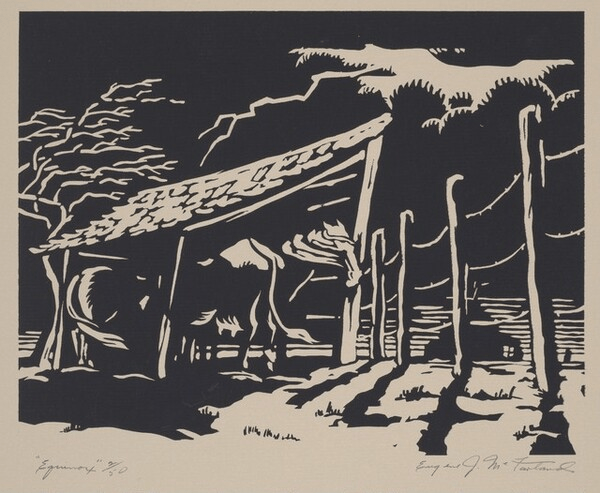
Featured Art: Studies of Men and Women in Medieval Dressby Byam Shaw
One of us is eloquent at 11 P.M. on unhinged dictators and the threat of nuclear war. The other is half-lidded in pursuit of flannel sheets. Or was, anyway.
One of us is a rowdy sleeper, blankets swirling and pillows airborne. The other babbles. One repels intruders and struggles to defuse a bomb. The other dreams a question: Can the failure of bodily organs be contemplated in random order or must it be chronological? One flails, tossing a wild fist; the other yelps in pain. One laughs without waking up. The other wakes up if a neighbor down the block inserts a bare foot into a fleecy slipper.
One of us wonders whether consciousness came before matter; the other doesn’t. One grapples with matters of spirituality. The other cannot suffer the word. One burns with existential questions: Are we alone in the universe? What happens to our memories after we die? Does evil exist, like radio waves, beyond human will? The other talks to strangers on the bus.
One of us hotly refused to marry a person who didn’t believe in God. The other hotly refused to marry a person who did. Each stomped down the street in the opposite direction. Eventually, one pulled up to the curb and opened the door. The other had crafted a cutting refusal, but slid into the passenger seat instead.
One of us was expelled from Hebrew school. The other preached the gospel to sidewalk strangers. One wore hair grease and played in a rock band at thirteen; the other wore a white robe and hymned as a child of Job. One graduated high school with the titular distinction of Crush; the other, with a distinguished truancy record. One was tear-gassed at an anti-war protest in Berkeley. The other attended martini lunches in what POTUS 40 called “the place where all good Republicans go to die.”
Don’t buy that, nothing will happen I said to Johnny Cash played by Joaquin Phoenix early in that movie when he was in Germany when he was in the service and saw some six-strings hanging in a store and was like huhh guitars huh and for some reason my wife cracked up and had to press pause and use Kleenex on her eyes and I thought yes because I hadn’t made or even heard her laugh in a while
we were separated almost or mostly her dad was dying plus Trump and Covid then about an hour or so later (oh it’s a long one) Johnny sees June Carter alone in a diner and figures what the heck and starts heading over and I figure what the heck and say Don’t talk to her, nothing’ll happen and my wife didn’t crack up like before but she did laugh again a real one not just courtesy and I was like hell yes but of course there’d be hard times and there would be scenes like the one where he rips the sink from the wall though it wasn’t in the script he just summoned his rage up and did it somehow and you can hear the gushing of the water off screen as it all hits the ground but an hour or so later in the credits (toward the end but we stuck around) the real June and Johnny start singing
and sing Maybe we can work this out Oh honey I think we can
Once, for fixing a car, my husband was paid with a large bag of small fish—smelt, frozen into a block that was flecked with scores of silver eyes. I would bring a dull knife out to the chest freezer and break off a chunk, let it thaw in the sink and feed it to the cats and dog.
Another customer shaved off some of the cost of her engine rebuild by knitting my husband wool socks that needed to be washed a particular way, which I failed to do, because this customer wanted to do more for him than knit his socks, and maybe did. After they shrank, I could have but wouldn’t wear the socks myself,
a waste I could live with. In the pantry sat another trade, a jar of home-canned venison I never dared to open. Those purplish cubes of meat in their purplish fluid pushed against the jar’s insides for years.
My favorite trades were the things the metalsmith made: a hammered a rack for pans, a copper vase, and three bright numbers that still mark that house— beautiful things with the tang of the earth inside them.
First, it was a painting of sunflowers. He had always been afraid of them, had always thought their gaudy yellow petals blossomed from something sinister. And their height—it was unnatural, he thought, for a flower to stare you in the face. They were plants, not people. Christopher was tall himself, just about six feet. Tall enough to meet a short sunflower, but not quite tall enough to tower over one. It unnerved him, the way they seemed to look at him, the seeds in their disks like so many spider eyes. He shuddered every time he drove by the boundless fields of them on his way to work, with their leggy stems bending under the gross weight of their heads, their huge blank faces open and screaming in the wind.
But there had been a painting in the museum, and he hadn’t been able to stop looking at it. In the background, a nasty storm with deep purple clouds billowed against a bruised sky. In the foreground, the shadowed, golden petals of three sunflowers were being buffeted by the fierce gusts. Dark sky, dark flowers, the threat of storm so strong he almost turned his head and looked out the museum window to see if it was raining.
There’s a man with the rope of a cowbell curled around his Captain Morgan. He whispers his poems from a stack of papers, sees your own and nods, buys you a drink. No conversation needed. Another person adjusts their blonde wig and quietly sings Mi mi mi mi meeeee repetitively. You wonder what song they’ll actually sing—their wig slightly off tilt. A man cradles his ukulele like a baby. Everyone stares into their drinks, performing their rehearsal, rubs the dark worn wood of the bar. You doodle stars on your pages. Half the people here will only show up once. No one will tip, and they’ll leave their empty glasses on the sticky tables, their printouts of songs and poems on the floor. You were the first to arrive, not thinking to stop home and put on something more formal than yoga pants. It doesn’t matter. There is some common urge to perform whatever thought you have, to share with these strangers. It’s Sunday night and raining. Why sit alone silently on your faulty couch with the endless drone of 60 Minutes on the television, the single-serving life of pasta and tomato sauce, the rain driving the ants into your kitchen? Someone taps the microphone, says HELLO, HELLO. The wig rises to the stage, sings “I Fall to Pieces” unconvincingly.
Sweep the seeds and leaves from the porch. The winds were harsh last week.
Practice sneezing more quietly. Stop the throat-scratch hacking. Who could sleep next to that?
Why are you still single? Ask your friends. They know everything about your failures.
Dump your shitty friends who can detail your failures verbatim back to you.
Do the dishes. Remove your socks from the bed sheets.
Bobby pins are not Q-Tips. Baby wipes are not bathtubs.
Commit to eating like a person. With other people. Stop wasting your money on wine and prepackaged food at the 7-Eleven.
Spend more time talking to yourself outdoors at night when stoned.
Stop drinking wine. Stop drinking. But only when alone. Except if you were drinking with people beforehand, and you came home to your dog.
Watch less TV. Except, re-watch the movie Frances Ha. You are a dancer, and you have dreams.
All those goddamn books you buy and barely open.
Make the world more beautiful! Take one earring, preferably dangled and missing its mate. Hang it from an old nail or forgotten hook. A quiet, lucky place.
Quit losing earrings. Quit earrings. Quit things.
Put your old jeans in a box and then the attic. And someday when you move into a new bright house with a new love, you’ll pull them out, thin and mothy, you’ll delight: I CAN’T BELIEVE IT! THEY ALMOST FIT!
Grow things. Give away things. Give away your neighbor’s excessive lemons. Your tight jeans.
Recycle more. Stop hoarding the little gifts that someone gives you when they kind of liked you because they barely knew you. The broken ceramic rabbit isn’t even emblematic.
Appreciate your one good knee, your moisturized cuticles, and the hair that grew back on your head after you got rid of that fucking IUD.
Reach into that folder of old letters pull out the one with the nicest paper. Don’t read it. Just touch it and let it be the cramp in the gut of all the people who used to love you by hand.
Celebrate your old-man dog. In the following order, give him: a walk, a scratch, a bath, a treat, a nap, a brush, a walk, a treat, a nap.
Write down a list of what you could do to be your best.
Kelly took a bookkeeper/handyman job at his friend’s deli. He showed up at Abu Hani’s whitewashed corner shop in East Palo Alto three mornings a week. While Abu Hani prepped the food for the lunch crowd, Kelly squared the receipts and paid the bills. He made sure all the little lights in the deli’s sign were working and stocked the anemic rack of trinkets—hamsa talismans, blue-eye pendants. Then, if Abu Hani was still busy, Kelly sat at the register and charmed customers with his radio-announcer voice. The job, to him, was the most dignified way to hide that his energy was draining fast through the sieve of his sixties.
One morning when he was entering receipts in the side office, he heard a customer talking to Abu Hani. Kelly hovered at the door—he couldn’t place the accent, though its dense consonants were almost familiar. He poked his head around the corner. Over the top of the deli case, the guy looked like any of the old-country Arab geezers who came in for their weekly breakfast olives: that gull-wing hairline gelled back from the brow, hair so silver-bright it made a blurry reflection in the polished deli case. Abu Hani had stopped working and was leaning his bulk on his two hairy fists planted on the counter.
The man noticed Kelly standing there, and he swept up his parcels and exclaimed to Abu Hani, “But you are busy! I am keeping you from your day.” In a last flurry of goodwill, he paid his bill and left.
An old man sluggishly waves a hand. He looks spellbound, as if by an apparition: A stranger, me, in a place few visit. I’m sidetracked into my own odd spell— Both sadness at bleakness and fascination. There’s a sign in another dooryard, bizarre: Atrini, World’s Finest Files.
A softball arcs on the blistered common, A father pitching, a son at bat. One newer car, a Buick, glitters Like gemstone in front of a postage-stamp store. Back lots full of witch-grass show unwheeled pickups Dead amid whips of lilac and sumac. I drive out of town past further signs:
BECKYS TRUCKERS HEAVEN ONE MILE COME IN AND HAVE A “CUP” WITH BECK BECKYS CLOSED FOR RENOVATION Its windows, boarded over with wanes, In brush beside it, a bedspring, a dryer. I notice a black cat eyeing a bird On its roof, too high for him to consider.
was after the memorial, her laptop propped on the table cluttered with half-empty teacups and books as her mother’s body was buried two time zones over
in Louisiana. After the eulogies and prayers, and the few people standing graveside walked away and all the others clicked off, there was nothing to do.
But she couldn’t bring herself to close the screen. So she sat a long time watching her own face looking back, and imagined she was her mother,
and watched to see what her mother would have seen if she’d been there, and in her expression she could see the love she knew her mother had felt
that last time they’d talked. And then she was crying and watching herself cry—as if she was her mother, and the connection was like a counterweight
she could carry, as though an infinity mirror had opened inside her. It didn’t matter then, if she hit the red button that said “End.”
Lift a small shovelful of snow without a shovel off the stubborn blanket of it in the field and throw it completely away, quickly, too, so quickly you couldn’t find it ever crawling on your hands and knees, calling out its name, puff of purest cloud, smoke of frozen fire, wind’s breath, you, with no shovel and a handful of white air.
A romance developed in my sixtieth year, which gave me hope, perhaps inane, surely extreme, especially in my verse, and affirmed principles of affection and cheer.
My lover was tender, our love serious, useful. It was as if in the afternoon, gray, crepuscular an angel had arrived! And we both so secular! Of course we never spoke of death, its easeful
nest, or the unlikelihood we’d ever alight together in the tall trees or, quivering, fly off at the same moment, but that was alright,
because, whenever new or found or at least not lost, desire adds a drop to the earth’s thousand rivers and briefly greens the grave, its bed of moss.
Less a description of a Thanksgiving I remember than an invitation to a party that asks many people, some alive, some dead, to fill the front hall of the old house with such loud joy at faces long unseen that few can reach the quieter fire-lit room at the back where cheese and bread await, and raise glasses of the most delicious, deepest red wine. No war, no plague, no economic collapse deflate the mood. I make a beeline for my favorite aunt in the corner looking out the window at the black river. There I join her bringing the news that the river doesn’t mean what it used to mean, now it’s behind her, not ahead.
I’ve been thinking about last times I never knew were the last— grandma cooing me unconscious, daddy whistling me home to supper, my toddler’s toothless grin, tiny fingers clenching wildflowers, the last time I prayed, desperate for those departed, how they flit ahead of us, flying.
Tonight the Big Dipper balances on its handle. Tepid tree frogs peep songs of resurrection. One morning soon, I’ll eat a good breakfast, fill a water bottle, pack a book, walk the fencerow into the holler, rest beneath the eagles’ favored perch, shake off this inexplicable sadness, two cinderblocks where lungs ought to be, let spring hold on to me for a while.
New Ohio Review editor, David Wanczyk: I’m speaking today with Kari Gunter-Seymour, a 9th generation Appalachian, and the current Poet Laureate of Ohio. Her new anthology, I Thought I Heard a Cardinal Sing: Ohio’s Appalachian Voices, will be published in March 2022. Kari, welcome. Can you tell us about the project generally and more specifically about your hopes for what it will bring to light about Appalachian poetry?
Kari Gunter-Seymour: I would love to do that, David. My hope is that people will become aware that Ohio is part of Appalachia. Because some people don’t know, and a lot of people forget that a quarter of the state of Ohio rests in Appalachia proper, and there are pockets of Appalachian families throughout Ohio, even in major cities throughout Ohio, that still practice those teachings and learnings from their Appalachian heritage and their culture. And so this book is all about bringing notice to that.
I think of us as being Central Appalachians. With roots deep in South and North. You know we had those who came up during World War II and the Great Depression to find work. To seek out the steel mills. We have to remember there was lots of coal and iron mining in Ohio early on, too. And so this book is specifically my dream of being able to give these voices an opportunity to sing. Because they’re different. We’re a little bit different.
We’re more of a mixing pot, I think, here in Ohio, because we are, as we’re finding out, Central. We’re not necessarily North; we’re not necessarily South, but we’re a really good mix of it all.
A body can work and do work in many ways—a body can also not work, or perhaps another way of saying this is a society can make it harder for some bodies to work, in which case a body itself can become work. Our body can be our life’s work—a body of work is the work of our lifetime.
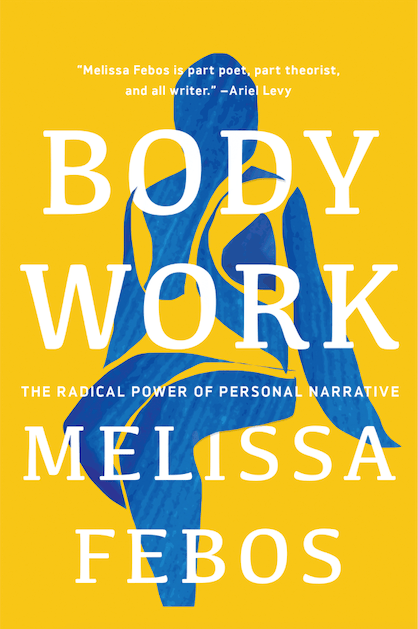
In Melissa Febos’s recent essay collection Body Work: The Radical Power of Personal Narrative, she investigates how bodies and writing intersect, how to tell the stories of our bodies and why we should. By mixing memoir and craft, Febos’s book does exactly the kind of work it argues is important, underscoring the power of the personal. I can’t help but think of the slogan from Second Wave Feminism here, the personal is political, and how today we might consider the personal is professional—that sometimes this binary, like so many others, subjugates certain bodies.
It had been the loneliest summer of my life, which is maybe why I was so looking forward to seeing Beth.
I’d been living in the city for about four months by then. I still wasn’t quite used to the foul-smelling puddles, the fire escapes that blotted out the sky, the way the subway would be whispering along then suddenly scream to a stop, forever lurching me into the lap of some nameless and scowling person. And Beth was nice, I remembered: she’d been the type of girl in college who was always the first to laugh, the first to dance; the type of girl who never complained when we ran out of cold beer and had to switch to room temperature. She was a good sport, I remember a buddy saying once, and I’d agreed.
It was a clear Friday afternoon. I was headed to my mother’s house for the weekend, and the idea of leaving the city for a full two days had left me feeling light. I decided to throw my weekend bag over my shoulder and walk the fifteen blocks to the coffee shop Beth had suggested.
I regret my good decisions while staring at digital timestamps within the carpeted walls of my assigned cubicle as November darkens to evening right after lunch. I regret them as I climb into the hybrid and track its mileage. On an after-work walk, plastic bags, candy wrappers, and beer cans sprawl. I decide to corral strips of wild sheeting massed into a wig of see-through hair. A slippery ooze crawls onto my hands. I should have fucked that guy. I should have broken my heart over him and kept breaking those gears —a clockwork that spends almost all of its time junked just for those two moments everyday, when it is exactly right.
The Prius should make a noise as it creeps behind school children scattering across the road, sunlight and leaf shadows waving around them. It should be, as one petition suggested to Toyota, the sound of the Jetson car, a whirr and a dapple of a sound. But Toyota has done nothing — nothing. The cars glide out each year, shark silent.
When I was 11, at the school trip to Kings Dominion, standing next to a plastic statue of George, Maria Framingham declared she had lost a $10 bill and so of course I checked my back pocket and of course my $10 bill slipped out. Maria picked it up and said she found her $10 and I made no sound and slunk away, my inner petitioner demanding, “Hey, make a noise!” And my inner Toyota doing nothing — nothing.
5. I am in a restaurant when I learn Rob has a wife. It shouldn’t matter, since I’m already a wife, too—Timothy sits across from me, cutting a chicken strip into toddler-sized bites between swigs of his craft beer—but something catches in my chest at the sound of Rob’s name. Maybe it’s because Timothy and I are hardly speaking at the moment, or maybe it’s because of the person delivering the news.
Amaya is supposed to be a ghost from the past. She is not meant to materialize inside the life I have now, this many years after college, as she exits Timothy’s favorite burger place. I don’t notice her until she sidles over and leans against the edge of our table, runs an invasive finger around its glossy tiles, slowly, as if she’s trying to seduce them one by one. We exchange pleasantries: Nice to see you. Yes, it’s been forever. What are you up to these days?
“By the way, Rob got married,” Amaya tells me. “She looks a lot like you, actually—brown hair, kind of wavy. They have a daughter.”
She winces a little when she says it, in sympathy or solidarity, as though we both have the right to feel jealous. Then she tsk-tsks and sets her lips in a thin, apologetic line, flutters her fingers over her shoulder: “‘Bye, honey.” The finality of her hips swaying toward the door.
“That was the Amaya?” Timothy asks through a mouthful of ground meat.
I can’t stop listening to your dumb wonderwall cover that I asked for as a joke. I don’t know what you did to make it sound all distant and a little haunted but I want to projectile vomit when you giggle through the reverb miss a chord and sing alltheroadsanananasomething. Why do people hate this song and why do people only ever play it on acoustic, it’s so good on electric or maybe I just like you—oh fuck, do I like you? During sex I asked how long you had wanted to do this for and you said within the first ten minutes of meeting you and I said same if not even longer, maybe before I met you, does that make sense? Am I making sense? Should I seek professional help if a fucking joke cover of wonderwall makes me want to grin at every blank-faced stranger in a gas station, makes me want to stitch your name into my underwear, makes me want to backflip into the Atlantic Ocean where you are treading water— and I don’t think that anybody feels the way I do about you now.
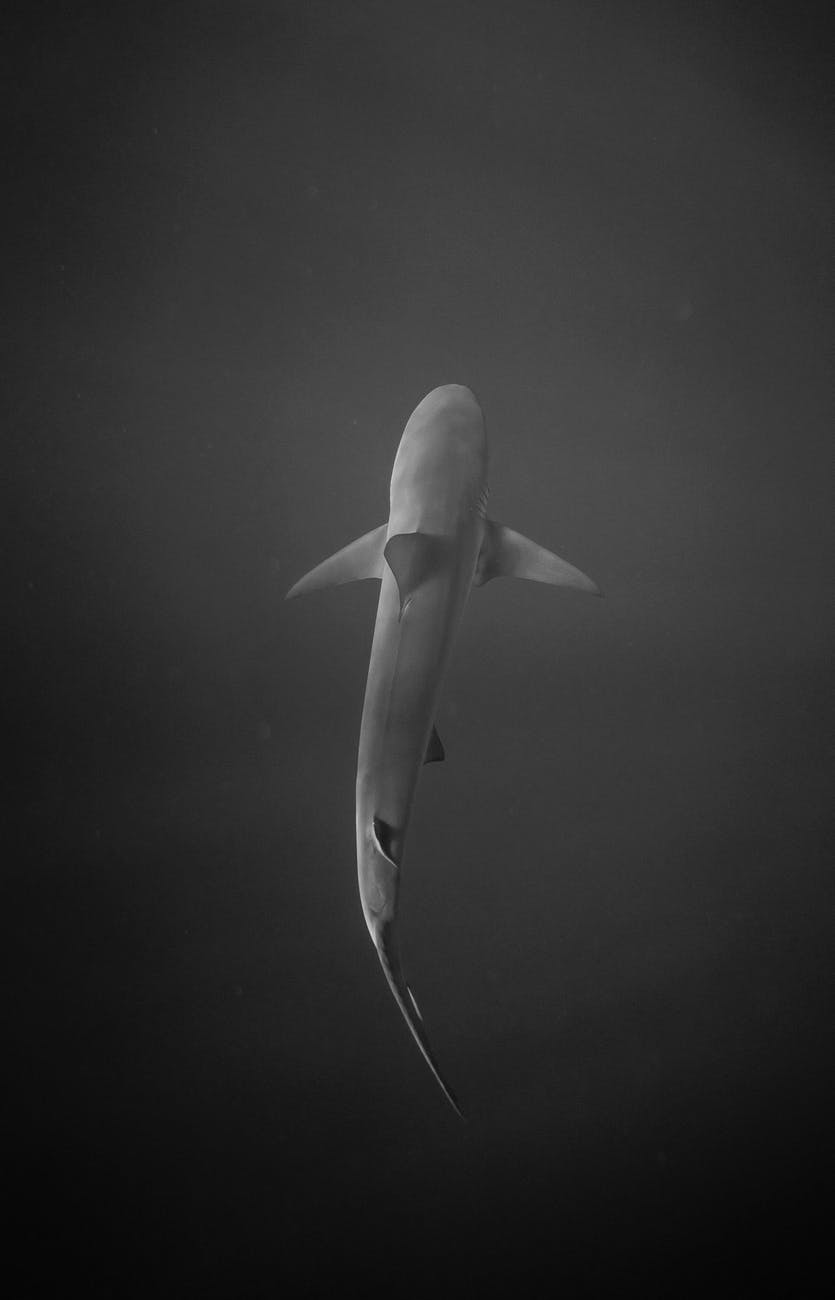
A dark shadow lifted off the sand and floated forward.
“Sting-ray!” she thought, and reached up to pull her goggles down over her eyes. They had seen several rays during their dives that week. She hoped this would be a spotted eagle ray. Velvety black beneath an ebullience of crisp white dots, the spotted eagle rays had been her favorites. She ducked below the surface.
And saw that it was not a spotted eagle ray.
It was not a ray of any kind.
It was a shark.
She had never seen a shark before. Of course she’d seen a shark before: in a movie, in an aquarium. But that was the sensation: I’ve never seen a shark before, but I know one when I see one, and that shape swaying through the not quite crystal-clear water, that is a shark. It felt primal: ancient, encoded, instinctive recognition of predator.
What Sappho calls the desiremind or the couragesoul I call the swirling Chesapeake Bay of my brain and sure you could call the tugboat trawling through the brackish waters desire and yes you could call the striped bass sourcing speed from the tugboat’s wake courage and sure you could call the crushed beer can scything the surf the mind and yes the soul looks like a blue crab when I close my eyes to picture it aquamarine claw olive-green shell I can’t quite place the bird tipping its beak into the bay to capture an absent worm absent because fields of eelgrass are emptied daily by giant pesticidal blooms heaps of dead fish falling upwards towards the surface but in placing the bird a red knot a piping plover one could easily mistake it for the faculties of the soul particularly the appetites so many Plato doesn’t even bother to tally them though he does warn of their penchant for battle the appetites who are hard to see when they stand still like the piping plover for whom they are often mistaken yes I’ve been out combing the waters for a new bird one whose bright rusty throat and striped back better represent those flightier emotions not even Sappho has the words for is it the tundra swan with ass upended and neck submerged searching for the eelgrass that isn’t there the tundra swan that birdwatchers who don’t know better call suicidal ideation maybe the tawny-throated dotterel is the one for me if I cover my left eye and squint my right the bird looks like the dysmorphia that keeps me out of the view of most mirrors just look at this dotterel can’t you see the pointed beak that just screams I want to be your worst best friend a voice that sings come breach that little bay of yours come tie the sky together with us birds a pointed beak that’s just dying to be the Orpheus to your Eurydice the kind of bird that wants to kickstart your katabasis a word that if I’m reading the Greek correctly can be widely defined as a descent of any kind such as moving downhill the sinking of the sun a military retreat clinical depression a trip to the underworld or a journey to the coast
By Zuzanna Ginczanka Translated from the Polish by Joanna Trzeciak Huss
Featured Image: Untitled by Tanner Pearson
We… A frenzy of hazel trees, disheveled by rain, a scented nutty buttery crush. Cows give birth in the humid air in barns, blazing like stars. O, ripe currants and lush grains Sapid to overbrimming. O, she-wolves feeding their young, their eyes sweet like lilies. Sap drips like apiary honey. Goat udders sag like pumpkins. The white milk flows like eternity in the temples of maternal bosoms.
And we… …in cubes of peach wallpaper like steel thermoses hermetic beyond contemplation entangled up to our necks in dresses conduct proper conversations.
Any biography of Zuzanna Ginczanka (1917-1944), however short, should attempt to speak to her desire to define herself and her refusal to be defined by others. For her, social and artistic identity was something to be chosen and cultivated, but in the times in which she lived, identity ascribed by others was a matter of life and death. Born Zuzanna Polina Gincburg in Kiev in 1917, she fled shortly after the Russian Revolution with her family to the border town of Równe in Volhynia (present day Rivne, Ukraine), which was at one point part of the Polish-Lithuanian Commonwealth and was about to become Polish again in 1920. The destination was not accidental: it was the town where her Russian-speaking maternal grandparents were well-ensconced. Yet this provincial capital proved too confining for her parents, who abandoned her to the care of her grandmother: her father leaving for Berlin when Ginczanka was three and her mother for Pamplona, Spain after she remarried. Równe, a multi-ethnic city, was Ginczanka’s childhood home and it was there she attended a French pre-school and Polish elementary school and high school. She adopted the name Ginczanka, and though Russian was her native tongue, chose Polish as her language of poetic expression. Yet she was never able to obtain Polish citizenship and remained stateless throughout her life.
By Zuzanna Ginczanka Translated from the Polish by Joanna TrzeciakHuss
Featured Image: Untitled by Tanner Pearson
1 In the beginning was heaven and earth: black tallow and blue oxygen— and fawns beside nimble stags and God, soft, white as linen.
2 Cretaceous Jurassic Triassic The earth layers in strata— The Miocene advances by tank — a majestic conquest. There is a separation between water and the land of ferns and birches —and God sees that it is good when Genesis dawns. Nitrogen brews in magma, magma congeals into rock mountain thrusts upon mountain in a thunderous, cosmic mounting The Carboniferous enriches the earth with bituminous pulp. —and He sees that it is good for moist amphibians and stars. Iron pulses like blood Phosphorus hardens into tibia—— — and with singing air, God whistles into pipes of crater.
3 In the beginning was heaven and earth: and fawn and tawny stags but then things took a different course: and flesh was made word.
4 Back then, a lone rhododendron trembled before a fragrant angel, horsetails tall as New York creaked and clattered. Now daisies wilt in town squares in Konin, Brest, and Równe and at night policemen and their spouses make love.
In the study that a child playing hide and seek once called the messy room, in a drawer, in a manila envelope, still sealed, I’ve filed the police report on how you died. It will stay put: it will age, though you don’t. I’ll open it today. I’ll never open it.
Here, photographs spill out of boxes, and you return, a small boy perched on a stoop in tiger pajamas. You grin, flashing little white cub teeth; you claw at the blue sky beyond a black and white world. You are about to climb a tree, to grow feathers, to rise, to become cloud.
At my son Kyle’s 12th birthday party, about fifteen boys in the pool stopped swimming long enough to look up. Ten feet away, up on the hill, a brown snake’s mouth was wide open, and a large rat looked like it had been stuffed head-first down the snake’s throat. Its pale pink legs and tail hung out of the snake’s jaw, which was clamped firmly on the rat’s plump midsection. The rat was not moving.
“Get my phone, I need a photo,” shouted Kyle, scrambling out of the pool. The rest of the boys followed him. Within seconds, they were watching the snake, snapping photos, mesmerized by the surreal scene. My husband joined them, along with a few of the boys’ parents.
“Can anybody save the rat?” I yelled frantically. I stood by the pool, looking up at the snake but I wouldn’t get closer. The snake was perfectly still, its mouth stretched wide open to hold onto the rat which dangled out of its mouth, limp. The snake looked about 5 feet long, with a thick body, teeth bared and eyes deadly.
The lives of the briefly famous, the fortunes sunk into places rich people call home. What they might tear down, what they deem worth standing.
Perhaps it is their need for comfort which makes these calls. The dumpster departs, and they are clean.
For me on Tuesday night, it’s all hypothetical; I owned a house once for a year, fixed it up, decided to sell. I rent now, happy
to call the landlord when the shower handle breaks or a tree falls on the telephone line. Through all the places I’ve lived as an adult—four rentals and that one home I briefly owned—
The first package contained a light blue pair of Nike Huaraches, size 8. I took this as a sign that I should keep stealing packages: my son laced them up, and they fit perfect. He started jumping around, walking on air. We both laughed until our sides hurt, and then I cooked a box of macaroni for dinner, made with water and oil instead of milk and butter, But who cares, my son said, lifting up his feet to admire his shoes.
I only took packages from the porches of nice houses, but not nice houses with fancy doorbells. Some of the doorbells had cameras and attached to smartphones. I could see the older style cameras, so I avoided those packages as well. Everything had to line up perfectly for me to steal a package.
I drove a Ford transit van delivering flowers for a flower shop, which is how I came to realize that there were neighborhoods in my town that I never even knew about, full of nice houses with packages on porches. Some of these neighborhoods were gated, to keep people out unless they belonged.
I also delivered flowers to neighborhoods like my own with old houses falling into disrepair or bought up and cheaply brought to code by slum lords. There were widening gaps between the houses where condemned houses had been demolished by the city. Every once in a while, Habitat for Humanity would slap a cute little bungalow in one of the empty lots. But I never took a package from neighborhoods like my own. It didn’t seem right.
In the mornings, I clocked in to work and looked at the flower arrangements that were going out for delivery that morning. They stood in the cooler in the flower shop, and I read each tag before deciding on my route. Then I loaded the vases into the back of the van and drove off. Sometimes I had to gas up the van or air the tires or stop at the grocery store to pick up fruit for a fruit basket. Then after my deliveries, I helped process the flowers in the shop, while the designers put together bouquets for the next day. That was it, the entire job. Sneaking the packages from the van to my car was easy. I never took anything larger than a shoebox, and I slipped it into the backpack I kept on the passenger seat.
“I don’t want to be cured of beautiful sounds,” insisted Milo.
—The Phantom Tollbooth
Must I implore you for more of what I want? A clanging of fine china, symphonies of wet spoons, clattering of forks falling from the violent sky, a click-clack-click of yellow teeth saying not much of worth in the night.
If trash can be treasure then I can be sound. I can be the scream rising like steam from the red kettle sitting on your mother’s stove.
I am the thumping & cheering & crying of every bum, junkie, bride & boy in town.
I’m an Appalachian beauty queen, a capable kitten with smooth birthing hips. Applaud the cinema kitty cat caught in the smoke ring.
I rule over Kentucky junkyards, zoom in as I sit on refrigerator thrones, play pianos by the highway, cigarette-thin fingers give a tinkle tankle of a tune perking ears that belong to someone twenty years ago. The honeysuckle sweetness of my fingertips, syrupy sweet on the dirt keys, greasing up the notes, F, E, B & so on.
Underneath the toasters & the books from all those rummage sales sits some hot ghost of a memory. Smitten kitten, the smell of trash makes me think of our place & the breeze outside is the same one I feel at night when trains go by.
Stack the broken binds of hymnals for a stage, wrap, rip, some leaves, some dirt, pack, perch, pack it all in, real tight, until the only clumps to fall from my deciduous crown are intentional. A tap dance for you, a finale with hula-hooping hubcaps & juggling light bulbs. I sing in a rusty tune, decaying notes in the keys of D, C, G & so on.
When I die, no fly will buzz, no bird will crow, no man will cry. Or maybe when I die, every man will cry
and say, “There goes the love of my life—a beauty—if only she had known.” Women will hate me stealing
their men’s hearts even in death, for taking over their dinner conversations after they’ve carefully prepared the pink-orange ham loaf.
Forks & spoons—the men will swear to see my eyes—my teeth will show up in all the fine china. My legs prance through the women’s heads
as they look at the octopus waving its arms, wrapping its tentacles around another. Dirty salt water will turn red with their fury
as their husbands say, “She was such a beauty. If only she had had eight arms.” A constellation will form in the shape of my face & planets with my thumbprints will be discovered.
When I die, don’t send me roses because I am now the dirt, I am the plant, I am the seed that sits in the crook of your skull, always reminding you what it’s like to call a place home.
When the doctor found the tumor in his brain, when the surgery was first scheduled but not yet scalpeled, before the poorly fitted tracheostomy tube which introduced the sepsis, your father forbade you from coming to Connecticut. He didn’t want you to see him like that, he said. That when your grandfather died, your father could only picture him ill and threadbare in a hospital bed. He did not want that for you, if he didn’t make it.
“No.” You lifted your laptop from the coffee table and clicked your internet browser. “Absolutely not. I’m pulling up Delta.” The ticket would be expensive from Iowa City, but you would pay anything to be there.
He told you that you could visit when he was well again, for Thanksgiving, maybe. “Look, Kimmy,” he said. “I got some bad apples, but we can still make applesauce out of them. It’ll be okay. The surgeon’s good. I’ll have to do some PT, but I won’t lose any cognitive function. That’s pretty good applesauce.”
You wanted to tell him there was nothing applesauce about a brain tumor. That you didn’t care how small, or how easy the recovery, or how experienced the doctor. You wanted to tell him that twenty-two was too young to be fatherless. If it was your Iranian mother, you would have had permission to scream and rip hair from your scalp and weep. But he wasn’t one for big sentiments, your father. He was American. So you laughed because you knew he wanted you to laugh.
After the phone call, you drove to the grocery store and picked out a jar of applesauce. It sat in your cupboard through his entire sickness, and you ate a spoonful a day as if it could keep him safe.
On the hayride night our senior year in high school we lay side by side holding hands under the stars trying to figure out how we could remain together because back then to a couple of cotton mill kids in the 50’s what else did our first-time kisses and hugs mean except true love but after graduation she made a sudden decision to attend the Richmond Professional Institute in Virginia and learn commercial art to get prepared to paint advertising pictures for newspapers and magazines she said maybe even like a cover for The Saturday Evening Post and how was I to manage a long distance relationship across the state line when I didn’t even have a car which I tried to tell myself was the problem but the real difficulty was Jenny seemed like some kind of pioneer woman to me and already out of reach a person who knew exactly what she wanted and wouldn’t let anything or anyone stand in her way while all I could come up with was maybe I would join the army and get to see the world myself someday – Hollywood or Africa maybe even what we did to Hiroshima – some place Read More
We are walking along the dunes at Corn Hill Beach with my grandfather, Baba. The sun is broiling our backs, and there aren’t any clouds. We smell like suntan lotion and laundered clothes. Baba breathes heavily as he walks. He wears clean sneakers with white socks pulled halfway up his calves. I have a new pair of flip-flops in one hand, my toes seeping into the sand. My brother runs ahead, an inflatable red lobster tucked under his arm.
We were supposed to leave the Cape a week ago to go back home to our mother, but we are still here. At night, after we’ve been bathed and fed, my grandparents fight about what to do with us. The day camp with the dreadlocked artist has ended; neither of us did well with tennis.
Wyatt is eight, and I am ten. We sleep in bunk beds in my grandparents’ renovated wing. When I close my eyes, I hear large ice cubes fill my grandmother’s glass, the freezer open and close. We have a whole dresser of new clothes they’ve bought us, some colorful toys in a wicker basket. If they yell at each other loudly enough, Wyatt sniffles and cries. “Be quiet,” I try to tell him, but he doesn’t understand. On my back, I lie as still as I can be in the top bunk, pretending I’m frozen in glass. If my grandmother hears my brother cry and peeks into the room, she’ll think that I’m asleep.
“Over here,” Baba says, and we move toward the water. He’s packed a cooler with Goldfish and Milano cookies, juice boxes, and cans of Coke. His white hair sneaks out the back of his baseball cap. Wyatt throws his shirt off and runs into the water, thrashing wildly in the waves. Baba takes off his shoes and socks carefully. He looks far out into the ocean, his soft skin glistening in the sun. The waves crash onto the sand, and the wind twirls through my hair.
Last week, when I asked my grandmother why we weren’t going back home to our mother, she wouldn’t give me a straight answer. “Your mother is busy,” she said. She was staring at herself in the mirror of her bathroom, fluffing her hair. “She’s writing a paper for her Statistics class.” My grandmother sprayed perfume on her wrists and then rubbed them together. Her gold bracelets slid down her arm. “She needs more time.”
“Don’t you want to go in the water?” Baba says.
The truth is I am afraid of swimming, but I get up and walk slowly through the thick sand, sitting down at the water’s edge. Wyatt is pretending to be a shark, flapping his hands like fins and growling. We are two different islands; we almost can’t see each other.
Smoking against the façade of a moon- bleached gas station she listens with a waitress’s patience to the local boy’s prattle —her senior year of high school
& already the air stinks of coveralls. Her hair is black. Brushed out long. Flyaways. The occasional breeze & his good blue eyes. A mile from here the highway shakes.
And he admires that probability. It’s far more likely than the chance of us being here as who we are; someone calculated that as about 400 trillion to one. He admires this, too, and how the sun
sits on our shoulders right now. Under the eaves of that sturdy-as-hell roof, the common ariel hornet tucked her nest for the summer. I was about to describe the season as brief,
but that is only how my stuttering synapses process time. So, I assure myself that my father will live damn close to forever, with a quick sidestep to knock on the closest tree and shush
any wisp of a god still hovering nearby. The bit of sun moves, so we move. Dolichovespula arenaria probably notes where our ungainly grounded bodies take up space
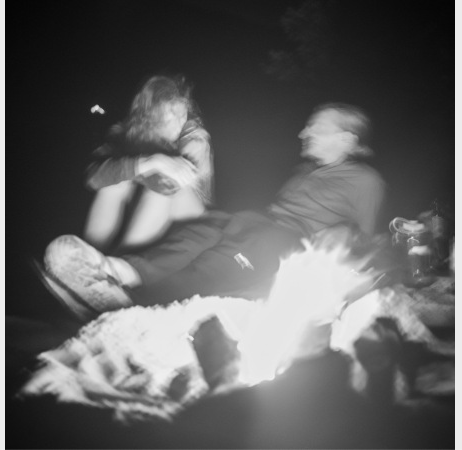
Featured Image: Forget the Flowers by Tanner Pearson
Twenty-six years have passed since you tried out mattresses at Macy’s, hands folded over your chests as if laid out for a viewing. No, that was not how you lay on a mattress at home. You had read in the paper that couples who rated their marriages “satisfying,” slept spooning and those who rated their marriages “highly satisfying” slept spooning with their hands cupping their spouse’s breast or penis, so nightly you wrapped your hand around his sturdy cock believing that you secured a happy marriage in your grasp. But after googling “how to” diagrams of spooning on the web, you’ve learned that as the smaller spoon you should have been the spoonee all those years. So now you are shopping for mattresses by yourself and the sleep expert at Slumberland wants to upsell you a queen even though you are still weepy and lost in your own trough within a double, a sinkhole of busted continuous coils. He asks how you sleep. Badly. You need something supportive, he says, but with plenty of give. Yes, absolutely! Memory foam, he says. Oh God, no. Knock me out on horsehair or kapok, sheep fleece or pea shucks. Give me a nightcap of nepenthe. Certainly not memory.
My finest moment, the occasion that defines me as a person. Okay. You have to imagine the cliffs. Sheer and bleached in the light of a moon or two and rising from the foam of a screaming ocean. The sky is bleeding down in a magical haze, and a horde of monstrous creatures roars nearer. That happens all the time. This isn’t metaphor. They’re armed and armored and charging from the landward side, and the petulant face of a dead god breaks open out over the waters. His teeth drip with death and his eyes are storms, literal lightning and thunder and hailstones, bearing down on where I stand at the edge of the world. He’s starting to take physical form. He’s getting real. I’m the focal point of the material plane for once in my miserable life, and I thrust the crystal, that plain-looking clear-color gemstone pulled unwittingly from a dragon’s trove, I drive it straight into my heart. Breastplate undone and hair flinging in the wind and my lover wailing as I drop into his arms. Our enemy screams and begins to fade. I’ve saved the world.
I cut the crowd loose, I stack the deck twice I feed you shrimp cocktail I sort through the loose mail When it rains, it worms and we blow the house down Wishing on the wick I am the boss of this clique!
My uniform is a pebble, my mouth Hums trouble. All I do is stay inside One-legged, I hide In the clutter of my mothers Turning red with permanent marker Wasting hours with Colonel Mustard
Eating ring-dings for dinner Singing happy birthday forever On Facebook, searching father Then deleting my browser Faceless, I cower and wave to the mirror Eating the angel hair of the dog
In the seventh grade we debated gay marriage. I was con. I stayed home. Kept my hair in a braid and kept my braid to myself. Tucked my name like a secret up my sleeve. Wore hideous loafers. Ate full-sized boxes of Twizzlers. Became rigid, a painting. Still Life with Social Studies. My skullcap, full of doves. My face, a hot button. Press it! Pierce my timid ears. In the bathroom eating a turkey sandwich and Jenny dragging my zipper down to see what was there. Con: my whole life riding on a hyphen. Con: my hands blue with luck. An eyelash on my finger. Two of anything can build a bridge. The love makes me lonely. The love makes my family. A slogan of roses. A crown of sugar ants eating through the gymnasium floor.










 New Ohio Review