Art Is Long, Planets Short: The Lasting Power of Carol Ann Duffy’s “The Woman in the Moon”

By Adrienne Su

I have mixed feelings about my belief that Carol Ann Duffy’s “The Woman in the Moon” is likely to endure well into and beyond the 21st century. The happy side is aesthetic: it has disciplined quatrains, playful alliteration, inconspicuous rhymes, and a cascade of clear images that are of the immortal kind. Its metrical dexterity nods to centuries of poetic convention, and while free verse has been more popular than formal for some time now, contemporary poets of enduring power, like Duffy, readily deploy elements of unfree verse even when not writing in strict forms, making poems as musically precise as they are creative and intellectual—the point of poetry. The reason I am unhappy that the poem is likely to be representative of this era is thematic. It’s a piece about patriarchal power and the destruction of the planet, and its message is urgent.

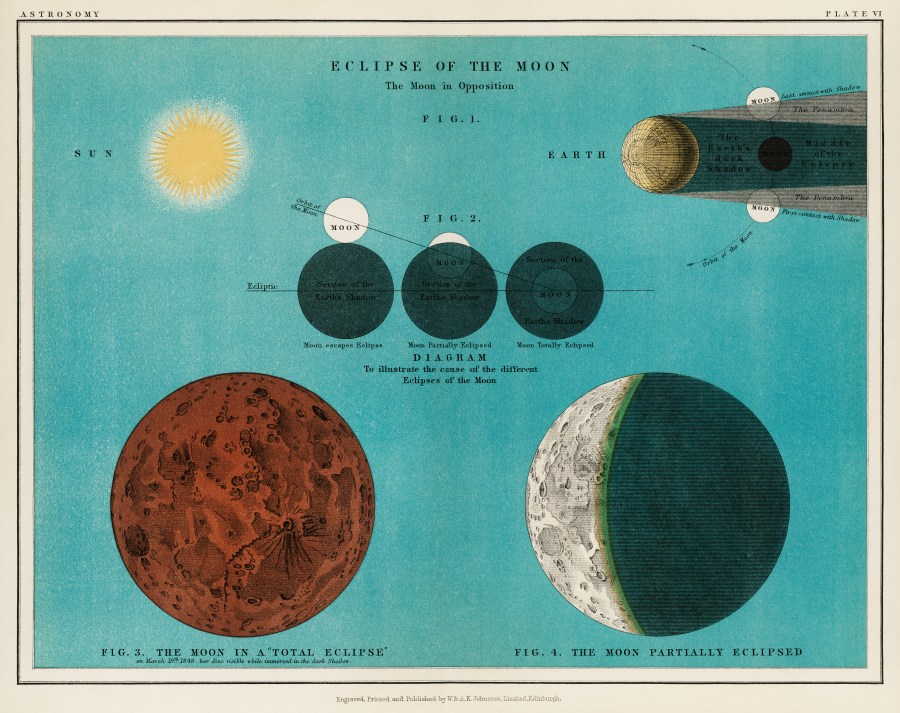
“The Woman in the Moon” in the poem speaks in place of the archetypal “man in the moon,” recasting that character as a woman who is irritated by the human assumption that this figure of legend must be male. In the wry voice of your most opinionated aunt (who always turns out to be right), she tells the inhabitants of Earth—addressed as “Darlings”—her thoughts on observing them through the ages. Affectionate and annoyed, she sympathizes with their struggles (our struggles) yet bemoans their abuse (our abuse) of the planet; and the poem’s final sentence laments its destruction. Along the way, the speaker shows herself to be a force not only of nurturing watchfulness but also of literary mastery. She is not only talking; she’s writing to us, it seems, and this woman in the moon is not just any writer. She is demonstrably a poet.

Read More
“Gender’s Tidy Little Story”: On Stacey Waite’s “The Kind of Man I Am at the DMV”

by Emily Mohn-Slate

On July 1, 2016, Mississippi HB 1523 was signed into law.  One of its provisions states, “Male (man) or female (woman) refer to an individual’s immutable biological sex as objectively determined by anatomy and genetics at time of birth.” This bill codifies discrimination toward anyone whose gender does not  fit the sex they were assigned at birth. How can a poem best speak to HB 1523, and to our daily lives as gendered beings?

Stacey Waite’s “The Kind of Man I Am at the DMV” (Butch Geography, Tupelo Press, 2013) dives headfirst into this question as the speaker encounters a boy in a Midwestern DMV:

Read More

What Essy Stone Done to Us

By Anders Carlson-Wee

Essy Stone: write it down if you have to, but don’t forget the name. Her poetry  is voice-driven, deeply rooted in place, narrative in all the best ways, and tough as fuck. It’s also weirdly inviting. Many of her poems are dramatic monologues, addressing the reader directly, and her work is musically deft, grotesque, grotesquely funny, and a total pleasure to read. Sitting in a café the other day, I found myself smiling while rereading her debut collection What It Done to Us; I handed the book to a friend, who burst out laughing within seconds. The collection was selected by Gary Copeland as winner of the 2016 Idaho Prize and published by Lost Horse Press in 2017. (Get yourself a copy.)

Stone builds much of her thematic tension through cinching together seemingly disparate forces: God and domestic violence; the Devil and homesickness; Christian testimonials and hotel blowjobs. In “Among  the Prophets,” which was originally published in The New Yorker, she takes on religion, sex, deception, poverty, small-town life, Southern conservatism, the KKK, and what it’s like to love and hate a father who wishes his daughter were a son. It’s a prose poem that paints a portrait of the speaker’s dad, who, people say, is “possessed by the spirit of King Saul.” Stone makes clear that the gossipers are “in town,” and with those two words, she quickly positions the speaker and her family outside the town, in the country, the outskirts. The poem goes on to describe the speaker’s father like this:

Read More

“Arch-Talk” and the Postmodern Gall of Josh Bell and Mark Bibbins

By Keith Kopka

The term “postmodern” is tossed around a lot in the 21st century and has become an enigmatic umbrella. Visual art, architecture, television, and online media have all embraced the idea of the postmodern, and poetry is no exception. However, because of our culture’s ontological zeal to define things, postmodernism can often feel like a catchall. Any rough poetic beast that questions the formal order or unhinges its jaw around an “accepted” version of discourse has everyone running to sound the postmodern alarm bell.

But what does this label really mean for the poems to which we assign it? And what are the characteristics of successful postmodern poems that help them to stand out against the backdrop of modernity? Perhaps the lack of definitive answers to these questions is part of the used-car-salesman charm that is post-modernity. Still, this doesn’t stop writers from engaging with our cultural landscape to create voices and arguments in their work that would have seemed unlikely only twenty-five years ago.

However one feels about the idea of defining things by their temporal relationship to “modernity,” what can’t be denied is that this idea, despite all the debate, has become a quintessential aspect of the 21st century, and the poems that are the gems of this age handle their postmodern baggage with skill and grace. Two examples of this are Josh Bell’s “Epithalamion Ex Post Facto” (No Planets Strike, 2008) and Mark Bibbins’s “A Small Gesture of Gratitude” (They Don’t Kill You Because They’re Hungry, They Kill You Because They’re Full,  2014). Doing more than simply rejecting the cultural hierarchies constructed by poets like Pound and Eliot, these poems, with their expert craftsmanship, leap between disparate thought and cultural interrogation: the poems play tennis with our expectations about what a poem should be.

Read More

The Present Deeply: The 21st-Century Love Poem

By Mario Chard

All the poems in new films set in the future are still the old poems. It means our visionaries of film are still looking to the past and not the present for lasting texts. And perhaps that says more about canonical texts needing time to rise above or drown in sand like Shelley’s “Ozymandias” (the poem turned 200 this past January). But it also says something about the need for forums like this feature—space to speculate on those 21st-century poems bound to last. Here are two that I prophesy will make the list—Katherine Larson’s “Love at Thirty-Two Degrees” and Solmaz Sharif’s “Look.” Prophecy, I once heard a theologian say, is not about glimpsing the future. True prophecy is about seeing the present deeply.

First, the past (briefly): Shelley died four years after “Ozymandias” was published: 1822. That same year, Matthew Arnold was born—and so goes the cosmic balance. But today, Arnold’s most anthologized poem, “Dover Beach” (it turned 150 last year), more closely resembles Ozymandias the statue reduced to “trunkless legs of stone” than it resembles “Ozymandias” the poem. One reason why: Arnold follows his famous thesis that “The Sea of Faith / Was once, too, at the full” but is now “withdrawing” and “retreating” with a sentimental turn he’d telegraphed earlier: “Ah, love, let us be true / To one another!” In this poem of existential desperation, where two stand “as on a darkling plain” over which “ignorant armies clash by night,” the poet turns dramatically back to his love. But although the line and its move to stay destruction by the declaration of love are memorable, it can also read as a prop, a staged expression of passion to make a poetic point. But is there something else that troubles us?

Read More