Solstice

By Maya Sonenberg

Featured art: The Vanishing Race (Navajo) by Edward Sheriff Curtis

Eight o’clock, nine o’clock, ten o’clock on a summer evening—it’s time to close the eyes, allow the breath to deepen, and sleep. The neighbor’s cat sleeps under the camellia bush and the neighbor’s baby has given up her screaming and sleeps in her crib; the hummingbird babies sleep in their nest perched on the Christmas-light wire strung across the porch ceiling; boys and girls everywhere put on their pajamas and brush their teeth; grandparents, all four of them, rest underground. In this house, though, the children call for glasses of water, kick off their sheets and pull them back up, ask for stories about the grandparents they’ve never met, count airplanes going in for a landing at SeaTac, their red lights blinking down through the trees, tell each other jokes through their open bedroom doors, and throw pillows at the back of any parent who dares suggest it’s time for sleep. Yes, darlings, you’re right: while light still fills the sky and the first star appears and then the others, and while your parents sit on the porch steps with their glasses of wine, trading stories, it’s impossible to think that this vast middle—life—will ever end, that anything will ever die. Now, before dark sets in, watch all the colors fade to gray: the last stripe of orange sunset in the west; the blue sky pulsating overhead; the cedar and eucalyptus and dogwood all dissolving into dark—a gray and then a darker gray that is the color of our house walls, headstones, and storm water rushing over Snoqualmie Falls. At the falls today, after playing in the hot sun and the icy rocky riverbed, attempting to catch minnows, you hiked the slowest hike in all creation back up the steep slope you’d run down an hour before, scuffing the gray dust with your toes, and moaning about your aching legs and parched throats and sweaty backs and lack of ice cream, but once we got back to the city, you decided you hadn’t had enough of the outdoors and insisted we stop in Volunteer Park where you, Ezra Jacob (grandson of Jack and great-grandson of Jake) and Phoebe Rose (granddaughter of Phoebe and great-granddaughter of Rose), sat side by side on the swings and pumped yourselves up and up and almost out over the fence separating the playground from the cemetery, out over blackberry bushes and hydrangeas, out over the chain link and then the short clipped grass and the monuments, so that if you’d let go, you would have sailed toward a waiting angel who would lift her stone arms and catch you, happy for the chance to save someone, happy for the reprieve from guarding a grave.


Read More
What Comes Next

By Maxine Scates

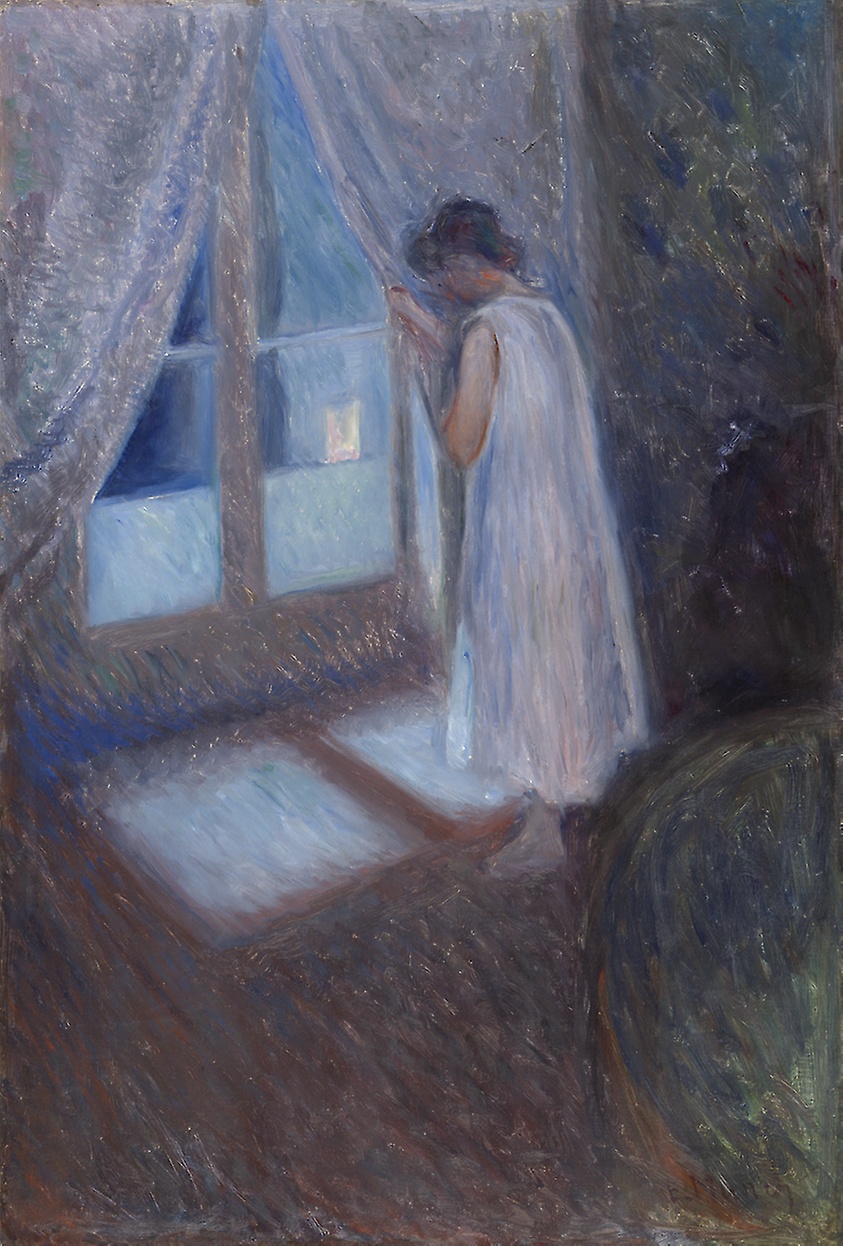
Featured art: The Girl by the Window by Edvard Munch

Life’s police car, lights flashing, on the sidewalk
in front of McDonald’s and two boys on the bus stop,

one boy moving quickly away from the other
who raised his hands and dropped his pack as the officer

approached, gun drawn. But how did the cop know
which one he wanted since both wore watch caps

and gray parkas and carried backpacks? He seemed
certain enough as he handcuffed the boy

then helped him into the back of the cruiser
his now gunless hand almost gently dipping the boy’s head

into what comes next, all we don’t see swallowing him,
the signal changing, day swallowing me until this morning

Read More

Luna de Miel

By Melanie Unruh

Featured art: The Herwigs by Edouard Antonin Vysekal

I like to practice what I’m going to say in therapy each week. The opening line is always the most important part because it has to be something attention-grabbing that still makes me sound stable.

I slept pretty well this week, except for Tuesday, when I stayed up all night watching a marathon of The Wonder Years. They played the one where Kevin touched Winnie’s boob.

It’s been six months, eighteen days, nineteen hours, and six minutes—give or take—since I last saw James.

This week I only made twelve lists.

My cat bears a striking resemblance to my therapist, but this isn’t because of their matching whiskers so much as the fact that they both make the same frowning concerned face when I tell them about my life. Boots and Dr. Andrews, who has tried without success, to get me to call her Maggie, are not formally acquainted.

Read More

Match.com/Matthew likes buttered toast, vulnerability…

By Elizabeth Powell

Featured art: Tujunga Canyon by Walter Elmer Schofield

My love lives in a little tiny box
Made of pixels and engineering. When I write him
He writes me back and when he writes me
Back, I write him. Even though we exist
Me/him, here/there: one day our band
Of consciousness will grow outward,
When science puts chips in brains
So all mysteries can be known—
Delusions, proclivities, sentences.
For now imagination a gangly vine
Grabs for a life. He has been so busy
Writing a narrative where he has no wife
That she has disappeared. So much first-person
Construct and banter. He has
A vixen schoolteacher held down
On the bed of his mind. And when he
Writes me he makes me
And when I make him I write him.
We are invented, in part,
By the wanting and not having
Of others. Soon someone else
Will pick him out of his little box
And begin again, wait for him
In the rain in front of the coffee shop
Where inside the donuts harden like
He can’t, and the red counter chair swirls empty
As if trying to conjure something so close.
But so close is almost, and almost is really
Far, still. She tries to pick him out of the crowd,
Ever hopeful, though night comes on like emergency.
And he is two places at once, virtual and real.
My love lives in a little box. Someone
Is making him
Into something else now.


Read More

Chemistry.com/Palmer is a Match–

By Elizabeth Powell

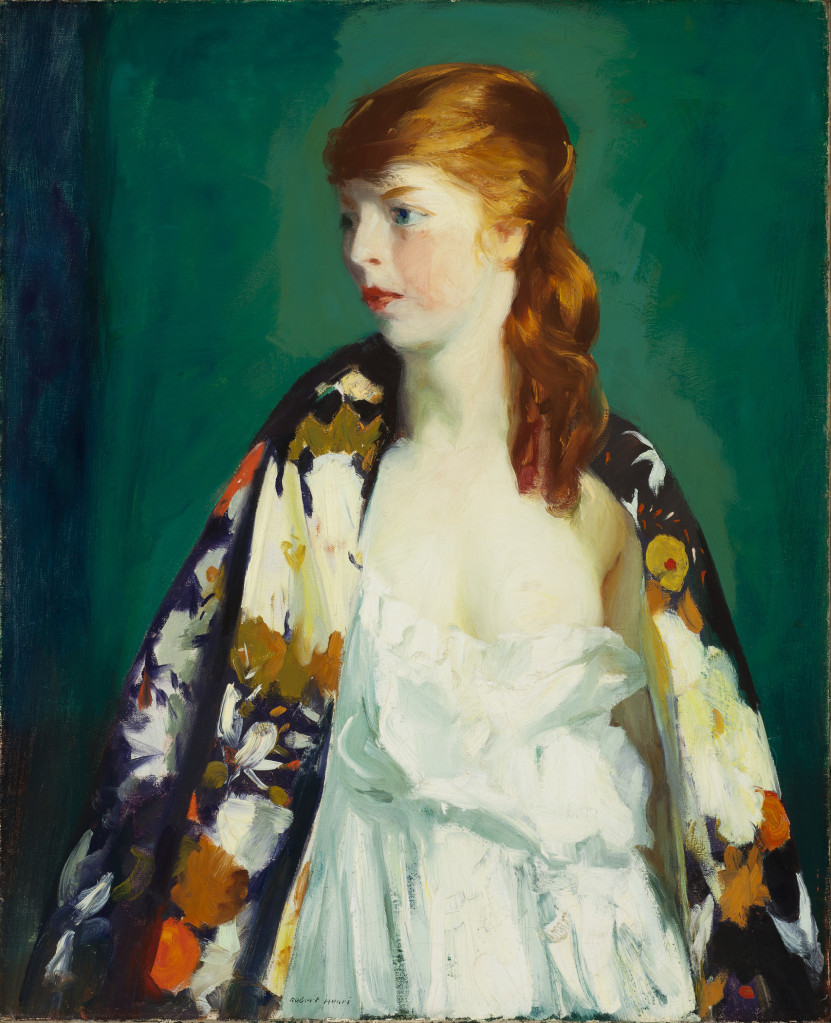
Featured art: Edna by Robert Henri

I knew you really wanted to meet me,
But I had the sneaky feeling you were an uber-Aryan
Chiropractor with homoerotic tendencies,
That maybe I should re-up with my academic
Asperger’s husband, and wear muu-muus on Saturday nights.
But I met you anyway before your snowboard race.
The style gel in your crew cut looked like ice,
Your red coat was puffy. You were disappointed
That my hair didn’t look like my picture. You implied
I was a liar. We walked down Main Street in Stowe
Past scented-candle-buying New Jerseyans
And Gnostic punk-rock townies eating baguettes,
My nose beginning to run in the cold,
Until we came to the cemetery and after you
Talked about your lying ex-wife, and your pretty ex-girlfriend,
You talked about a pair of little green baby shoes
That made you realize you were now too old
For children and I thought of the poetic
Significance of shoes, how used and alone
They stood for death. Your incoming text messages
Beeped us all the way to my car, which was German
But somehow not Aryan, where you told me good luck,
Shook my ungloved hand, then thought better
And gave me a hug
As if I were a patient on your ward.


Read More

Dear Doris Day

By Pamela Davis

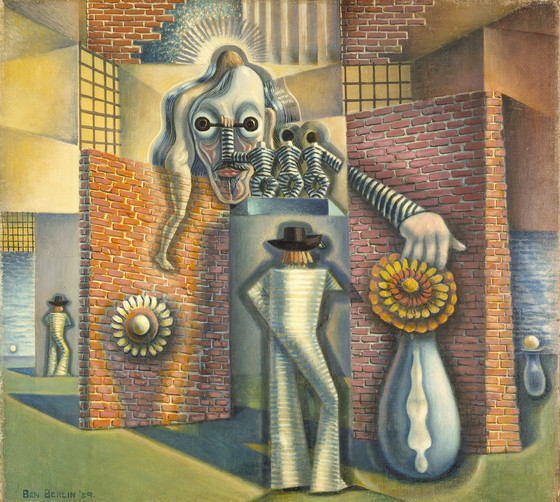
Featured art: Untitled (Surreal Abstraction) by Benjamin F. Berlin

I trusted you to never change, when I was 15, and needed
to believe men and women sat up talking all night,
like the movie with you and Rock Hudson joking in a satin bed,

both of you in men’s pajamas you buttoned to the chin.
Alone in my room crammed with horse figurines, you
were all that stood between me and what hid under the sheet—

the straining warm blossom that held me in thrall. I believed
you’d always be Rock’s chum, immune to Cary Grant’s mink-
lined smile. I’d be like you, beehive my hair, keep my knees tight.

We could have driven forever, you and me and Rock
in a two-tone convertible he steered with his big, clean hand.
How could you fall for Clark Gable, a man with a moustache,

and clearly too old? A burglar’s eyes. Safecracker hands.
In the movie you played his teacher in twinset and pearls,
eyes big as pies when he cocked one leg over the edge of the desk.

I needed you to report him to the authorities, not follow him
to a nightclub. Later there would be torn sheets, cigarettes,
counting the days between periods. Bad men with keys.

But I never imagined you’d go out of style, show up in the tabloids
bloated and hazy, surrounded by stray dogs, and, last I heard,
living alone.


Read More

July 4th, 1984

By Maggie Mitchell

Featured art: Figures by Benjamin F. Berlin

Maddy is thirteen, almost fourteen. Her chest is as flat as a boy’s and she does not own a pair of Jordache jeans.

“I hate Fridays,” she tells her mother. What she means is that she hates everything.

“I know you do,” says Jude, understanding perfectly. “I’m not sure what you want me to do about it.”

“It feels like I’m in prison. There aren’t any windows in there.” She’s referring to her room behind the bar, to which she is more strictly confined than usual on Friday nights: Jude insists that she stay out of the way when it’s crowded. “I can hear people but I can’t see them.”

“Why would you want to see them? They’re adults at a bar.”

“But that’s all there ever is,” Maddy rails, not even caring if she makes sense. “Adults at a bar. I wish we could be normal.”

“That’s what you keep saying. You tell me what normal is, and I’ll see what we can do.”

Maddy whirls around and storms into her room behind the bar, daring to slam the door. She knows only what normal isn’t.

Read More

The Lecture

By Billy Collins

Featured art: Wrestlers by Thomas Eakins

If all of time were poured into a salt shaker,
human history could be represented by a single grain,
the professor of astrophysics claimed
as a shaft of light illuminated his head,

leaving me to marvel at how
there would be room inside for everyone—
for Mary Magdalene and Isaac Newton
and every month of the Hundred Years’ War,

and Andrew Marvell would have a place to think,
a garden in which to dwell,
and you would be in there as well
and your ex-boyfriend, the cheap bastard,

with his ridiculous sports car parked by a lake
in some small boring town and me
shaking the shaker furiously
over a plate of blackened fish and boiled potatoes.


Read More

At the Mall

By Carl Dennis

Featured art: Youth by Frederick Carl Frieseke

It’s a long time now since the cedar tree
That you and Martha Spicer inscribed
With your twined initials was reduced to shingles
For a house later torn down to make way
For the Northtown Mall, the very mall
You walk now on rainy mornings.
In a few more weeks of the exercise program
Prescribed by your doctor, you should feel the strength
Lost with your triple-bypass finally returning.
Then you’ll confront the years still left you
With the zeal they merit, or the fortitude.
Be sure you’re in line when the mall doors open,
Before the aisles fill with serious shoppers
Intent on finding items more sturdy
Than their bodies are proving to be.
Could Martha Spicer be among them?
What you felt for each other back then
Didn’t survive the separation of college,
Though now it seems careless of you
Not to have kept in touch. Maybe you’ve passed her
Unrecognized as she’s looked for gifts
To make her grandchildren curious
About the world they live in, a book, say,
Devoted to local trees. On the cover
A cedar stands resplendent, the very kind
She carved her initials in long ago
With a boy whose name may be resting now
On the tip of her tongue. Try to imagine her
Hoping he hasn’t wasted his time on wishes
That proved impractical, like her hill house
Bought for its vista that proved in winter
Inaccessible to a snowplow. If he made that mistake,
Let him move back to town as she did
And focus like her on keeping her windows open
So a fragrance blown from afar can enter
When it wants to enter, and be made welcome.


Read More

Forever

By Carl Dennis

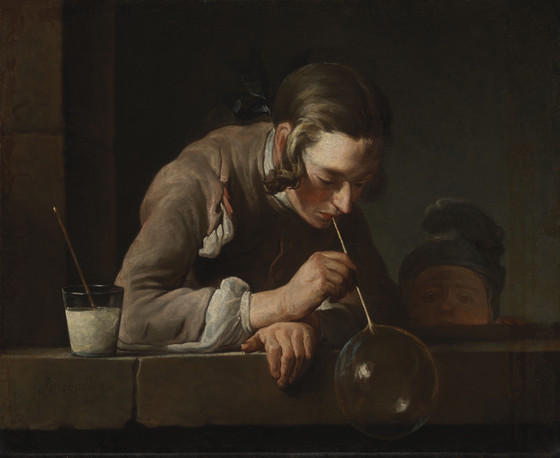
Featured art: Soap Bubbles by Jean-Baptiste-Siméon Chardin

Even in Dante’s inspired version,
Heaven and hell don’t seem like regions
Appropriate for humans, being too static,
Too imbued with notions of the eternal.
Yes, for the sake of justice, the violent
Who get away with murder on earth
Ought to feel a heat more fiery
Than the coals of rage that burned inside them;
The betrayers of friends and patrons deserve a chill
Colder than the ice in their arctic hearts.
But shouldn’t their sentences have a limit?
Won’t their victims, the pillaged and trampled
And rolled to the wall, eventually grow
Uncomfortable in the balmy realm of the blessed
At the thought of their oppressors
In endless torment? Won’t they decide
A determinate stay is long enough?
It isn’t our place to stand in the way if Abel
Throws down a rope at last to Cain,
If Jesus takes Judas by the hand.
So hell, if imagination wins out,
Ought to be slowly emptying,
And then heaven as well, as the saints
Return to earth to help the sinners
Learn what damage they can undo
If they give themselves to the effort,
And what damage they’ll have to leave as is.


Read More

Engagement

By Adam Sol

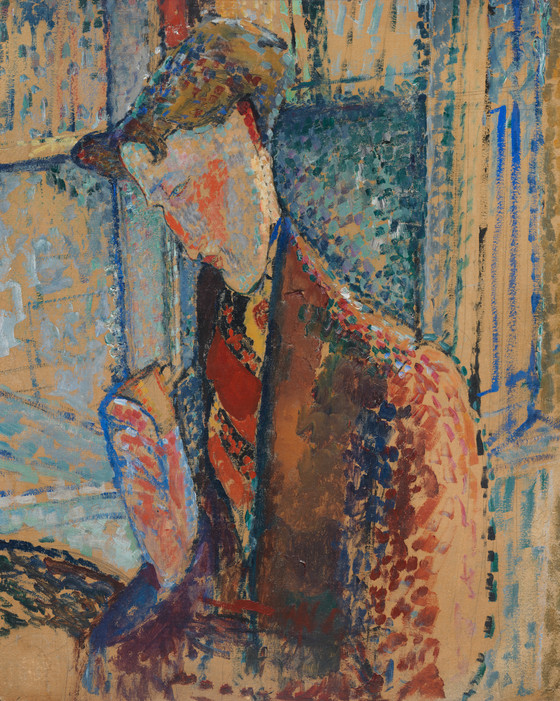
Featured art: Reverie (Study for the Portrait of Frank Burty Haviland) by Amedeo Modigliani

The young man knows he’s going to die today, but he’s wrong.
The other young man figures the army is the best way to improve his life, but
he’s wrong.
They both think their weapons will protect them, but they’re wrong.
They both believe their prayers will help.

Their commanders have intentions and intelligence, but they’re wrong.
We’ve heard the story before. It’s wrong.
The news will document it, but it will be wrong.
The war on terror, the war on Islam, the clash of civilizations.

The explosion will exceed the necessity of the occasion.
The exchange of fire will be unbalanced.
The response will be disproportionate.
The reporter is factually incorrect, theoretically misinformed, morally reprehensible.

The clear typeface and perfect binding are misleading.
The reader is uncomfortably and inappropriately implicated.
The tranquil mind is insufficient to the task.
The young men, necks dirty and damp, advance.


Read More

The Ugly Law

By Jillian Weise

Featured art: Futurist Garden by Benjamin F. Berlin

Any person who is diseased, maimed, mutilated or
can I continue reading this? will it affect my psyche

so that the next time big Logos comes over
I will not be there in the room & instead I will be

wandering a Chicago street in my dress with my
parasol as a cane, on the verge of arrest, where arrest

could mean “stopping” or “to keep the mind fixed
on a subject,” where the subject is the diseased,

maimed, mutilated self of 19th-c. Chicago, the self
in any way deformed so as to be unsightly

& will I tell him to stop looking, tell him I’m tired
& I’m about to be arrested for walking in public

& I can’t possibly climax when I am an improper
person who is not allowed in or on the streets,

highways, thoroughfares or will he say we’re alone,
no one is watching, there is your bedside table

& there your mirror & who am I kidding? I won’t tell
him anything. There is no room in bed for this.

Read More

Abundance

By Chelsea Rathburn

Featured art: Elephant Combat by an unidentified artist

The island seemed in permanent full bloom.
Through hairpin curves, our driver pointed—mango,
lime, poinciana—this one hanging low,
that one as bright as flames. And in our room,
a riot of blossoms. Across the bed, hibiscus
letters spelled out CongratulationsWelcome.
Bottles of champagne, pitchers of rum
punch. Why would we bring up poverty or loss
or the scorpions we pounded with a shoe
by the bathtub drain, small and densely black?
We ate golden apples, and had a view
of the mountain from the shower. On the third day,
darkness dropped from my towel. I jumped back:
a welcome-flower no one had swept away.


Read More

How It Happened

By Chelsea Rathburn

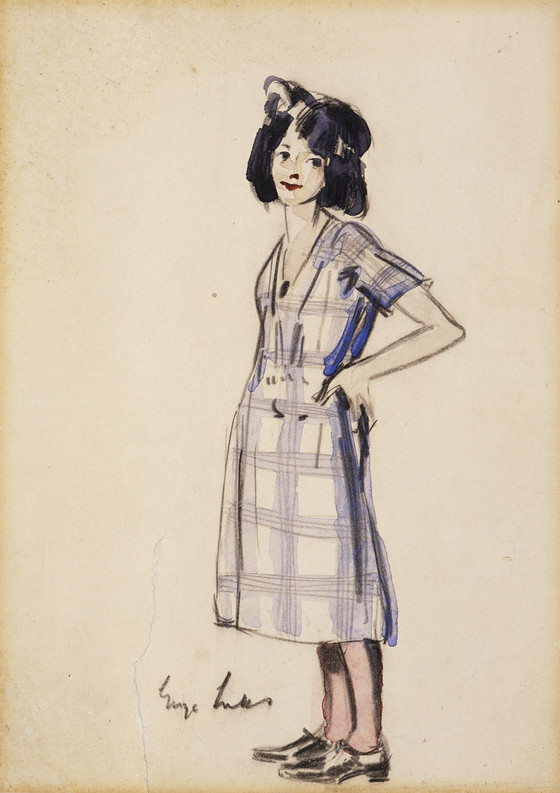
Featured art: Girl in Checkered Dress by George Benjamin Luks

I blame that little village in Spain,
the one with the whitewashed houses
in a crescent along the sea,
a fleet of pastel fishing boats,
and that celebrated coffee with brandy.

A sour wedge of apple lurked
at the bottom like a tea-leaf fortune.

Because we couldn’t afford the fish
we ate pizza with peaches and oregano
on the beach, the sun and breeze conspiring.

Seeing us there beneath the cliffs
and the postcards of the cliffs,
who wouldn’t have predicted luck and beauty?
Can I be blamed for loving it all
and thinking it was you I loved?


Read More

Amerikanka

By Maria Kuznetsova

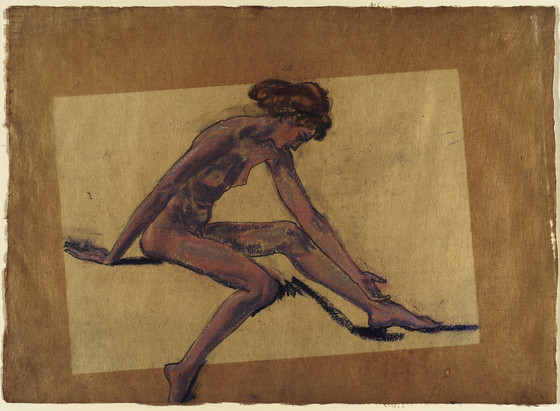
Featured art: Seated Female Nude in Profile, Bending Forward by Arthur Bowen Davies

I met a man in Russia, after my father’s funeral. It was only appropriate.

Papa always knew how to make things harder for me and I didn’t see why his death should be an exception. This is how it happened: after the service, I was taking a walk through the cemetery, hoping to get lost. The throng of admirers and chemistry colleagues had left long before, and it was just me there, staring at the grave of this little girl who died on her second birthday. I don’t know how long I must have been standing there, considering this, when I heard a voice say, “Excuse me, Miss. You dropped this. And this. And this.” A man came up from behind, holding my wallet, my passport, and the headphones from the airplane. He gestured toward my purse, which was hanging open.

Read More

Wet Carpet Awakening

By Kevin Stein

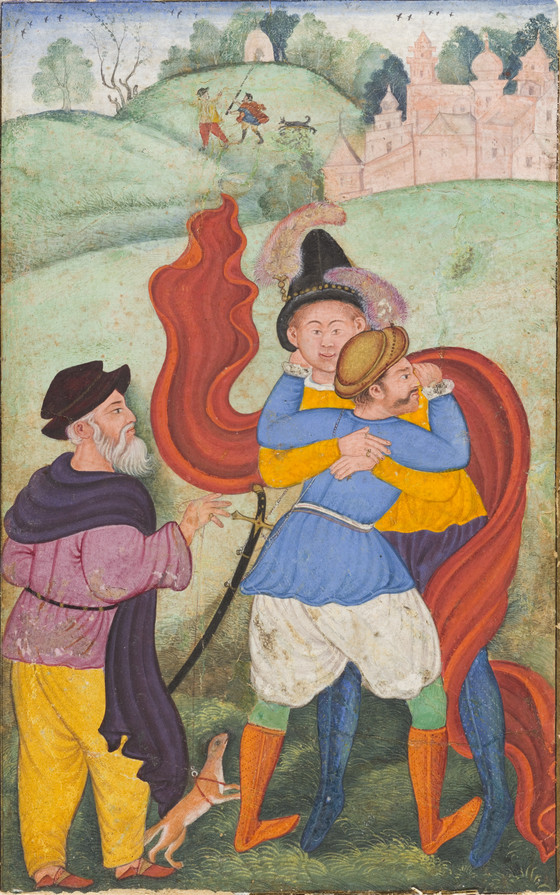
Featured art: Europeans Embracing by an unidentified artist

Cursing the stubbed-toe 2 a.m. call—my father?

I picked up a woman’s feather-brushed gush, “Wilbur,

it’s a grandson! Jamaal José O’Bryant.”

And I, unhappily not Wilbur, croaked Wrong number as one does

when plucked frog-eyed off sleep’s lily pad.

She was old. Who else misdials the pay phone’s tiny numbers?

Who else marries a Wilbur, their grandchild an American blend?

Outside rain misted not cats and dogs but litters of kittens.

Her lavender sachet apology, my bed-headed threnody,  my 

No problem, and click. Lightning cracked night’s black egg

in halves I couldn’t tap back in place:

My father’s dead. I’m next.

Revelation arrives like that, thunder trailing the flash.

I rode the open window’s wet carpet awakening,

storm flipping its toggle above the wind-blown yarrow,

electric as any newborn. Shaggy, late autumn, nearly gone-to-seed-

bloom, naked ecstatic.

I floated my trial run out a window the rain had come

in. When the dark made light of me I was.


Read More

Playing My Part

By Sharon Dolin

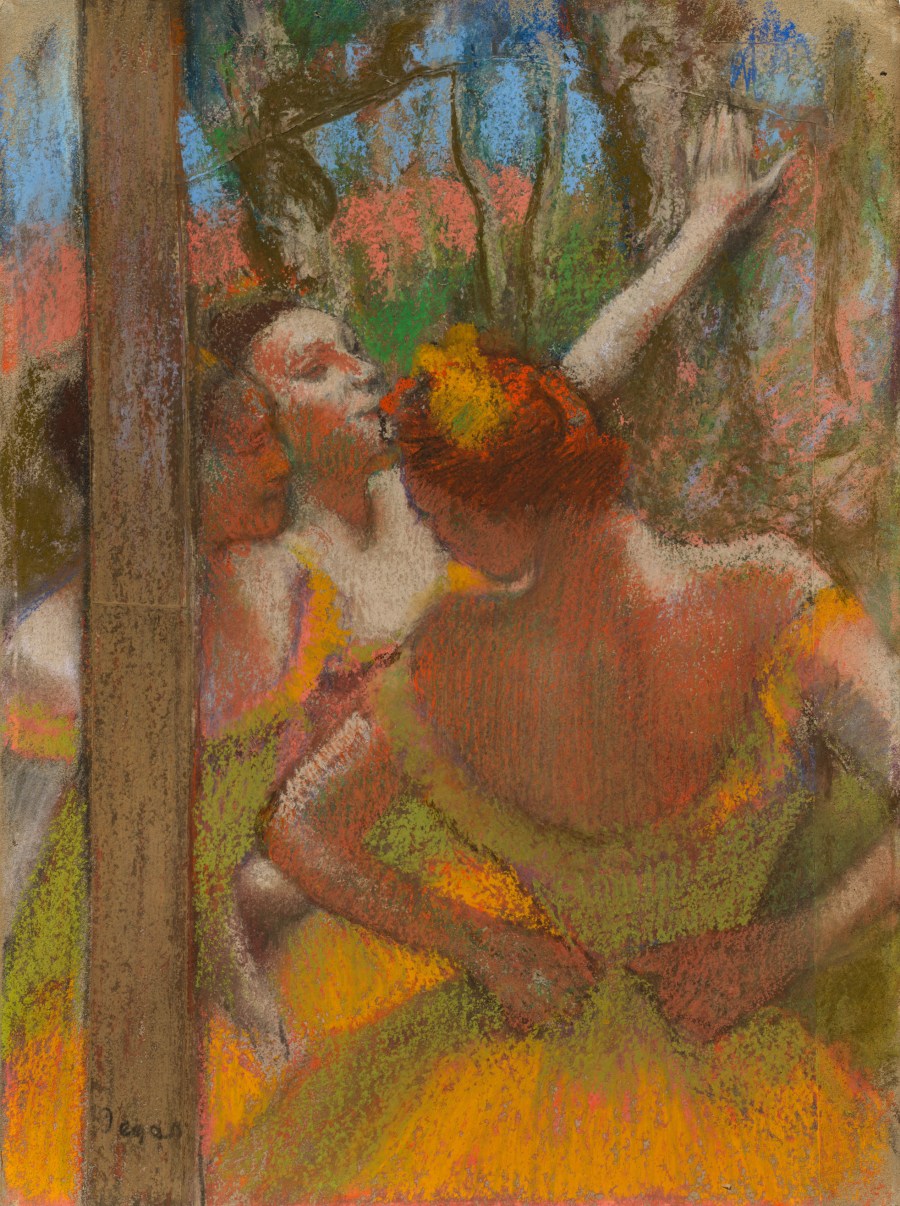
Featured art: Dancers by Edgar Degas

I let him go. I complied. Adjusted. Saw. Did not see his disappearing
act of staying while leaving the body. It felt so familiar.
My zombie-mom (on Stelazine, Thorazine to tamp

her paranoia down), would be there/not there to make
macaroni and cheese, do the wash, help me with my Spanish.
I knew she was sick, I knew she loved me though she lay in bed until noon,

again in the afternoon, comatose with the New York Post, her arm bent
at the elbow to cover her face. This was what love could feel like—
somnolent, absent. Why be paranoid when he slept in the same pose.

Sometimes cooked dinner, did the wash. Who knew a blunt face
could hold so much hate. The child in me saw his numbing out,
going to bed early, not as aversion but a version of my mother’s love

and all I had to do—as when she’d be taken away, hospitalized, shocked—
was wait for his return. (Is there a Penelope inside every troubled wife?)
Didn’t my mom always come back?


Read More

Palimpsest

By Todd Hearon

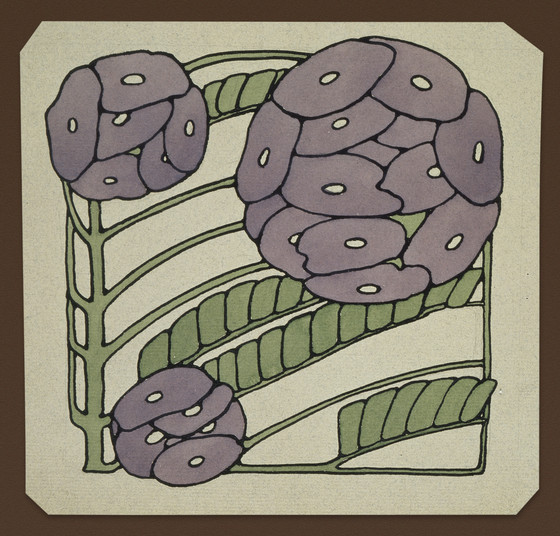
Featured art: Purple Stylized by Hannah Borger Overbeck

What was the tongue we spoke when the lotus first
unfolded from the navel of the god, the one who dreams
the universe, and in whose ear we must have whispered
our hunger to hold each other? What were words
must now be reflex, shudder, blood, be impulse, pulse
a palimpsest of longing written over
eons, eons ago. If we could scrape
back bone, back blood, back breath to the original
dust the dreaming god himself has long
become, the universal dream a drift of ash
settling in some dark corner of the sun,
would we find ciphered there the DNA
relation to the tongues we speak today
when we want words to say what words can’t say?


Read More

Hominid Up

By Neil Shepard

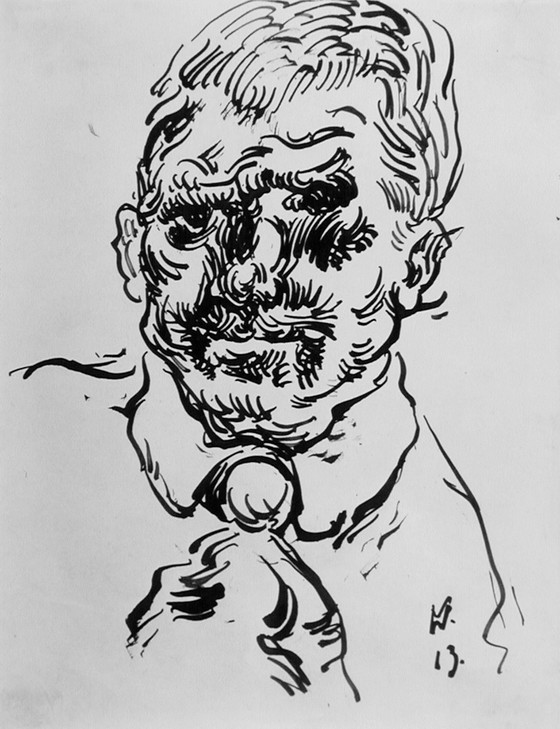
Featured art: Portrait of a Man by Wilhelm Morgner

I write at night when the old hominid
climbs up to the highest branch of the brain

and crouches there in a leafy crotch
listening to the night-sounds snarling below . . .

his heart outracing the big cats of the savannah.

He’s glad I’m civilized and live indoors,
far from the tooth and claw. Glad my central

plumbing works, my TP dispenser full,
so he doesn’t have to shit off a limb,

wipe his butt against rough bark or let it cake.

Read More

The Two Lances

By Scott Nadelson

Featured art: Disturbed by Henry Keller

The summer I should have hit puberty but didn’t, I went to a Jewish sleep-away camp in the Poconos. It was an uncomfortable summer for me, full of insecurities, and not only because of my = slow physical development. Most of the kids in camp came from Westchester and Long Island, and even if their families weren’t much wealthier than mine—we were solidly upper-middle-class—they
showed off their wealth in ways that mine never did. Their parents dropped them off in Mercedes, BMWs, even the occasional Ferrari. Around their necks they wore 24-karat gold Chais and Stars of David. They were obsessed with brand-name clothing—Guess, Polo, Benetton. They talked about vacation homes on Nantucket, Cape Cod, Hilton Head. They had rolls of cash to spend at the camp store, which sold shampoo, toothpaste, soda, and candy.

Now, of course, I can see that such displays of wealth were signs of insecurity in their own right. These parents were the tacky rich, desperate to prove how high they’d climbed, and their children were spoiled and snobbish, nothing to envy. And how rich were they really if they had to ship their kids off for eight weeks of every summer to a camp subsidized by the Young Men’s Hebrew Association?

Read More

Any Time Soon

By Joshua McKinney

Featured art: Maine Landscape by Preston Dickinson

Folks said it was about the worst thing anyone in our town had ever done.
Afterward, friends stopped calling and wouldn’t answer their phones. Coworkers
avoided me. My accounts folded and the VP asked for my resignation. I moved
out, rented an apartment on the bad side of town. Had my food delivered. Only
went out at night. That was months ago. Lately, I’ve taken to going out days.
But in disguise: dark glasses, Raiders cap, knee-length trench coat. I sit on a
bench in the park and feed popcorn to the pigeons and squirrels. I never have to
wait long. Somebody will amble by and make small talk. Ask if I’ve heard about
it. An old man tells me my wife cried so hard a vessel burst in her eye. A girl in
a tracksuit says a neighbor chased me down the street with a tire iron. A red-
haired woman, who looks vaguely familiar, says she heard that after it happened
we had to put our German shepherd to sleep. That the crepe myrtle by our front
gate blighted and died in the span of a week. I’m not sure how much is true.
“One thing’s for sure,” she says, “folks around here aren’t going to forget any
time soon.” I tell her I probably don’t want them to forget. I say that I probably
feel more alive than I did before, and some people will do anything to feel alive.
A pigeon flutters to rest at the end of my bench. I tell her I’ve heard I lost my job
but still live in town. I say I’ve heard I have taken to venturing out during the
day. That I might be wearing a disguise.

Read More

Soul Patch

By Tom Noyes

Featured Art: Two Nudes in a Room by Ernst Ludwig Kirchner

Fresno, Fargo, Toledo. Albany, Tallahassee, Boise. I hit every town in a tux. When the crew and I crash the wedding—I try to time it so I’m rushing the aisle just as the bride and groom lean in for their kiss—the church erupts in confused gasps and worried whispers. Eugene, my best friend and agent, himself a three-time groom, holds the opinion that, in terms of nerves and anxiety, weddings are worse than funerals. With a funeral, what’s done is done. With a wedding, futures are at stake.

E’s theory of weddings could explain why things get hairy sometimes for the show and me. Three seasons ago in Dallas, the bride’s stepfather, an off-duty ATF agent, stood and drew his service revolver just as I reached the altar. Last season at a synagogue in Baltimore, one of the groomsmen, a former D-1 linebacker, took a running start and squared me up, yarmulke to sternum, knocking me flat and breathless. Usually, though, the spectators, ushers, bridesmaids and clergy recognize me, and relief sets in, and then euphoria. Kingsley Carter and his show New Digs for Newlyweds is in the house, and it’s all good.

Read More

New Ohio Review Issue 8 (Originally printed fall 2010)

Newohioreview.org is archiving previous editions as they originally appeared. We are pairing the pieces with curated art work, as well as select audio recordings. In collaboration with our past contributors, we are happy to (re)-present this outstanding work.

Issue 8 compiled by Ellery Pollard, Julia Smarelli, Benjamin Bird, Callie Martindale, Sarah Hecker, and Brady Barnhill.

Minding Rites

By David Yezzi

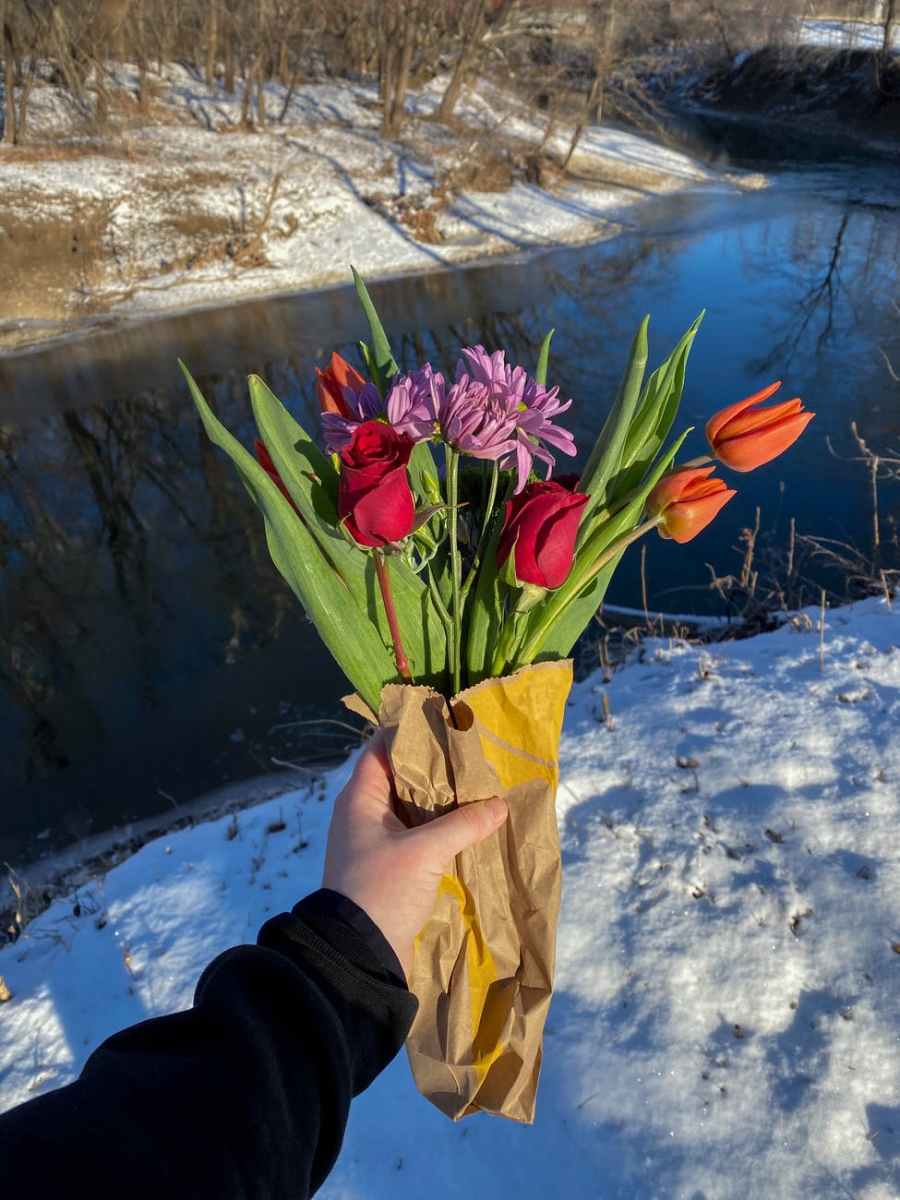
This guy I know, a rabbi, Friday nights,
on his way home against the sun in winter,
always stops at a florist or bodega
to buy a bunch of flowers for his wife.

Every week the same, a ritual,
regardless of her mood that morning, fresh
upsets at work, or snarling on the bridge;
he brings her roses wrapped in cellophane.

But isn’t there a ring of hokiness
in that? Why should a good man make a show
of his devotion? Some things go unspoken;
some things get tested on the real world,

and isn’t that the place that matters most?
So when you told me I should bring you flowers,
I laughed, “But don’t I show my feelings more
in dog-walks, diapers, and rewiring lamps?”

The flowers, I learned later, weren’t for wooing,
not for affection in long marriage, but
for something seeded even deeper down,
through frost heaves, and which might be, roughly, peace.

(It’s funny that I just assumed romance.)
Now there’s no peace with us, I wonder what
they might have meant for you, those simple tokens,
holding in sight what no rite can grow back.


Read More

A Giant Bird

By Kevin Prufer

Its great heart pounded like the distant sea
wounding itself against the cliffs.

+

We lived in its shade.

Sometimes, my daughter ran her fingers along that part of the breast
that swagged low over our camp.

It’s beautiful, she said, smoothing a feather’s twig-like barbs,
gazing past our mountain toward the burning cities.

+

What kind of bird is it?
                Some feathers were tawny, others tinged a perfect white.
Is it a sparrow?
                It may be a sparrow.
Is it an owl?
                I can’t see its face.
An eagle? I think it’s an eagle.
                                We often played this game.

Read More

Ocean State Job Lot

By Stephanie Burt

No one is going to make
     much more of this stuff now, or ever again.

Graceless in defeat
     but beautiful, harmless and sad
on shelves that overlap like continents,

these Cookie Monster magnets, miniature
     monster trucks, scuffed multiple Elmos, banners

that say NO FEAR
     and A GRILL FOR EVERY BOY
are a feast for every sense.

Some would be bad manners
     to give or bring home-

Read More

The Fake I.D.

By Scott Garson

She didn’t believe that anyone could believe that she was this person. This person had a weighty face. It looked weighty. Full of bone. The name was “Danna”—Danna Hollenfar.

Danna was, by printed date, twenty-two years old. In the photo her mouth and nose were pulled to the left, as if she was resisting a joke. But her eyes looked frank and hard.

“Danna Hollenfar,” she said out loud. She was doing her eyes in the mirror. “1311 Rand Boulevard.”

The boy at the door of the club, however, was too coked up to ask questions

Read More

Is That You, John Wayne?

By Scott Garson

The day kept changing. The sky would close in virtual dusk and thunder from the other side of the river would rumble the sodden hill. Then something would open. For a while the birds would sing their song to the shining grasses.

“Who are you going to believe?” she said. “Me or your own eyes?”

He turned from the window. He said, “Duck Soup?

“Only bad witches are ugly.”

“Too easy,” he said to her. “Wizard of Oz.”

She lay on the wrinkled futon-couch and worked a gathered lock of her hair into a very tight braid. She wore underwear and her breasts spread out within her tank top, which was charcoal gray.

“We didn’t need dialogue,” she said.

“We had faces,” he responded, “Sunset Boulevard.”

“You’re somewhat good at this, aren’t you?”

“Somewhat?”

He was joking but his heart wasn’t in it. Through the screens, the light was in sudden decline, as if the fires of the sun had been doused. The Live Oak tree was a hex in the gloom and the bushes on the hillside were graves. He wondered why he felt like he’d known her for so long. He wondered what they were doing for dinner. He wondered when he’d felt like he thought he would feel at his age, which tomorrow was thirty.

Read More

All About Skin

By Leslie Adrienne Miller

On a reasonably sized female adult,
two square yards of the stuff,
all etched with nerves of wild
to be roused, altogether the largest
organ in the body. Unless you count
the considerable accumulation
of disappointment that sprouts
as fast as creeper in a chemical-free
yard. Or all those useless tears,
salt and mucus and plain old water
manufactured by the ducts every time
hurt shows up for dinner, rather more
often too, as the years advance,
putting his feet on the sofa,
leaving dishes in the sink. Perpetually
twenty with his tight ass and gorgeous
hands, he invents longing like a tall tale
and gets us to drink one more glass
of merlot than we’d meant to tonight.
If only we had more feathers and horn,
that sweet jacket of woolly lanugo we wore
in the womb and swallowed like a marvelous secret
just days before the world turned on the lights
and pronounced us girls.


Read More

Carnival Nocturne

By Mark Wagenaar

Peanut shells crackle beneath your pink slippers
as you pace. The players behind routines of a different sort
long after the show is over, long after the spectators
return home, their caricatures slipping from their grasp
as they unlock the front door. Teeny the strongman
is calling the torn names in the phone book
he ripped in half, as Vasserot listens outside, smoking
a cigarette with his left foot, his arms a phantom
presence he feels each time he reaches for another can
of peaches. Karlov the Great has gone to bed
regretting his dinner, three light bulbs & a seven-foot
feathered boa, while in the next room Madame Sossman
is about to win a red nose & a pair of floppy shoes,
unless Noodles can beat three Hangmans.
Monsieur LeBeau stands in the big tent, still listening
to the cheers of the departed crowd. His daughter
won’t return his phone calls, but tomorrow
will bring a new town, with a different name & story,
where anything is possible, & tonight the stars’ white flames
burn on their blue wicks – she’s out there, somewhere,
the one you left behind on the Serengeti, in the night
that paces in a circle with its one black shoe, beneath wires
no one will ever see, the sickle moon’s ivory
as beautiful as your tusks once were.


Read More

Living with the Dead

By Patrick Hicks

She was naked on the embalming table and I just couldn’t stop staring at her nipples. This happened two years ago when Ginny Pazinger ran a red light while she was text-messaging a friend. One of those big SUVs ran into her car and she spun around the intersection like a top. Shattered glass and chunks  of vehicle burst into the air, explosion-like. My family has been in the funeral business since 1882 so we expected Ginny’s body to be banged up pretty badly, we thought it would be a closed casket for sure, but her remains were in good shape thanks to the side airbag.

Read More

Always a Little Something Somewhere in the Purse

By Julie Hanson

I couldn’t determine her age. She was trying not to look me in the face.
I was approaching a bank of blue seating at Gate B-8,
her bank of seating, and I sat next to her.
I got out my glasses and reading.
I put them back in my bag.
How could I read when the woman seated next to me and trying not to cry
was only mostly succeeding?
I rustled through the inner pockets of my purse
until I found the travel pack of tissue, crumpled from the years,
flecked with leather dust. But as I offered it up, I saw that she, Thanks, anyway,
had already produced her own.
Isn’t that just like us?-always a little something somewhere in the purse
which can’t alter reality in the large sense
but might help us along in the small.

Her phone rang.

She wiped her nose and answered with her name.
No, she couldn’t show the split foyer this afternoon,
but Cindy in the office could.
Some kind of confidence had happened in her shoulders. And her voice:
genuine, helpful. She specified the freeways to avoid and better ways to take.
It sounded like L.A.
Her voice played the notes of continual possibility.
There was one more door at the end of disappointment,
and this might be it, it just might. Hearing her speak,
there isn’t a client who wouldn’t have straightened a bit,
curiosity increased.

She slipped her phone into her bag and rearranged her legs.
I glanced obliquely to our right and said,
“You handled that awfully well, Karen, under the circumstances.”
Then she told me everything.

O’Hare International Airport


Read More

Qu’est-ce qu’il y a?

By Julie Hanson

Each morning my eye goes straight to the high bare branches of the ash
where a plastic HyVee bag tugs and puffs
but has no choice.

Well I won’t see that in France,
I say to myself, but the consolation is as temporary
as the trip will have been

once I’m standing here again,
staring at that bag
and thinking, Now that’s the kind of thing I never saw in France.

It looks so orphaned and waif-like
against the shiny gray bark of the ash and the muted gray of the sky,
so white, so insubstantial, so wanting,

and, even with its one red word,
so caught there in the tree.
I’m certain it can hang on to the branch that has pierced it

for another six weeks.
There may be another bag in the maple by then,
recently freed from a thatch of wet leaves

or come tumbling
lightly from the garbage truck
that will have taken on that day no offering from us.

On the day we come back, it will still be
bare as scattered bones out there,
not yet the middle of March.

The ground will be hard. The grass will be tan.
This is so like me,
imagining,

not the cottage roofs of flat stones
pictured in the Green Guide to the Dordogne,
the massive ramparts for the great gone door of Domme,

but the day after-these littered horizons, and winter
still trying to get out of the yard.
On the day we come back

the ground will be hard. The grass will be tan.
But there will come a day much deeper into spring,
a day shady and humid

in the unfurled foliage of June,
when I realize I haven’t thought about that bag in weeks
because I can’t see it at all,

I can’t see its branch.
The massive ramparts for the great gone door of Domme
will have lost a lot of bulk by then,

resembling more and more the sketch
on page twenty-one
in the Green Guide to the Dordogne.


Read More

On a Thursday Afternoon of His Life

By Michael Chitwood

my brother-in-law wrote a letter he never mailed.
In it he explained what a dog smells when it smells fear.
He described what he saw when he saw blue.
He mentioned a moment that afternoon:
he was alone in the house,
somewhere not too far off was the rumble of heavy equipment,
then he heard his name pronounced by a familiar voice he’d never heard before.
He gave two options for how things would turn out
and wrote “one or the other.”
He noticed how “or the” was almost “other.”
He mentioned that in the next line of the letter.
Why am I telling you this he wondered next.
He said Friday was his favorite evening, in the fall, the team just taking
    the field.
He knew he would not mail the letter but wrote it out long hand with the
    pen he kept by the phone for taking messages.
The letter will be found years from now in the back of a drawer that
    contains a hinge and a set of brass keys to doors that are long gone or I
    should say now always open.
The closing was hood something, the last word smudged,
good luck? goodbye? good something, good.


Read More

The Elements Will Have Their Way

By Michael Chitwood

1

It seemed that water did not want to be in the bucket.
Where was I going, so long ago?
The water leapt, it dove over the side of the bucket.
Why did the water not want to be carried?
Where did it want to go that it was not going?
The bucket’s thin handle cut into my hand.
My hand wanted to refuse the handle.
The water bucked. It made the bucket bang my knee.
The water jumped to me, darkened my clothes.


Where was I going with this quarrelsome water?
What spirit it had. It would not be held.
It held my hand reluctantly. It sloshed and tugged.
It gulped and knocked against the bucket.
It was hard-headed water that would not lie down.
I leaned away from it, my head cocked in the pull.
What would this water do, forced to go the way I went?

2

Men were running. Men that I had never seen before
were running. The fire was going where it wanted to go.
The fire went in four directions. No, five.
Up too. It climbed trees, a bright, hot child.
The men beat at the fire on the ground with brooms
and wide rakes. The tines of the rakes sang
like harps. The notes of the music were sparks.
The fire swayed and dodged the men.
When they smacked at the fire, it jumped.
Where the fire wanted to be was away from the men
and the men wanted it to be with them, wanted it close
but that is not what the fire wanted. It was wild to run.

Read More

Introduction to my Latest Effort

By Robert Hemley

I wrote the next poem I’m going to read this
morning on the plane
I’m not sure it’s very good
but I kind of like it and I thought I’d share
my latest effort with you.
Would you like to hear it?
I think it’s going to be the first in a series
of poems about emergency exits
because I was sitting in the emergency exit row
and the flight attendant came around and asked me
if I was willing to assist in the event of an emergency.
I was tired and didn’t hear him
correctly and I thought he had asked if we were willing to exist
in the event of an emergency.
Which startled me because sometimes
I have suicidal thoughts and I must have looked
alarmed because he asked me if I knew
how to speak English and if I wanted to be moved.
I told him I thought he had asked me if
I was willing to exist and he laughed and said,
Oh sir, we assume the answer to that question is yes.


Read More

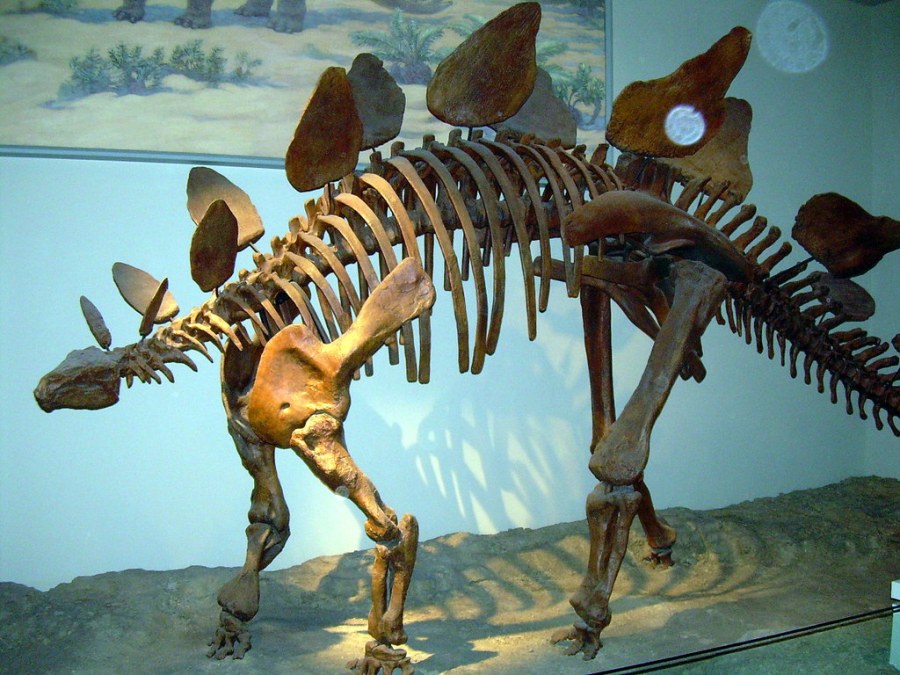
Feeling Sorry for Myself While Standing Before the Stegosaurus at the Natural History Museum in London

By Michael Derrick Hudson

Oh yes my friend, I’ve been there; the insects battering at
the armored lids of your yellowish eyes

the moment you pecked your way out of that rotten shell
and dug out from your sandpit nets . . .

And I’ve experienced the thud thud thud of your days,
the indigestible monotony

of everything’s spiny orangy-green husk. How the sun
gets daily whiter and hotter and just

a little bit closer. The week spent gobbling down your

own weight’s worth of whatever. One stumpy
footprint after another, tracking the trackless, squelching

across last night’s marsh into a volcano-spattered today
hip-deep in ash and yawning

a muzzleful of sulfur. Swishing through stiff fronds,

we drag an unbearable load of tombstones on our back
and a fat lugubrious tail, shit-smutched and

spiked. The flattening of the razor grass. The forgotten
clutch of eggs. Our shrill yaps

and groans. That tiny gray walnut
for a brain and the fat black tongue tough as a bootsole . . .

They’ve explained us away a dozen times: some passing
meteorite or anther, the rat-like mammals

eating our pitiful young, all kinds
of new weather. Issueless, but far too stupid to be forlorn,

we trundle along the pink quartz shore
to sip at the lukewarm edge of yet another evaporating sea.


Read More

Disintegration of Purpose at Cocoa Beach, Florida (Part 1)

By Michael Derrick Hudson

A pelican divebombs the same shimmery-shammery silver stripe
of the horizon. The pale yellow and presumably

bloodless crabs scuttle to their holes, terrified by my shadow

all over again. Again! They’ll never figure it out,
but of course every moment for them is nothing but the fretful

expectation of imminent death. They’re expendable. Fecund.

Edible. Fuck ’em. So where’s my hero? My old conquistador
my Castilian grandee terrible with purpose . . .

Señor! Over here, por favor! But what if he did come, feverish

and bedraggled, this Spaniard wading hip-deep through the surf
cumbered by his mildewed ruffles

and waterlogged boots, in silver salt-pitted
spurs and a rust-bucket helmet? He’d spout nonsense, bragging

about the usual claptrap: solid gold wigwams, diamonds bigger
than pumpkins and an obsidian-eyed princess

festooned with raccoon tails. There’d be those outrageous lies,

poison darts tinking off his armor while tramping the Everglades
and living these five hundred years fetched

off death’s front stoop by a few quavering, toothless sips from

the Fountain of Youth. With the point of his cutlass he’d scratch
the beach with treasure maps and schemes, telling tales

of the cannon-shattered fo’c’sle and those desolate, bone-littered
passageways. I’d put up with it for as long

as I could. ¡Hola! History stops here, Señor! Everything does!

Read More

The Businessman Cleans a Mermaid for His Supper

By Michael Derrick Hudson

Yeah I snagged her, I snagged her good and then I shucked her
out of her shimmy, killed off that last twitch

of hers in the sink. And those labials, all of her wet slobbery

labials I reduced to a dried-out oxygen-starved O. I flensed
her down to the bone and chopped

away her emerald green flukes. I got wet to the elbows in her
and scraped at her dime-sized translucent scales

until they spangled the tops of my greasy boots
and clogged the drains. But her filets were worth it, redolent

of ambergris with a tincture of seaweed. In her eyes I found

tiny discs of abalone, the secret of their weird yellowish glint
like a cat’s in poor light. And then I brought her

to a resinous sizzle. But what a fight! Such fabulous breaches

How she resisted my hooks and gaffs, the vast tangle and bulge
of my nets. She couldn’t believe the multitude

of knots I’d mastered or these chains and rudders and screws or
my hand-over fist desires and

the way I whistled at my work. Or my inevitable appetite . . .


Read More

Valuable Lessons Learned on Delaware Bay After the Horseshoe Crabs Came Ashore to Spawn

By Michael Derrick Hudson

They look like the Devil’s codpiece.
They look like the Shield of Achilles.
They look like George Washington’s last boot heel.

Oh sure, noggins get cracked, the meat tweezed out

in a glut of shrieking seagulls. Always sun-vexed
throughout their frantic scrabblings

they suffer the dried-out gill, the blotted eye,
the heartbreakingly feeble clench

of an expiring mouthpart. But still they deposit
what they can of their sorry clutches,

their dabs and globs of purpose, spotting the world
with their gluey yeses. Satiated,

doomed, happily they nibble
at their own nutritious backwash, feel around with

their feelies. Tipped-over. Busted. They look like
The Battle of Berlin. They look like the Last Days
of Brontosaurus. But they persist.

You know, they persist.


Read More

Love

By Stephen Dunn

Featured art: Self-Agency by Bailey Wiseman

Found dead in an alley
of words: awesome,
no hope for it, and share,
which must have fallen
trying to get by on its own,
and near trash cans,
almost totally exhausted,
the barely breathing cool.

But there’s love
among the disposables,
waiting, as ever,
to be lifted
into consequence.

And here comes a forager
looking for anything
that might get him
through another night.
Love’s right in front
of him, is if he wants it.

In the air
the ashy smell of clichés,
the stink of obsolescence.
He’s leaning love’s way.

All the words are watching,
even the dead ones. It’s as if
What he does next
could be the equivalent
of restoring awe to awesome—

that love if chosen
might be given back to love,
made new again.

But the man is just a man
out for easy pickings.
Or has he remembered
how, at first, love
always feels original?

Let us forgive him
if he keeps on foraging.


Read More

The Crypt on the Rock

By James Davis May

You swore never to be

a ritual mourner.

Czeslaw Milosz

My language and friends are behind me now.
A mile down Grodzka, I bought water and cheap bread,
then on my way to your church’s baroque spires
I passed the historical marker next to the bakery.
And here, in front of you, these red candles
have melted to rings, a day’s worth of flowers
pile up on your granite with five unread notes.
The odd, underwhelming feeling of tombs.
Is it from the disappointment of not knowing
what to do? I wait and leave,
head back what feels like too soon
into the painful sun where three teenagers
smoke at the ankles of some patinated saint
and a jackhammer pummels the sidewalk
into the wrong scene. The want for something
more than this common ugliness. So I look back,
but feel instead my palms, blasted by the pain
of what almost happened, go flat on the car’s hood.
I don’t know to watch where I’m going.


Read More

One Pearl

By James Davis May

John Weir! Remember when you used to call yourself
the sodomite at my window? Houston
was so odd. Every mile the same pattern.
A strip mall with a strip club, a school,
then a mansion next to a tire factory—
all repeating themselves like the background
of some Saturday morning cartoon chase.
Before I left, it seemed I was always searching
for someone else’s lost dog, nearly falling
on the sidewalk’s confusion of acorns.
And Atlanta? No sodomites like you here.
Today the azaleas’ birthday-cake pink
materialized suddenly as cards
shooting out from a magician’s palm. Wait.
Is that clear? Just understand they’re beautiful,
that I’m tired of clarity, of condescending
marble statues, of being tired of being tired.
Tonight’s guest speaker quoted a mime
who reportedly said, “One pearl is better
than a whole necklace of potatoes.”
A woman nodded, a man made a sound
that sounded like polite pleasure.
And in the cocktail party that follows
all those pretty words, here I am
on the porch, my left ear faintly lit
and half in New York. Because I dept dropping
cracker crumbs into my wine. Because
someone else asked me if I was Fiction
or Poetry. I’d ask how you are, but I know
you hate yourself and want to die.
I too have stolen much, and in the great circle
of folding chairs crushing the oriental rug,
I’ve retold the stories and jokes of others,
as if my own, usurping the obligatory laughter.
I don’t know how one gets away with beauty
or grace or, I worry, how to admire art
without wanting to have made it myself.

Read More

On “In Time Which Made a Monkey of Us All” by Grace Paley

By Michael Griffith

Given the ever-shrinking gap between today and the grave and the ever-growing library of Books I Might Love (Should I Ever Get to Them), I’ve come to see the utility, even necessity, of making bold snap judgements and sticking to them. But over decades of reading one is forced now and again to reassess, and sometimes to repent a rashness.

About most changes of mind it’s mind it’s possible to flatter oneself. One’s unexpected passion for Middlemarch years later needn’t be a goad to recall how stupid or loony one was in school; no, no, here is a newfound maturity of which to be proud. One’s crabby willingness to like a few of Raymond Carver’s canonical stories isn’t a fig leaf for small-mindedness doggedly clung to even after you realized you were wrong; instead it’s proof that you are beyond the hotheaded dissings and envies of youth, and are now willing to grant old Ray, safely dead, a junior membership in the Pantheon, where he can at least be counted on to put Henry Jame’s knickers in a twist.

Yes, most softenings or hardenings of judgement can be managed in ways that keep self-loathing at by. But then there’s my failure to recognize the greatness of Grace Praley, a lapse for which I can find neither excuse nor explanation. For twenty years, I just plain BLEW it.

Read More

On “I Used to Live Here Once” by Jean Rhys

By Sylvia Watanabe

This brief narrative, perhaps no more than four hundred words in length, is
most often read as a ghost story. In it we follow the unnamed protagonist on
a journey of return to what may or may not have been her former home. With
her crossing of the river (a traditional symbol of transition) in the opening
scene, we enter a mirror world in which familiar places and things have been
made strange: the road widened but oddly unkempt trees and shelters van-
ished, the old house “added to and painted white.” The sky itself is described
as mirror-like, with a “glassy look that she didn’t remember.”

From the story’s onset, we see the dissociation in the central character,
which is a hallmark of every good ghost story, established through the un-
grounding of a memory and of what can be reliably known. Through the au-
thor’s strategic choice of the past progressive, the protagonist appears in the me-
dias res, as if out of nowhere, “standing by the river looking at the stepping
stones and remembering each one.” She is simply there; we do not know where
she has come from or how long she has been traveling. Here, and throughout
the following narrative, the specificity of detail, “the round unsteady stone,
the pointed one . . .” is deceptive. Rhys leads us to believe that the vivid detail
of memory is somehow telling us about this world, when in fact, it is telling
us more—through implication—about absences, about what the world is not.
Though “She” (the central character) is “remembering,” she has no history, no
place of origin, no name, no age. When she finally arrives at what we might
carelessly assume to be her former home, Rhys does not say that she ever lived
inside that house. Other clues are provided that she may have lived in the
ajoupa—a kind of rough wooden shelter about among the trees.

Read More

On Rereading Donald Barthelme

By Peter Ho Davies

Worse even than the books and writers we should have read but haven’t, are the ones we have read, but haven’t got.

Take Lydia Davis.

Admired by friends, colleagues, students and critics that I admire, I reread her periodically with a feeling of amusement and befuddlement. (The Emperor has no clothes! Or – wait – is it my eyes, the light? My hang-ups?) And yet reread her I do, partly because of the high opinion of those others, partly because of my anxieties about my own judgement, and partly because every so often some writer I didn’t get before will suddenly speak to me with visionary freshness.

Take Donald Barthelme.

You want to like Donald Barthelme (especially in grad school). The wit, the invention, the scampish coolness. He’s a day-go Kafka, a Beckett of the American dream, William Burroughs with better aim. I always wanted to like him, and yet for years the stories left me feeling not cool, but cold. They struck me as flip, easy, fish-in-a-barrel satires. And then I tried them again, in 2005 or so, and something was different, the stories laced me with a poignancy and a fury I’d never felt before. Part of the change was in me, of course. Older, wiser, and – crucially in my case as an expatriate Brit – more American. But part of the change was in our times.

Take this, from “The Indian Uprising”: “We interrogated the captured Comanche. Two of us forced his head back while another poured water into his nostrils. His body jerked, he choked and wept.”

The first fictional description of water boarding I’d read, and it dated from 1965.

Not all of Barthelme’s stories map so directly onto the Bush years, but their absurdity, as I reread them, felt tonally right, an appropriate, even an essential response to a cultural/political crisis, echoing the period of upheaval – the late 60s and early 70s – when many of Barthelme’s best works were published. Is it fair to read work like this as an anachronistic allegory, or fictional prophesy? Not entirely, probably. And yet, it’s a power of such work – Kafka’s most famously – that we reinvent it, repurpose it so. It’s tempting to wonder, too, if the rise of a loose school of contemporary absurdist writers (the “goofy realists” as a student once dubbed them) – George Saunders, Miranda July, Aimee Bender, Kelly Link, Karen Russell, etc. – might be a similar reflection of our times.

But of course, the times are still a-changing.

As I reread Barthelme in 2010 to draft this piece, some of that revelatory energy has receded (perhaps it’ll only return as the silver lining of the Palin administration), yet some has also advanced.

Take the opening of “The President”: “The darkness, strangeness, and complexity of the new President have touched everyone…”


Read More

On Orlando by Virginia Woolf

By Karen Brennan

When I first read Virginia Woolf’s Orlando – about thirty-five years ago – I did not like it at all. In those days, I had been reading Woolf passionately. Like most Woolf devotees, I loved the idiosyncrasies of her voice, the brave way she took on the modernism du jour – her thinking, her sensibility, her scenes, her sentences. I’d become smitten with To the Lighthouse and Mrs. Dalloway and my all-time favorite (still!), Between the Acts; I’d read and reread A Room of One’s Own, and a chunk of her nonfiction (notably, her memoir Moments of Being and parts of A Writer’s Diary).

What entranced me about Woolf was her ability, even in nonfiction to create scenes as sensual containers for emotion – a kind of alchemical magic, as I saw it – scenes which, moreover, approximated real life much more wittingly than the usual fare of literary realism. I loved the feeling of inhabiting her characters/narrators, which was always complicated by Woolf’s own understanding of isolation and her yearning for connection.

None of this did I experience in my first encounter with Orlando. Instead, this novel, antic to be sure, seemed to me to be too agenda-driven, too in love with its own conceits – its history lesson, its gender games. Moreover, the characters were not – like Clarissa Dalloway, like Mrs. Ramsey – complicated by contrary impulses, by their own failures to understand, but rather wooden and unchanging. Even Orlando with all his/her transformations from male to female, from Elizabethan nobleman with “fine legs” to twentieth-century woman driving a “motor car” seemed, in his/her soul, untouched by the alterations of time or circumstance. Finally, I felt in Orlando an overly self-conscious, almost smug wit, a “biographer” (Woolf’s narrator, recall, is a tongue-in-cheek biographer) too in control of her subject so that, in the end, the novel was unsurprising and static, even with all its gimmicky surprises.

Read More

On “The Widow’s Children” by Paula Fox

By Charles Baxter

This needling and unpleasant little book can easily upset readers who are expecting to find nice characters and inspiring behavior. The novel’s settings—a hotel room, a restaurant, a back office—are claustrophobic, and its dramatis personae show themselves to be weak or contemptible when they are not being viperish. Indeed, The Widow’s Children fits snugly in the tradition of the Viper Novel, with a centrally placed witty monster who makes mincemeat of everyone around her. In this respect, it resembles Jarrell’s Pictures from an Institution, a book that is much more fun to read. In short, there’d be no particular reason for reading The Widow’s Children if it weren’t a masterpiece of psychology. It is a great short novel, under-appreciated in the way that books about cruelty tend to be. The first time I read it, I couldn’t stand it—or, rather, I couldn’t bear it, which is not quite the same thing. Now I can.

Read More

New Ohio Review Issue 7 (originally printed, Spring 2010)

New Ohio Review is archiving previous editions as they originally appeared. We are pairing the pieces with curated artwork, as well as select audio recordings. In collaboration with our past contributors, we are happy to (re)-present this outstanding work.

Issue 7 compiled by Rylee Reis.

My Sky Diary

By Claire Bateman

Featured Image: Sunset over the Catskills by Frederic Edwin Church, American, 1870-1880

Because it’s my book,
I will treat it however I want.
I will crack its spine, though not its spirit.
I will bend back the corners of its pages
along the margins of whose cold fronts
I will inscribe hieroglyphics,
and over whose most capacious melodic passages
I will take terrible liberties with liquid paper
whenever I crave silence.
Haven’t I paid for this privilege
through decades of learning to write,
all those decades in the first grade,
my retinas suffering
the mute incandescence of letters
which withheld their significance from me
as, lathered like a horse
condemned to drag his own stable behind him,
I’ve labored with sentences and paragraphs,
wrestling the fat green pencil
that grew quantumly heavier
as it registered each mistake?

Read More

Tree Talk

By Claire Bateman

Featured Image: Trees by Maurice Prendergast 1918

Everywhere in town you hear:
“The forest’s on the move again”—
our forest!
Not ours, exactly,
but we feel it to be so,
since its visitation
ensnares our limbs
as, at every crosswalk,
neighbors duck and flinch,
weaving carefully through, apparently,
nothing at all—
forgive me, I’ve neglected to describe
our forest’s unparalleled clarity
from pine-tips to underbrush,
its streams, its spiders,
its (presumably) spotted fawns
tremulous, poised for flight—
“Our transparent forest,”
I should have said!
Impossible, of course,
to hide, to hunt, to lose one’s way!
Thus, we are reduced
to uneasy picnics in a vitreous shade
not wholly without shimmer.
Then, just as we’ve begun to settle in,
discerning where to place our feet,
grope for berries,
seek out the heaviness of honeycomb,
with a rustle and groan,
it’s gone,
having abandoned us
to elsewhere bear

its rough and leafy patronage,
its boughs of varying heft,
which our clumsy passings-through
had forced back till they rebounded,
scoring our faces
even as they sprinkled us
with resin-dew
(or, in that woods’ itinerant winter,
mild scatterings of unseen snow).


Read More

A Pocket Introduction to Our Universe

By Claire Bateman

Featured Image: The Throne of Saturn by Elihu Vedder 1883-1884

What does our universe most like to do?

To contort without any warning
into nothing but corners,
an awkward though not unbeautiful
configuration.

Of what elements is our universe composed?

The first is distance,
of which there are innumerable varieties,
such as the chromatic stutter between
forethought and aftertaste,
and the measureless span between
the transparent and the merely translucent.

The second is otherness,
that of the other
and that of the self,
reciprocal and ever-escalating glories.

What holds things together and apart?

The strong and weak gravitational forces.
Scar tissue.
The Great Universal Loneliness,
from which not even the material realm
has been excluded.

What are some of the forces that pass through flesh and bone?

Neutrinos.
X-rays.
Invisibility itself passes through the body
in immense, inarticulate storms.

Read More

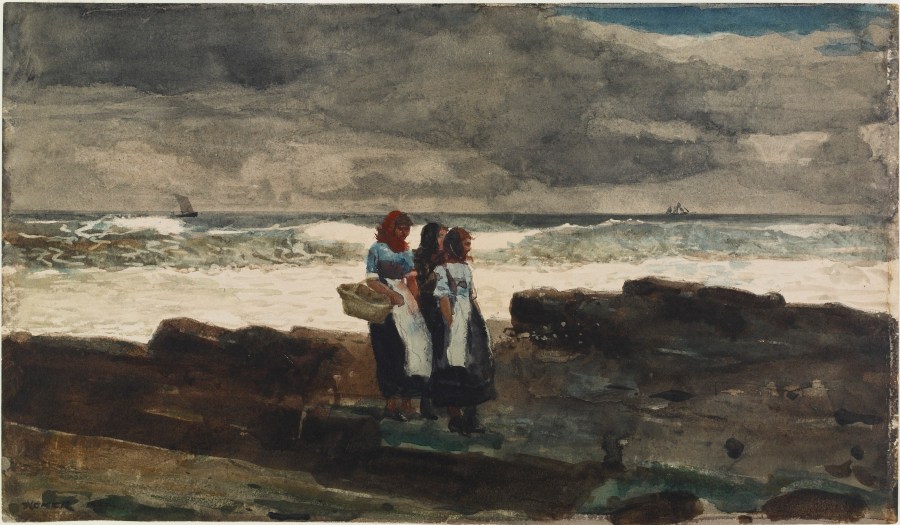
What Bliss, When Exuberance Overruns Its Banks

By Lance Larsen

Featured Image: Ocean Swells by Winslow Homer 1895

As in a certain exit ramp outside Seattle,
a glissando of cement and steel
that promises release, or at least a shortcut
to the Sound, then sheers off into sky,

or stretches of Hemingway when dialogue tags
fall off the page, leaving only God
and a passing scrap of cumulus
to discuss troutness or the ontology of clean,

or my favorite, a tiny Rembrandt etching
of a milkmaid canoodling with her beau,
spokes of sun, hay at her back, why,
why shouldn’t she reach with three arms?


Read More

Between the Heaves of Storm

By Lance Larsen

Featured Image: Approaching Storm by Edward Mitchell Bannister

We have buried our aunt with words and hymns.
Now to finish the job with dirt.
In the front of the church, a hearse
waits to lead the cortège of headlights
to the cemetery two miles away.
But here, in the back parking lot,
a grandniece, perhaps six, has squirmed
out of her itchy skirt and grabbed
a pink hula hoop from the family van.
We put the morning on pause,
three or four of us, car doors flung open.
Plenty of time to take in this emptying quiet,
her skirt puddled now on asphalt
like a secret entrance to the underworld.
And plenty of room for her little girl hips.
She jounces and gyrates, as if trying
to coax rain out of the wispy clouds
floating above our fair city.
Twelve, thirteen, fourteen . . . She counts
with a wheezy underwater voice,
the kind one uses to address homemade dolls—
limp dolls, badly stitched, x’s for eyes,
velcro on the hands to hold
an embrace after the arms grow tired.
Little grandniece swings her hips.
Green undies, dishrag sky, a waiting 
that fills the parking lot even as it clears.
Any worries about the next life set
spinning for now in reassuring orbits, rattly pink.


Read More

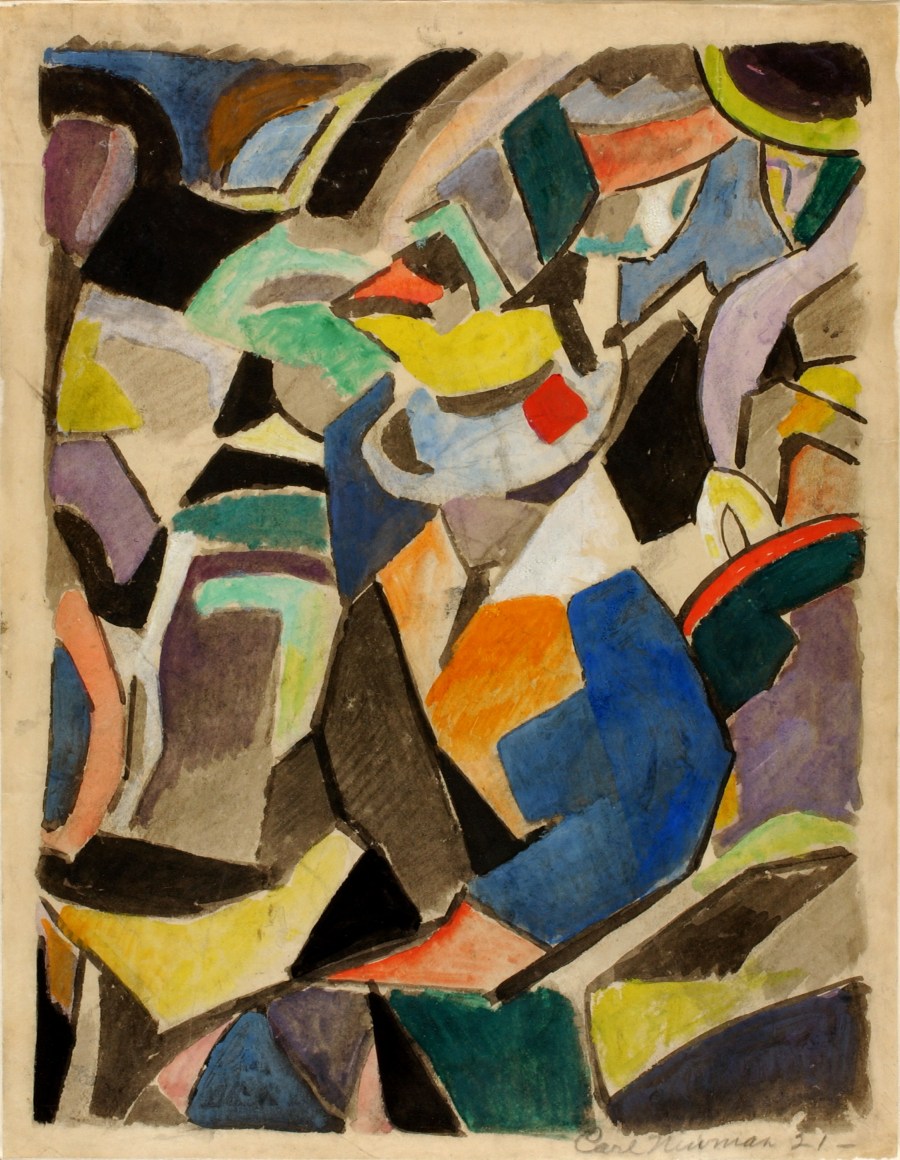
Brushes with #3

By Emily Toder

Featured Image: Abstract by Carl Newman 1858-1932

I was being chased by a rhombus
I had gone up to it
a medium-sized rhombus the size of a float
it had enchanted me standing in its canopy
a stone-faced rhombus and yet a rhombus
with real drive
I had to get through all this landscape
to get the rhombus off my trail
I ran into a quarry I thought a rhombus wouldn’t like
I went through a lot of narrow spaces
I thought the rhombus would be too broad for but it made it
it made it through a very tiny pipe at one point
it came with me into a hollow
all the theorems and I were wrong
about it, it could fold up like a house
to get through a tube and it could support itself
on one tip which we thought it couldn’t do
and on its tip it could hop around
and it was even capable of loving


Read More

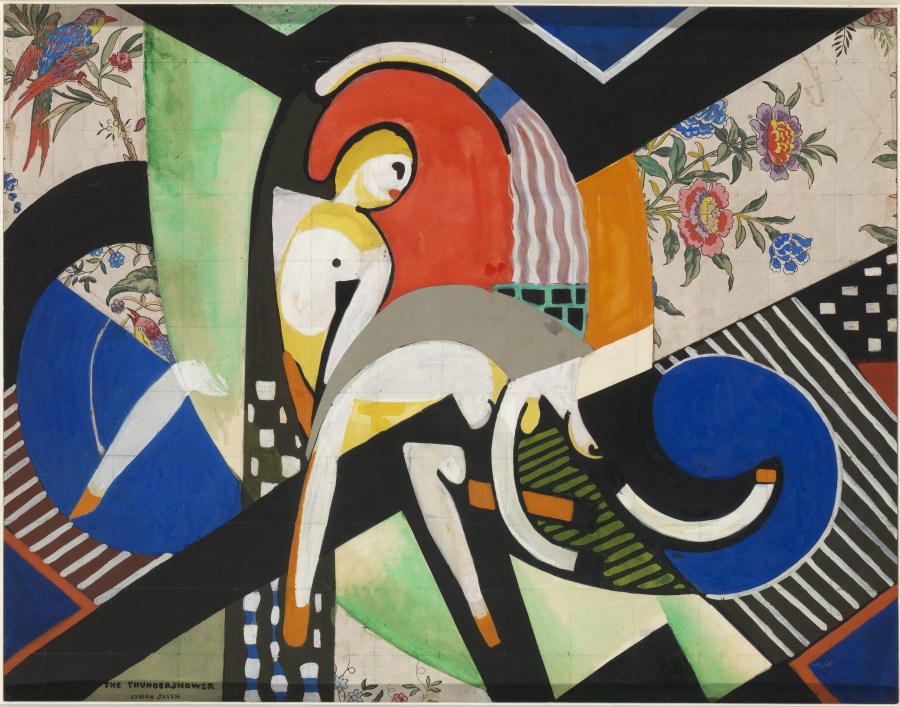
Mysterious Neighbors

By Connie Wanek

Featured Image: The Thundershower by H. Lyman Saÿen 1916

Country people rise early
as their distant lights testify.
They don’t hold water in common. Each house
has a personal source, like a bank account,
a stone vault. Some share eggs,
some share expertise,
and some won’t even wave.
A walk for the mail elevates the heart rate.
Last November I saw a woman down the road
walk out to her mailbox dressed in blaze orange
cap to boot, a cautious soul.
Bullets can’t read her No Trespassing sign.
Strange to think they’re in the air
like lead bees with a fatal sting.
Our neighbor across the road sits in his kitchen
with his rifle handy and the window open.
You never know when. Once
he shot a trophy with his barrel resting on the sill.
He’s in his seventies, born here, joined the Navy,
came back. Hard work never hurt a man
until suddenly he was another broken tool.
His silhouette against the dawn
droops as though drought-stricken, each step
deliberate, down the driveway to his black mailbox,
prying it open. Checking a trap.


Read More

Listen

By Eric Schwerer

Featured Image: Sunset, Oxford by George Elbert Burr 1899

Here every evening a woman
strides into her backyard calling
her rabbit which raises an ear when she sings:
Peppermint’s eyes’re red, His fur’s so white, Oh
where’s Peppermint gone tonight? When she sees him
she relaxes and lingers in twilight
as fireflies make brief green slashes
and the blacktop ticks with the heat
it’s digested all day. Then in her grass
while the light collapses I watch her daydream
a portion of the dusk away. I mean
I imagine she daydreams as through my screen
I watch her stride about shoeless, her rabbit
nibbling the lawn going gray. In a clean blouse,
fresh from a shower, with night coming on,
she might think of marriage. The lace
curtains in the windows of her house
are drawn. In my own still air and losing light
I stare at her, her curtains, her rabbit’s white hair.
Downstairs at the sink in my darkening kitchen
a glass of iced water is crying a ring—
Has he hopped the gate?
Left me again? Peppermint please
She continues to sing, though it’s not
wandered and would not ever leave.


Read More
The Last Litter

By Melissa Cistaro

Featured Image: Sunset by Edward Mitchell Bannister 1883

1975

It’s a nice place to visit my mom, a lot better than the last one. I get to stay for almost a week and even be here for my tenth birthday. There’s a bed with a blue quilt, a shelf piled high with boxes of puzzles and the scent of my mom’s L’Air du Temps perfume drifting down the hallway. She lives on this dairy farm with 180 cows and her new boyfriend, Roger Short. One of the first things she mentioned about Roger is that he’s colorblind. She says he can’t see how horrible the wall-to-wall chartreuse carpet looks in his house—in fact he can’t see the color green at all. I think that’s a shame, because there are green fields like patchwork for miles around his farm. But then again, I suppose that being colorblind is just fine for Roger since he only raises black-and-white cows.

Read More

The Woman Who Didn’t Know How

By Maya Jewell Zeller

Featured Image: Clouds and Sunset, Jamaica by Frederic Edwin Church 1865

Her skin was too human too often,
hands too happy to touch the splintered

door of a barn, too easily moved toward
a nettle, too ready to cover her mouth

when she gasped in joy, so she let
the aliens take her when they came.

They moved like question marks toward her
and she dropped the garden tools

to watch their wavy willow-like eyes, slits
of smoke their mouths flung out in nets.

They didn’t make a sound. Instead they held
signs with shimmery words to tell

what they wanted. On board,
they began to teach her restraint,

offering pudding then peeling the lid
to reveal the round torsos of bugs.

She wanted to laugh, but they asked
her to keep the noise down.

She wanted to explore, but they said
it was best if she lay back, rest a while,

it would be a long trip, would she please
just draw them a picture of a horse or a spade,

a packet of seeds they could plant
back wherever they came from. Through

the floor-holes she could see her husband
still sleeping on the lawn.

She had never wanted more badly
to tear through his loneliness,

lie softly like an animal on his chest.


Read More

Help Is On the Way

By John Brehm

Featured Image: Clouds and Rainbows, Jamaica by Frederic Edwin Church 1865

Time heals all wounds
except those
it

in-
flicts—and in
time even those.


Read More
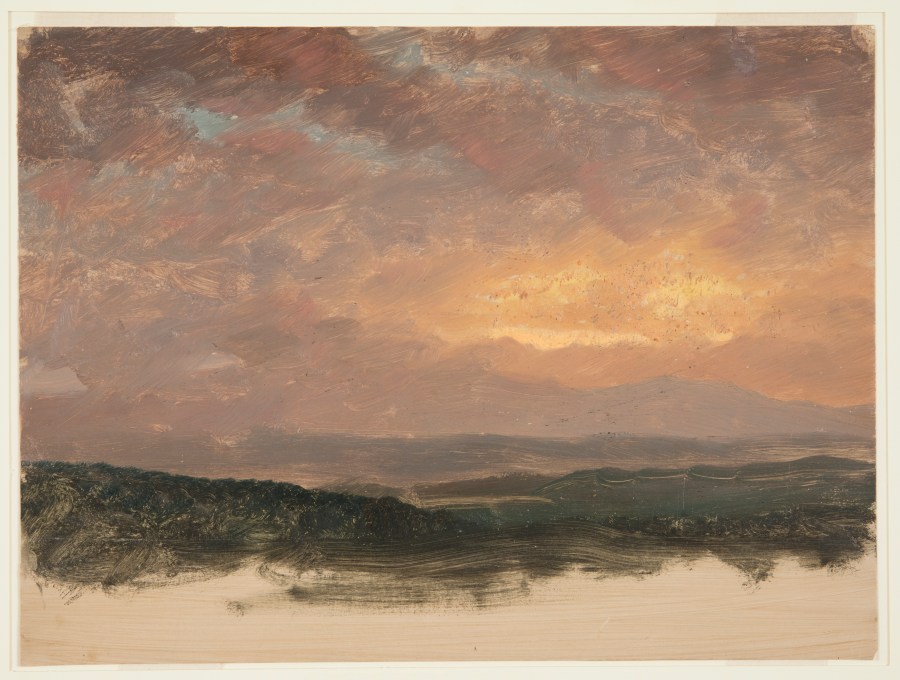
An Iris Murdoch Reader

By John Drexel

Featured Image: Sun and Clouds by Winslow Homer 1882

Everyone knows something. No one knows everything.
Most know less than they think.
As in life, there is much confusion,
especially about love. The girl in the basement kitchen,
grown disenchanted with the scholar
who is confused about the shape of his career,
considers entering a nunnery in Argentina.
Her mother has encountered a man
she has not seen in twenty years.
Someone is writing a book; someone
is hiding a crime; someone is about to suffer
near-death by almost-drowning. The narrator’s
cousin doesn’t know how to answer
her mentor’s letter, isn’t aware
she might be the heroine of this particular tale.
Everyone has forgotten something—
is this the moral?—with marvelous
consequences. There are self-delusions
and glimpses of God in surprising guises.
Children are always arriving home
or going away to school. In twos or threes
lovers or ex-lovers or would-be lovers
take cliff-top walks, receive invitations
to dinner parties given by former friends
or present rivals, send and perceive mixed signals.
A dog follows someone home.
People live in a succession of weathers,
patterns of drizzle or downpour or blazing sunshine.
It is difficult to see clearly. Some
thing is lost; something is foreign.
Somewhere a swimmer is diving
into the sea, the sea.


Read More
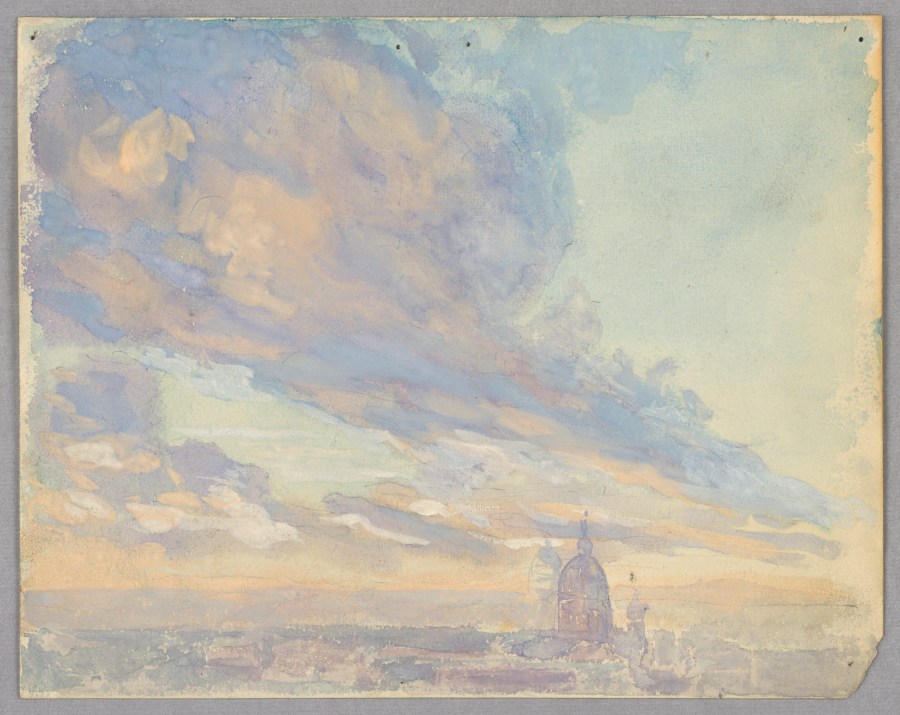
Love Song (Lame)

By Courtney Queeney

Featured Image: Study of Clouds, Rome, Italy by Francis Augustus Lathrop 1893-94

This is a little like high school
he said, when I wouldn’t take off my clothes.
It was true, although in high school
I would’ve come over to torture him deliberately
and now the torture was an unfortunate side effect
of my sadness, and had nothing to do with him at all.
Sleeping with you would be like
a drowning woman grabbing an anvil,
I explained. A burning man guzzling gasoline.
Lame analogies, but I was trying to make a point.
When he got up for a drink, I missed him
but that feeling disappeared once he came back.
I sat there and tried to feel sad,
tracking my blue mute form
as it sank to a furrowed ocean floor.


Read More
Her New Plan

By Kevin Casey

Featured Image: Desert Vista by Benjamin C. Brown 1932

The original plan: move to Los Angeles. Take acting classes. Meet people. Audition. Act. Get famous. (Not Katie Holmes famous. Kate Winslet famous.) Win awards. Get rich. Meet people. Shoot heroin and drown in a bathtub at Chateau Marmont, spawning sudden posthumous appreciation for the life’s work of Jill Dawson, the Actress.

Such a clichéd way to go, though. Jill, after a year or so of living in L.A., thought of another ending instead: retire quietly from acting to grow old in some funky little house near Topanga State Park with a friend named Beatrix (with an x). Grow a little weed out back among the rosemary, lemongrass, and cilantro. Cook vast organic feasts and always read the book before seeing the movie. There would be an avocado tree in the yard. They would write annual checks to Topanga Animal Rescue and have four adopted cats. That would be enough to feel sufficient, but not so many that they would be known in the neighborhood as The Cat Ladies. Jill would die ripe, in her sleep, and Beatrix would organize a nondenominational service in Ventura. Friends and fans would gather on the beach to drink red wine from Solo cups and share their favorite Jill stories. They would reminisce about her most remarkable roles, and when the sun took its evening dip in the Pacific, the mourners would light bonfires and play Leonard Cohen on a weathered boombox. Their tears would spill into their laughter as Beatrix sprinkled Jill’s ashes along the shifting line between sand and sea. The end.

Read More

Lonesome While Kissing

By Jim Daniels

Featured Image: Clouds by H. Lyman Saÿen 1910-12

She would be dead in twenty years.
        I never felt as lonely
as kissing her in between auto shop
        and the field house, imagining
wind wouldn’t find us
        but it did.
We pulled apart and said nothing.
        She leaned her fine brown hair
against my neck, then disappeared.
        I walked under the swing-set bars
and raised my hands as if to grab the lost chains.
        I stood waiting for someone to push me.

Read More
La Vie Ordinaire

By Mark Kraushaar

Featured Image: Kanawha River Valley by Samuel Colman 1888-90

Monsieur LeBrun est un ingénieur chimiste:
on page 8 of our ninth grade French One text
Mr. Brown was just leaving for work
and behind him, always, always, there was Madame
in her pretty print dress and beside her the waving twins
Marcel and Marie—Au revoir, Papa!
I’ll guess the rest:
next he drives to Toulouse or Roubaix
and there’s a big meeting on polymers, or pyrite,
heat flux, or octanes, and after his lunch
he walks to the lab with his good pal François.
One man pours a beaker of blue fluid into a flask
while the other graphs a special equation
or holds a test tube in the light.
Later the two men sigh and say goodnight
and Monsieur LeBrun climbs into his yellow Renault,
takes rue des Gallois to rue Saint-Michel and arrives
back home where with six kisses given, six received
the evening begins.
In fact, each evening starts with those same dozen kisses
for another decade at the end of which on a similar night
he opens his paper, sips his drink, eats, and sits
staring at a pink- and avocado-colored plate
which like a little TV he can neither focus on nor turn from.
C’est vrai, says Madame.
I guess we want to make sense, she says, except,
here’s this whole improbable, bright scene before us,
and we’re peevish and stuck, and then one day
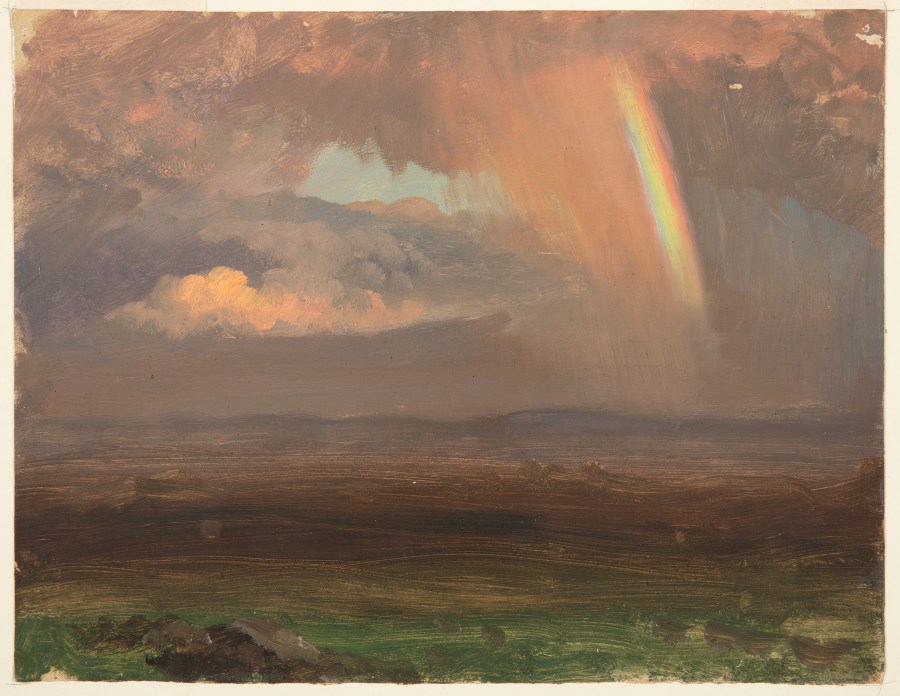
you’re rinsing a cup and it’s like the heart
takes off for Bermuda and you rise right out of your shoes
and think how easy it is, how like a trick of the mind
to simply be happy, and as the Earth turns
into a map there comes a moment it feels
like forgiveness and thanks and when
you want to dive you dive—c’est vrai!
and recover soaring upwards
by thinking it so. I’ve met someone new, she says,
it’s true.


Read More